Choosing the right supplier matters when sourcing Tin Box Metal packaging for international markets in 2026. Buyers need more than attractive product photos and competitive quotations. They should examine manufacturing capacity, material consistency, decoration quality, packaging protection, and documented quality controls. A dependable supplier can explain tinplate thickness, surface finishes, printing methods, and production tolerances in clear language. Small details matter.
This guide introduces leading tin box metal suppliers serving global buyers across food, cosmetics, gifts, collectibles, and general retail packaging. It focuses on practical evidence, including factory experience, sample accuracy, communication speed, export capability, and customer feedback. Strong suppliers should provide prototypes before bulk production. They should also explain inspection procedures, carton strength, moisture protection, and shipment timelines. Certifications may support trust, but certificates alone cannot replace transparent factory communication or consistent samples.
Real sourcing is rarely perfect. A supplier may offer excellent printing but limited flexibility for small orders. Another may quote less but provide weaker protective packaging. Buyers should compare complete costs, not only unit prices. Ask direct questions. Request measurable answers. Independent inspections can reveal issues that polished presentations hide. This article therefore combines market research with practical purchasing considerations, while recognizing that supplier performance can change over time. The final choice should reflect product requirements, target markets, order volume, and acceptable risk. Careful evaluation creates a stronger foundation for reliable partnerships and better customer experiences.
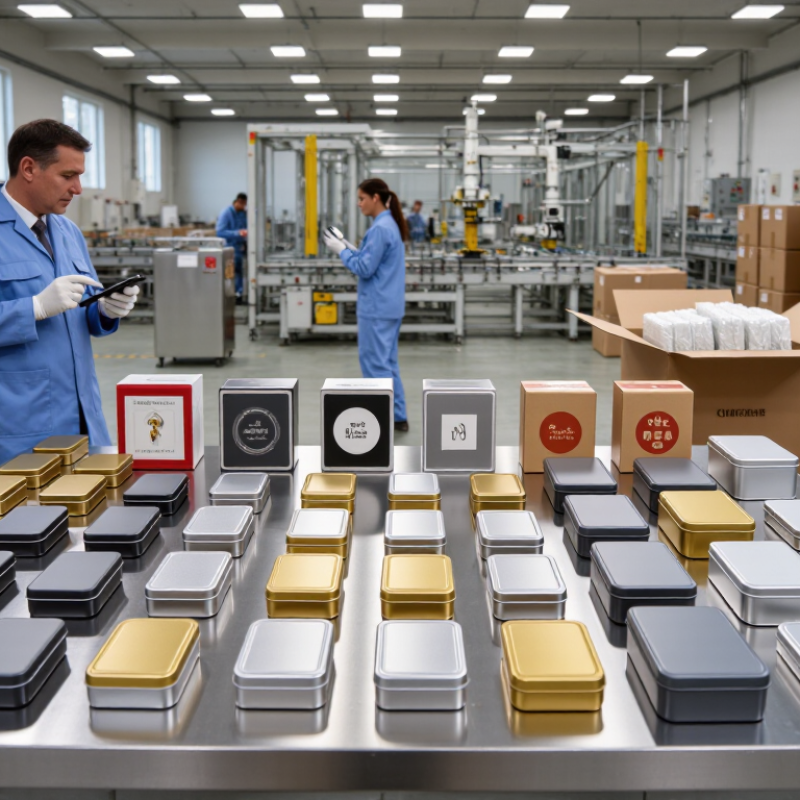
In 2026, global buyers can choose among several tin box metal supplier types.
Direct manufacturers usually provide stronger control over metal thickness, printing, hinges, and tooling. They suit large orders with stable designs. Buyers should request production samples, material specifications, and recent quality records before signing contracts.
Contract OEM and ODM suppliers support custom shapes, embossed lids, and fitted inserts. They are useful when a buyer needs packaging development, not only production. Their engineering teams can review drawings and suggest practical changes.
However, customization may increase tooling costs and lead times. Small errors can become expensive.
Wholesalers and distributors offer mixed sizes, lower minimum quantities, and faster availability. They may help smaller importers test demand before placing factory orders.
Specialist suppliers focus on food-contact packaging, gift packaging, or durable industrial containers. Their documentation often includes coating details, migration testing, and traceability records. Buyers should verify whether certificates match the actual factory and product. A polished website proves little.
Recycled-content suppliers can support sustainability targets, but claims need measurable evidence. Ask for material percentages, audit reports, and packaging data.
No supplier type is perfect. A direct factory may lack flexible communication, while a distributor may add useful local support. Compare total cost, inspection access, delivery performance, and corrective-action speed. That comparison is often harder than expected.
Evaluating tin box manufacturers requires more than comparing unit prices. Check the tinplate grade, thickness, coating, and dimensional tolerance. A reliable supplier should explain these specifications clearly. Ask for production samples, not only polished showroom pieces. Inspect the lid fit, hinge movement, edge finishing, and print alignment under normal light. Small defects often appear after repeated opening.
Factory experience matters. Review tooling capacity, monthly output, quality-control records, and maintenance routines. Confirm whether the supplier owns critical equipment or relies heavily on subcontractors. Request batch traceability from raw material to final packing. Independent testing can verify coating adhesion, ink durability, odor, and resistance to humidity. Details matter. A sample may pass inspection while later batches vary. That gap deserves attention.
Export capability is equally important. Examine packing methods, carton strength, labeling accuracy, and documented shipment history. The exporter should provide clear lead times, minimum order quantities, payment terms, and inspection procedures. Ask how they handle damaged goods or production delays. Written answers are useful, but factory evidence is stronger. Communication should remain precise when drawings change. One overlooked measurement can affect thousands of boxes. I would also leave room for a trial order, because supplier claims are not proof until performance is observed.
For global buyers, a tin box is not just a printed container. It must protect contents, open safely, and travel through varied climates. Reliable suppliers should provide material specifications, production records, and test reports before sampling. Food-contact projects need documented coating suitability, migration testing, and traceability for every production lot. A practical audit should examine sheet thickness, seam strength, lid fit, surface finish, and odor after curing. Small defects matter. A sharp edge or loose hinge can become a customer complaint.
Quality control should follow written acceptance criteria, not personal judgment. Ask for samples from regular production, then compare them with approved samples under clear lighting. Check dimensions with calibrated gauges and inspect decoration for scratches, color shifts, and pinholes. Safety also includes packaging, stacking, and transport protection. Boxes should resist compression without dangerous deformation. Compliance requirements differ by destination, so suppliers must identify applicable food-contact, chemical, labeling, and recycling rules. Independent laboratory verification adds credibility, although one report cannot replace continuous factory controls. This is where many purchasing plans remain too optimistic.
Tips: Request a compliance matrix listing each market, standard, document, and renewal date. Confirm factory calibration records and retain sealed reference samples. Test filled boxes through temperature and humidity changes when practical. Keep corrective actions documented, even for minor defects. Ask difficult questions early. Good suppliers answer with evidence, not confidence alone.
The chart shows the original publication or adoption year of major international frameworks commonly considered when evaluating tin box manufacturers and metal packaging supply chains. These references cover quality management, food-contact materials, good manufacturing practice, chemical control, and restricted substances.
References: ISO 9001:2015; ISO 22000:2018; Regulation (EC) No 1935/2004; Commission Regulation (EC) No 2023/2006; Regulation (EC) No 1907/2006 (REACH); Directive 2011/65/EU (RoHS).
Choosing a tin box supplier in 2026 requires more than comparing unit prices. Production control matters. Check steel thickness, forming accuracy, seam strength, and coating consistency. A capable factory should provide material certificates, color proofs, and batch inspection records.
Customization also needs practical testing. Ask whether the supplier handles embossing, debossing, window cutting, hinged lids, and fitted inserts in-house. Confirm artwork tolerances before mass production. A three-millimeter shift can affect lid closure. Request a physical sample, not only a digital rendering. According to Smithers’ metal packaging research, demand is supported by durability, recyclability, and premium presentation. However, attractive tins can still fail during transport. Drop tests, stacking tests, and humidity checks should be documented. The World Steel Association reports that steel remains one of the world’s most recycled materials, supporting long-term packaging value. Yet regional recycling results differ, so avoid broad environmental claims without local evidence.
Tips: Compare the full packaging system, not just the tin. Review inner bags, paper sleeves, cartons, pallets, and export marks together. Ask for carton compression data and loading photographs. Check whether the supplier can maintain color consistency across repeat orders. One overlooked issue is replacement tooling cost. It can quietly change the final budget. Packaging quality is often decided outside the factory floor. Internal handling and warehouse conditions matter too. Recovery plans are useful, but suppliers rarely describe them clearly. Ask anyway.
| Comparison Dimension | Core Production Capability | Advanced Customization Capability | Buyer Verification Points |
|---|---|---|---|
| Primary Material |
|
|
|
| Box Construction |
|
|
|
| Size and Dimensional Control |
|
|
|
| Printing Capability |
|
|
|
| Surface Finishes |
|
|
|
| Embossing and Debossing |
|
|
|
| Interior Coating and Product Contact |
|
|
|
| Minimum Order Quantity |
|
|
|
| Tooling and Development |
|
|
|
| Quality Control |
|
|
|
| Packaging for Export |
|
|
|
| Typical Production Lead Time |
|
|
|
| Sustainability and Recycling |
|
|
|
| International Trade Readiness |
|
|
|
Reference basis: The ranges and options shown are indicative industry benchmarks for tinplate packaging production. Actual capability, minimum order quantity, tolerances, pricing, compliance documentation, and lead time should be confirmed in writing for each project.
A reliable tin box supplier should prove capability before discussing price. Ask for material grade, tinplate thickness, coating type, dimensions, and allowable tolerances. Request recent inspection records, not only polished product photos.
The 2024 World Steel Association report recorded 1,888.2 million tonnes of global crude steel production in 2023.
This scale shows supply depth, but it does not guarantee suitable tinplate for your application.
Check the supplier’s manufacturing process in practical detail. Can the factory control stamping, curling, solder-free assembly, printing, and protective coating?
Order samples with your actual artwork and closure design. Test lid fit, edge safety, odor, surface scratches, color consistency, and stacking strength.
For food-contact packaging, request migration and coating compliance documents for the destination market.
The International Tin Association’s 2024 market review identifies packaging as a major tin-use sector, making traceability and material verification important.
Certificates should match the exact factory and material batch.
Price needs context. Compare tooling fees, minimum order quantity, lead time, packaging, inspection, and replacement terms.
A low quotation may hide expensive mold changes or weak quality control.
I prefer a written pre-production sample approval, even when schedules feel tight.
Perfect control is unrealistic. Small defects still reveal process discipline.
Ask for corrective-action records when problems occur. A dependable supplier explains what failed, why it failed, and how the next shipment will improve.
Request material specifications, production records, inspection reports, and test results. A sealed reference sample helps prevent later confusion.
Check sheet thickness, dimensions, lid fit, seam strength, and edge safety. A loose hinge is a small defect with practical consequences.
Inspect samples under clear lighting. Look for scratches, color shifts, pinholes, and uneven coating. A few flaws may reveal weak process control.
Request coating suitability documents, migration testing, and production-lot traceability. The documents must match the actual factory and material batch.
Test stacking strength, compression resistance, and packaging protection. Use temperature and humidity changes when practical. Real transport is less forgiving.
Requirements may cover food contact, chemicals, labeling, and recycling. Ask for a compliance matrix showing each market, document, and renewal date.
Yes. Compare regular-production samples with approved samples and written acceptance criteria. Personal judgment alone is too inconsistent.
Compare tooling, minimum quantities, lead time, packaging, inspection, and replacement terms. A low quote may hide mold changes or weak quality control.
Ask what failed, why it failed, and how production will improve. Corrective actions should be documented, even for minor defects. Confidence is not evidence.
This guide to the 2026 best Tin Box Metal suppliers for global buyers explains the main supplier types, including manufacturers, exporters, wholesalers, and custom packaging specialists. It outlines how to evaluate each supplier by reviewing production experience, material quality, manufacturing capacity, customization options, communication, lead times, pricing transparency, and export support. Buyers will also learn how to compare suppliers based on international expectations for product safety, food-contact suitability where applicable, environmental responsibility, labeling, and quality control.
The guide further examines production capabilities such as stamping, forming, printing, finishing, closure design, protective coating, and customized packaging. It also highlights the importance of secure packing, sample approval, inspection procedures, payment terms, and after-sales service. By comparing these factors systematically and confirming documentation before ordering, global buyers can select a reliable Tin Box Metal supplier that delivers consistent quality, practical customization, secure packaging, and dependable long-term cooperation.

CR Tin