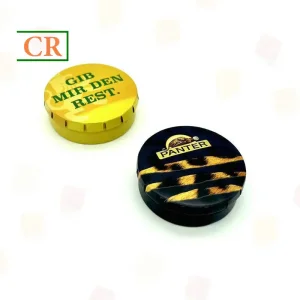
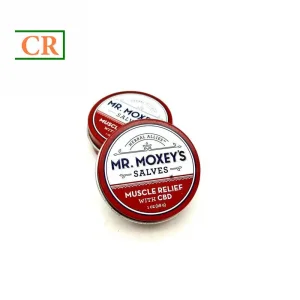
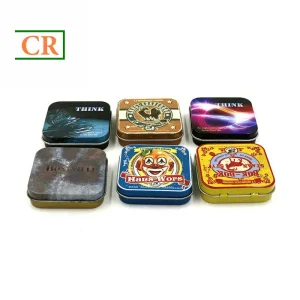
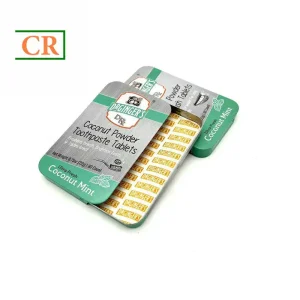
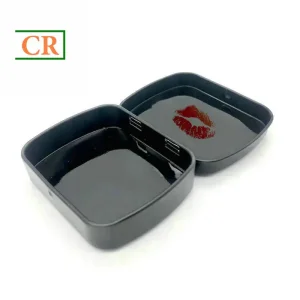
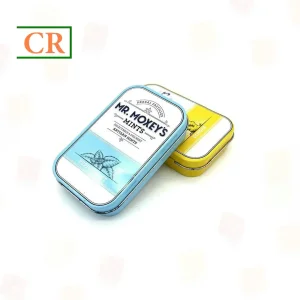
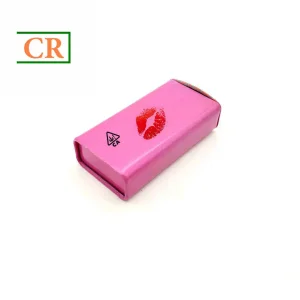
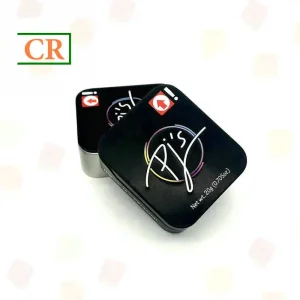
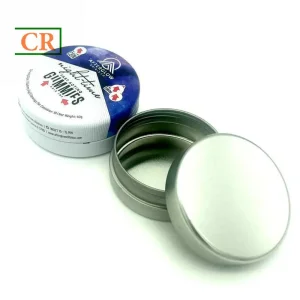
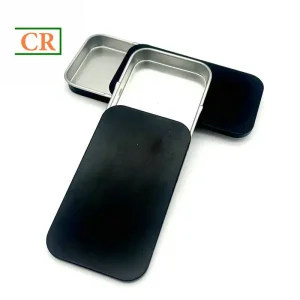
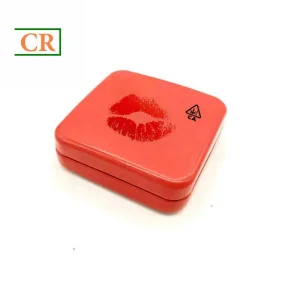
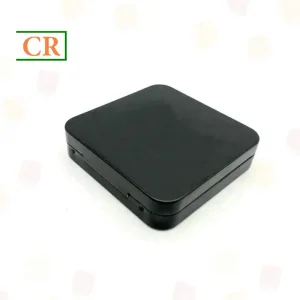
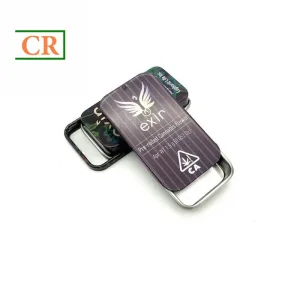
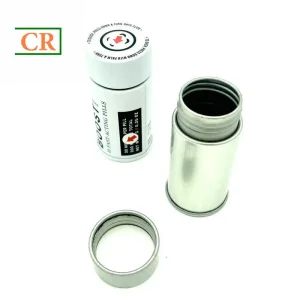
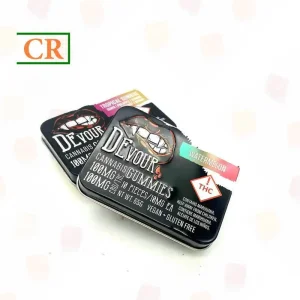
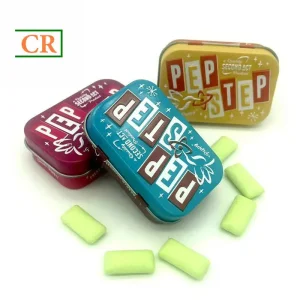
Explore our engineering capabilities through our signature custom configurations, specialized child-resistant locks, and premium sliding containers.
In the modern FMCG landscape, the design, structural integrity, and regulatory compliance of product packaging represent crucial touchpoints for brand differentiation and safety. As a leading mints tin manufacturer and factory, we recognize that metal packaging has long surpassed its fundamental container utility. It now serves as an essential medium for luxury positioning, long-term preservation, child safety compliance, and environmental stewardship. The transition away from single-use plastics to highly recyclable, food-grade electrolytic tinplate reflects a significant macro-shift across global supply chains.
For brands operating in confectionery, wellness, botanical supplements, and pharmaceuticals, packaging is the first physical interaction a consumer has with their product. Premium tin containers offer a cold, solid feel that instantly communicates tactile luxury. More importantly, they provide an absolute barrier against oxygen, light, and humidity, ensuring that aromatic products like functional mints, throat lozenges, and active botanicals retain their potency and crunch over extended shelf-lives.
Information Gain: Research indicates that packaging materials impact consumer taste perception. Heavy tinplate containers are subconsciously associated with premium formulations and higher ingredient quality, directly allowing brands to secure a pricing premium over plastic-bagged alternatives.
A key growth driver in the metal packaging sector is the demand for child-resistant structural designs. With strict international consumer protection guidelines, products containing high-concentration mints, active pharmaceutical ingredients (APIs), CBD, or legal botanicals must satisfy child-resistant criteria under global frameworks like ASTM D3475 and 16 CFR Title 1700. Designing an effective child-resistant metal container requires balancing two conflicting human factors: creating a locking mechanism complex enough to prevent access by children under 5 years old, while maintaining intuitive access for adults, particularly seniors.
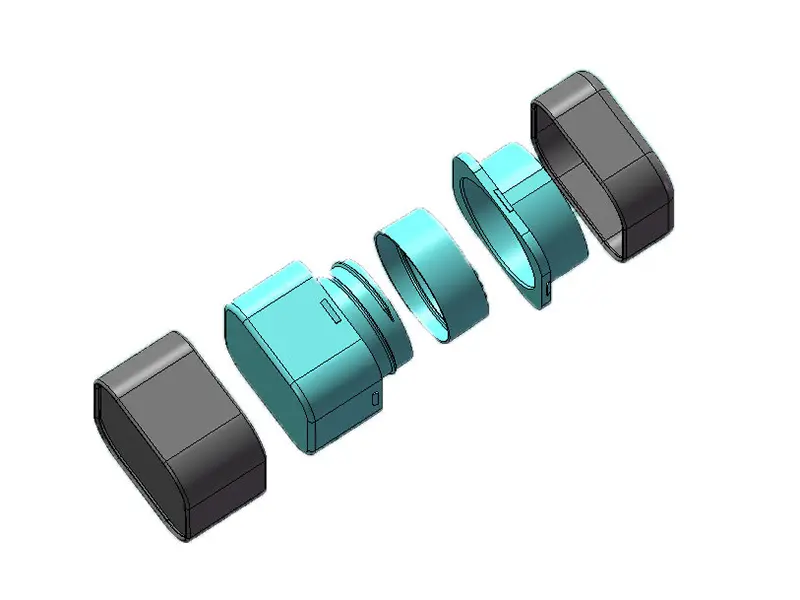
As a pioneer in this category, our engineering team has designed, tested, and commercialized over 70 certified child-resistant lock styles. These styles range from the classic two-step squeeze-and-pull mechanism to sophisticated sliding paths that utilize spring-steel tension points. Because metal lacks the inherent elasticity of plastic, achieving consistent tolerances across millions of production units is an engineering challenge. We resolve this through high-precision tooling and integrated QC optical inspection systems, keeping structural deviations to less than 0.05 millimeters.
For global purchasing directors and FMCG procurement managers, sourcing custom packaging from overseas is often complicated by long lead times and high initial development costs. Establishing a custom mold can typically take up to 90 days in traditional metal container manufacturing. We address this bottleneck with an optimized, single-source operational model that completes unique child-resistant tin structural designs, 3D renderings, functional prototype sampling, and ASTM compliance certifications within 30 days.
Operating 8 high-output automated lines allows our factory to process large-volume B2B orders with consistent quality. Advanced automation reduces human error during stamping and curling, while stabilizing manufacturing costs. By integrating raw material sourcing, automated tin formation, cleanroom accessory assembly, and quality checking, we help protect brands from supply chain disruptions.
CR Tin (Andylots Tin Box Packaging Co., Ltd) is a streamlined, single-source professional supplier of child-resistant tin boxes, integrating child-resistant lock design, mold making and sampling, child-resistant lock testing, and mass production. CR Tin began developing child-resistant lock tin boxes in 2017.
After nine years of research, development, and pioneering experience, we have over 70 certified child-resistant lock tin boxes, covering all major tin packaging styles in the industry. Through constant iteration, we have established our own unique child-resistant lock tin box system to serve leading brands in the US, European, and Asia-Pacific markets.
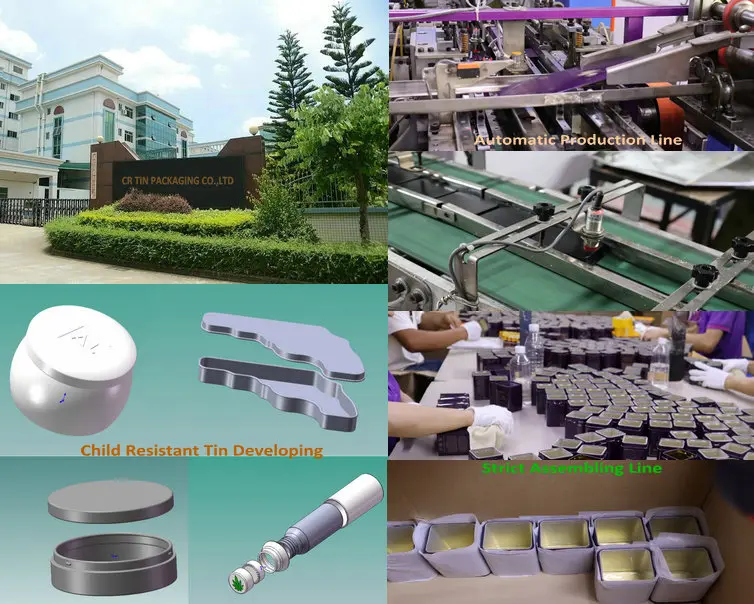
A look at our technological capabilities, engineered structures, R&D cycles, and high-efficiency automation systems.
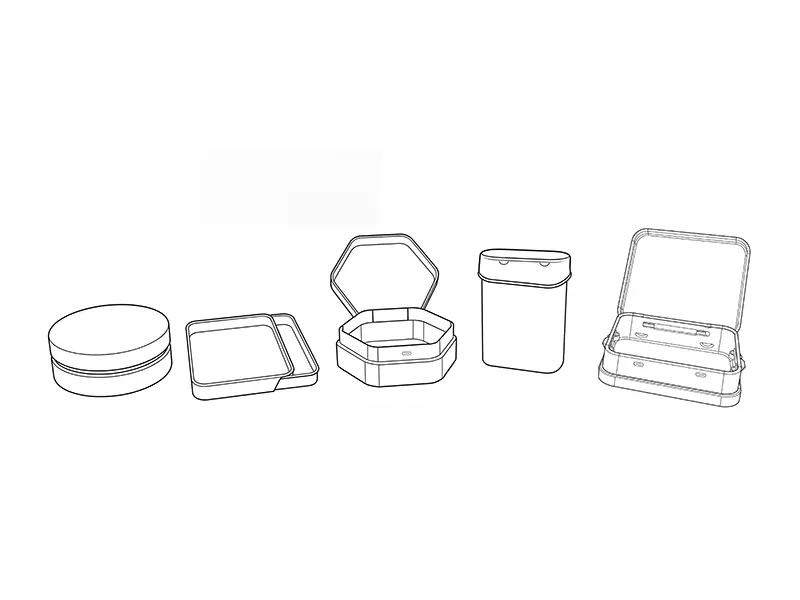
We offer over 12 proprietary, certified CR tin configurations, allowing brands to implement pre-approved child-resistant solutions directly into retail channels.
Our dedicated engineering department provides complimentary design support, 3D photorealistic renderings, and 3D-printed plastic prototype samples within days.
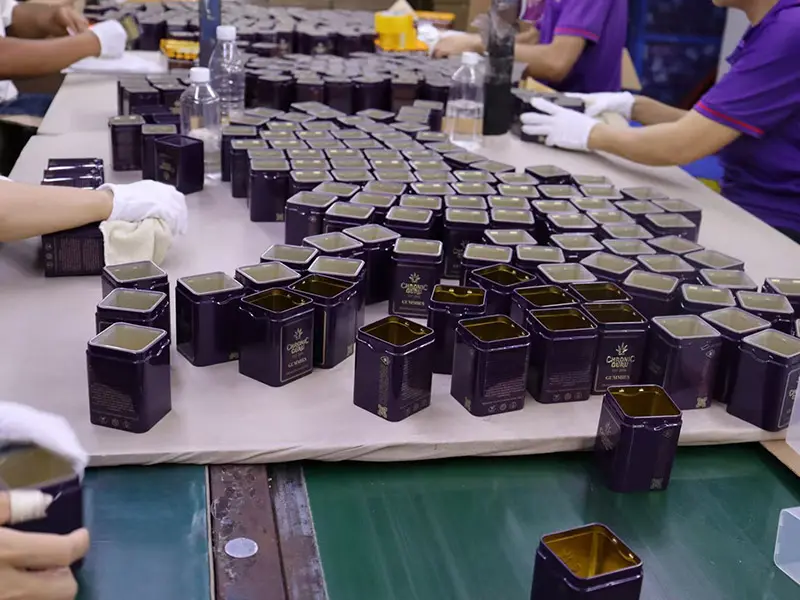
Combining high-speed automated machinery with experienced quality inspectors ensures that complex locking mechanisms and custom finishes remain stable.
From structure conceptualization to final container assembly, our team manages every stage of production.
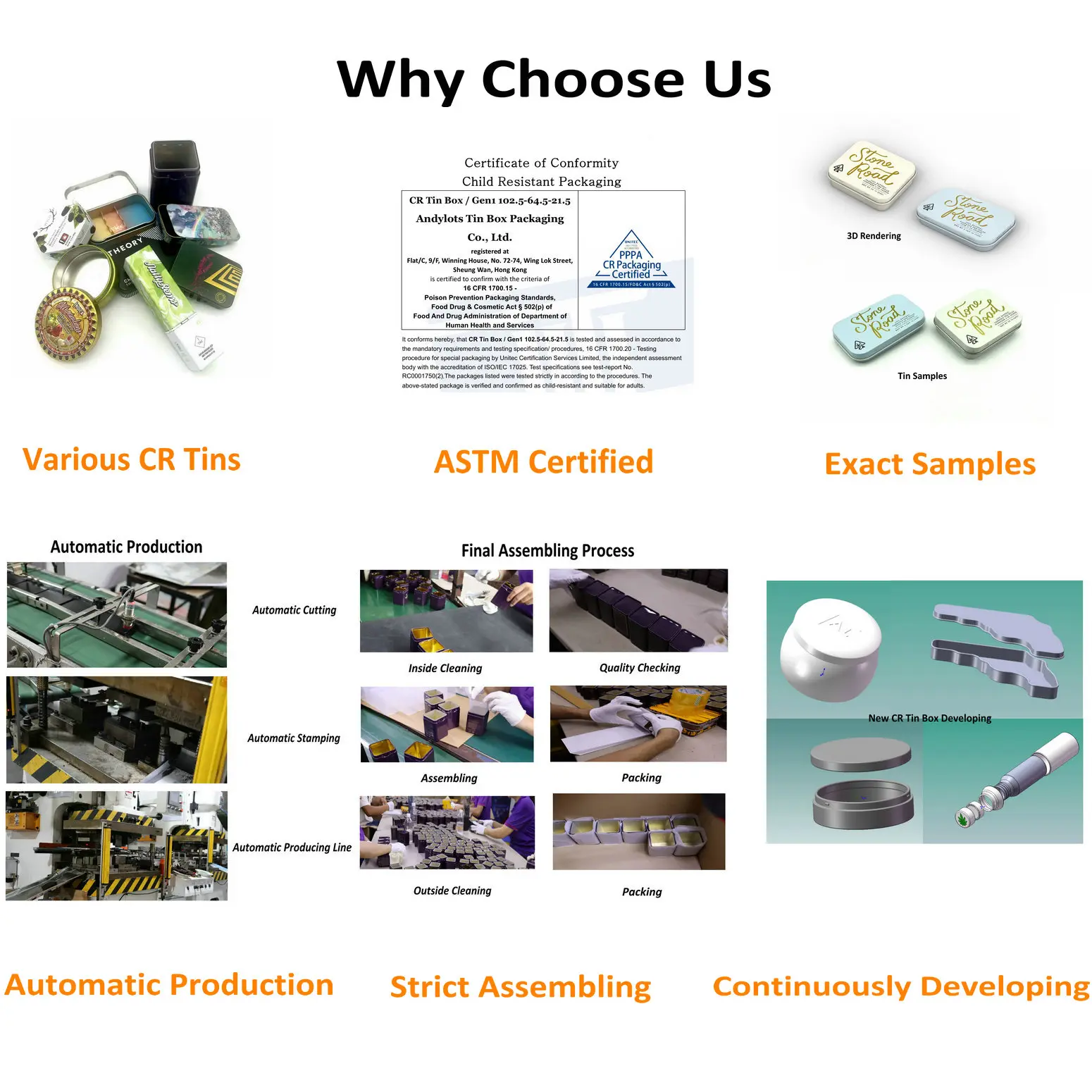
How we streamline manufacturing processes to balance high production speeds, reliable quality, and competitive cost structures.
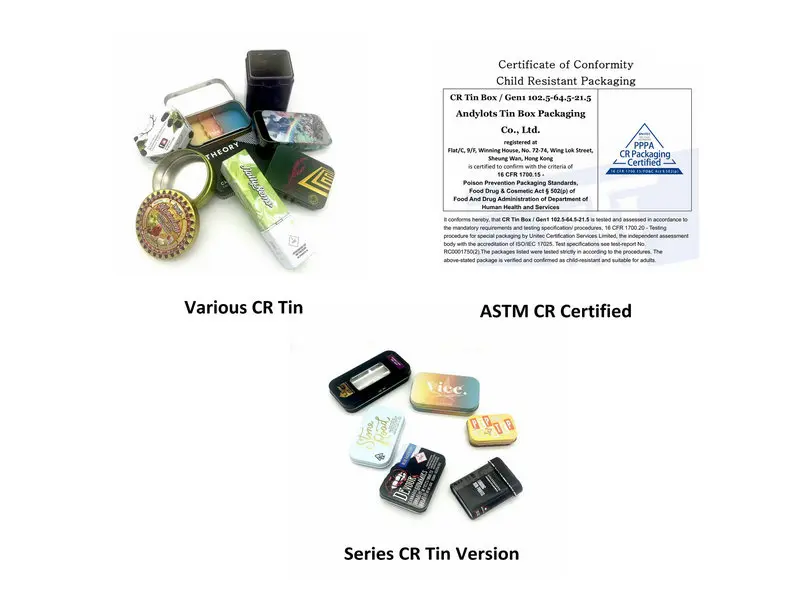
Choose from a range of functional child-resistant structures developed and refined over years of production. Pre-certified tooling options help minimize development timelines and certification costs.
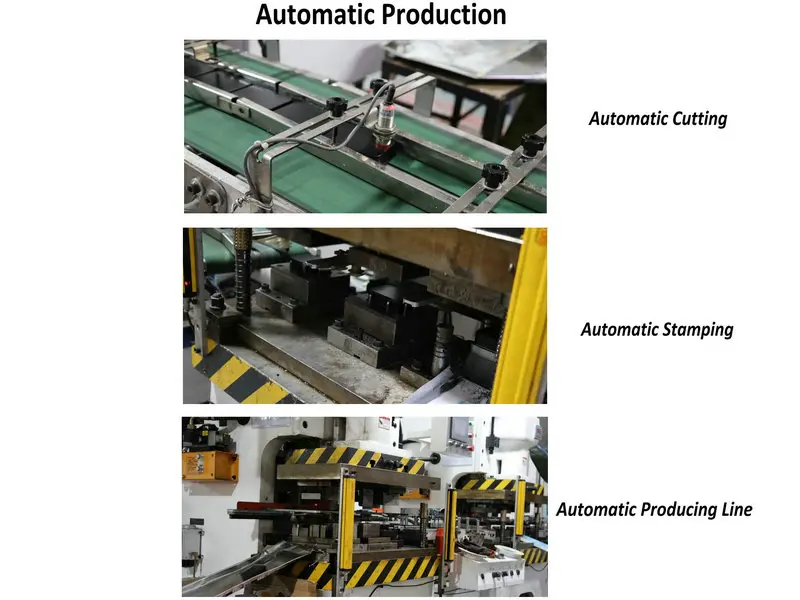
We leverage automated stamping machinery and close partnerships with accessory suppliers to maintain stable, competitive pricing without compromising on materials or structural integrity.
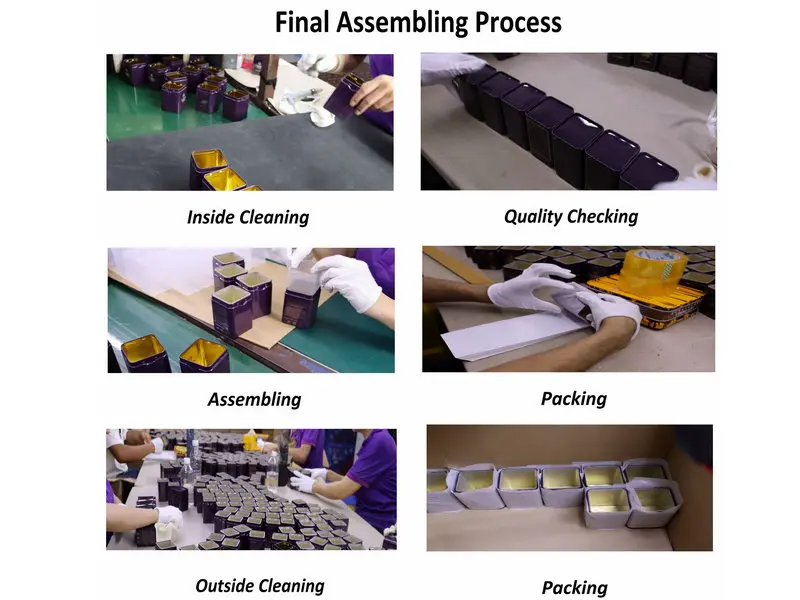
Our quality control process includes checking raw materials, testing lid alignment on assembly lines, and reviewing finished packages. Independent third-party inspection reports are available upon request.
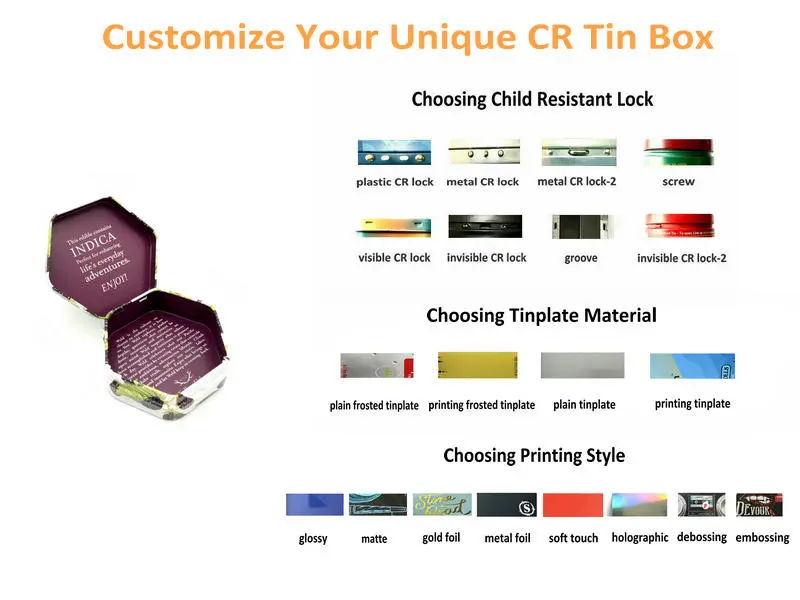
We help tailor your packaging project from start to finish. Our team supports custom embossings, debossings, soft-touch varnishes, spot UV coatings, and internal food-safe laminates to match your brand requirements.
An essential element of metal packaging is the quality of the raw material. Mints tins are typically fabricated from Electrolytic Tinplate (ETP), which consists of cold-rolled steel sheet coated on both sides with thin layers of pure tin. The steel core provides the structural strength and ductility needed for deep drawing and complex shaping, while the tin coating offers corrosion resistance, food-safe protection, and a clean surface for lithographic printing.
For mints, lozenges, and chewable products, moisture and oil barrier properties are critical. Essential oils like peppermint, eucalyptus, and wintergreen are volatile and can degrade or interact with unprotected plastic containers. High-quality tinplate acts as a barrier, preventing flavor migration and maintaining taste consistency. We apply customized, food-safe internal varnishes (such as organosol coatings or epoxy-phenolic resins) to prevent the essential oils from interacting with the metal core, ensuring long-term product purity.
Furthermore, metal packaging supports sustainability goals. Unlike plastics, which degrade in quality during recycling, tinplate is a mono-material that can be recycled indefinitely without losing its structural properties. Magnetic sorting systems in recycling facilities make steel and tin recovery simple and efficient, helping brands reduce their packaging footprints.
Compliance Standard Note: All varnishes, lacquers, and sealants used on our production lines are FDA-compliant, REACH-registered, and BPA-free, satisfying the food safety requirements of the European Union, the United States, and major international markets.
Custom tins offer extensive design opportunities. Our factory utilizes multi-color, high-speed offset lithography to print graphics directly onto the tinplate before sheet cutting. This achieves sharp resolutions, vivid colors, and precise gradients that are difficult to replicate on paper labels or flexible pouches.
To enhance visual and tactile appeal, brands can choose from several finishes:
Answers to common procurement, compliance, tooling, and shipping questions for purchasing managers.
For standard modifications, we provide 3D digital renderings within 2–3 days. Once designs are approved, physical 3D plastic mockups are completed within 5-7 days. Building a custom metal production mold and producing initial sample tins generally takes between 20 to 30 days.
Our child-resistant designs are engineered to meet US CPSC CFR Title 16 Part 1700 and ASTM D3475 standards. We conduct testing protocols where the mechanisms are evaluated by adult and child panels. We provide test documentation and certificates to support your compliance submissions.
For standard shapes with custom lithographic printing, our minimum order quantity starts at 10,000 units. For fully customized shapes requiring a new mold, the MOQ is generally between 20,000 and 30,000 units, depending on the complexity of the design and tooling setup.
Yes, all metal containers intended for food products undergo internal varnishing with FDA-approved, food-safe lacquers. These liners act as a barrier to isolate food products from the metal alloy, preventing oxidation and preserving taste.
We offer flexible commercial terms including FOB, CIF, and DDP (Delivered Duty Paid). Our logistics team coordinates sea, air, and rail transport, managing export documentation, customs clearance, and duty payments to deliver orders directly to your warehouse.
Explore our certified child-resistant designs, sliding metal boxes, and custom round packaging options.
 CR Tin