Choosing the best Tin Box manufacturer in China requires more than comparing prices. The right supplier must combine engineering skill, stable production, honest communication, and reliable quality control. A polished catalog proves little. The factory floor tells more.
Packaging consultant David Luttenberger once said, “Packaging is a brand’s most tangible connection with consumers.” His view applies strongly to Tin Box production. A lid that closes smoothly, clean embossing, accurate colors, and strong hinges can shape a buyer’s trust. Small defects remain visible. They are not small to customers.
A serious evaluation should examine tooling capability, steel thickness, printing methods, food-contact documentation, and inspection procedures. Ask how the manufacturer handles prototype changes. Check whether samples match mass production. Review export experience and response times. Good suppliers usually explain limitations instead of promising everything.
No factory is perfect. That matters.
Some manufacturers offer attractive quotations but rely on unclear subcontracting. Others produce beautiful samples but struggle with delivery consistency. Buyers should request factory videos, audit records, production photos, and reference projects. Independent testing may also be sensible for products involving food, cosmetics, or children’s items.
The best Tin Box manufacturer in China is not always the cheapest option. It is the partner that protects design accuracy, product safety, and delivery reliability over time. This conclusion deserves careful reflection, because supplier performance can change with new equipment, managers, and material sources. A responsible buyer keeps checking. Trust should grow from evidence, not confident promises.
What Defines the Best Tin Box Manufacturer in China?
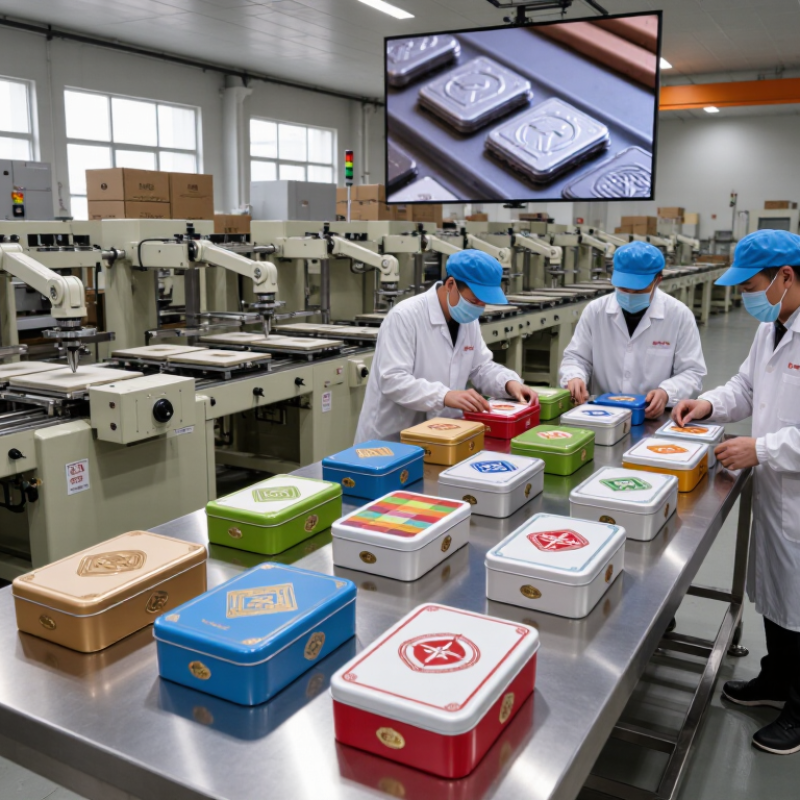
The best tin box manufacturer is defined by repeatable quality, not attractive samples alone. From factory visits and packaging reviews, I look closely at sheet thickness, cutting accuracy, and lid alignment. A well-made box opens smoothly without sharp edges or loose corners. Small details matter.
Professional manufacturers control each production stage. They check metal surfaces before printing and inspect color consistency after curing. They also test hinges, closures, stacking strength, and resistance to dents. For food-related packaging, reliable suppliers should provide suitable material documentation and production traceability. Clear records build confidence.
Experience becomes visible when a supplier handles problems honestly. A capable team explains tooling limits, realistic lead times, and possible coating defects. It should provide pre-production samples, inspection reports, and corrective actions. I once accepted a sample too quickly, then noticed uneven edges in bulk production. That mistake changed my review process. Now, I request multiple samples and inspect them under ordinary warehouse lighting.
The strongest manufacturers also communicate well across design, engineering, and quality teams. They ask about transport conditions, filling methods, and storage humidity before recommending a structure. Certifications can support credibility, but they do not replace careful inspection. A factory may have excellent equipment and still miss a packaging detail. Trust grows through evidence, consistent communication, and improvements that can be verified.
Choosing the best tin box manufacturer in China requires more than comparing prices. Manufacturing capability should be measured through evidence, not attractive samples. Ask for material specifications, steel thickness, coating details, and dimensional tolerances. A reliable factory can explain each choice clearly.
Request a production sample made with your artwork and requested structure. Inspect the lid fit, hinge movement, edge smoothness, color consistency, and printing alignment. Check whether the box opens without sharp resistance. Small defects often appear near corners and embossed areas. They matter.
Visit the facility when possible, or arrange a live video inspection. Observe sheet cutting, stamping, printing, forming, and final packing. Ask how workers record defects and separate rejected pieces. Review equipment maintenance records, inspection reports, and previous production capacity. A capable manufacturer should also provide realistic tooling costs and delivery schedules. Very low quotes deserve careful questions.
Communication is part of manufacturing quality. Confirm artwork approval procedures, sample revisions, packaging methods, and responsibility for damaged goods. Do not rely on promises alone. Written specifications protect both sides. My experience suggests that factories can perform well during a small trial yet struggle with larger orders. That risk is easy to overlook. Place a controlled pilot order and compare its results with the approved sample. Evaluate consistency across multiple cartons, not just one perfect box. Reliability appears in repeated details.
Choosing the best tin box manufacturer in China requires more than comparing prices or reviewing polished product photos. Certifications and quality standards reveal how consistently a factory controls materials, production, and customer risk. ISO 9001 is a useful foundation because it covers documented quality systems, corrective actions, and process control. ISO 14001 can indicate responsible environmental management. However, certification alone does not guarantee excellent tin boxes. Its scope, expiry date, issuing body, and covered factory location deserve careful checking.
For food, tea, cosmetics, or other sensitive applications, ask for market-specific compliance evidence. Food-contact materials may require testing under relevant United States or European regulations. Request migration reports from an independent, accredited laboratory. Check coating performance, ink safety, soldering or seam quality, and resistance to moisture and corrosion. RoHS or REACH documentation may matter for certain products and markets. The right requirements depend on the final use.
A reliable manufacturer should provide batch records, material certificates, inspection standards, and traceability from tinplate arrival to shipment. Ask for dimensional reports, coating thickness data, drop-test results, and approved samples. Factory audits can expose details that certificates miss, such as poor storage or inconsistent line checks. Be realistic. Every production system has variation. Even a strong supplier can make an error. Clear specifications, retained samples, and pre-shipment inspection reduce that risk. Look for evidence, not impressive claims.
What Is the Best Tin Box Manufacturer in China?
When comparing custom design services, look beyond attractive product images. An experienced tin box manufacturer should explain material thickness, mold fees, printing limits, and production risks clearly. Ask for a digital dieline and a physical prototype before approving mass production. Small details matter. A 0.23-millimeter tinplate body may feel sturdy, while a weak hinge can damage the user experience. Embossing also needs careful testing, especially around narrow corners and deep patterns. Reliable teams check color samples under standard lighting, not only on computer screens.
Production service shows the real difference between suppliers. A capable factory should provide a clear timeline for tooling, sampling, printing, forming, assembly, and inspection. It should also document quality standards for scratches, dents, lid alignment, and coating adhesion. For products used with dry goods, confirm that interior coatings and packaging materials suit the intended application. Factory audits, sample approvals, and batch records add practical confidence. Still, no process is perfect. A prototype may pass inspection yet reveal a loose lid during transport testing. That happened to a project I reviewed, and the packaging design needed revision. Ask how the manufacturer handles such problems, rather than assuming every quotation tells the full story.
| Evaluation Dimension | Custom Design Service | Production Service | Practical Comparison Criteria |
|---|---|---|---|
| Design Development | 2D drawings, 3D renderings, dielines, and structural recommendations can be prepared before tooling. | Production follows an approved drawing, specification sheet, and physical or digital sample. | A capable supplier should provide revision control and written approval before manufacturing begins. |
| Common Tin Materials | Material selection may include electrolytic tinplate or other specified steel grades, depending on strength and forming needs. | Standard production commonly uses tinplate in approximately 0.20–0.35 mm thickness, subject to the product structure. | Confirm material thickness, surface finish, corrosion protection, and compliance requirements in the quotation. |
| Shape and Size Options | Rectangular, round, oval, slide-lid, hinged, shaped, and multi-compartment structures can be developed when tooling is feasible. | Existing molds generally offer faster production, while new shapes require engineering review and dedicated tooling. | The best option balances the desired appearance with manufacturability, stacking strength, and tooling cost. |
| Artwork and Printing | Artwork may support offset printing, spot colors, metallic effects, matte or gloss varnish, embossing, and debossing. | Approved artwork is transferred to printed sheets before forming, with color checks required for repeat orders. | Request a physical color proof or approved production sample when color accuracy is important. |
| Tooling and Mold Charges | A new mold or die is normally required for a non-standard shape, lid, hinge, or embossed structure. | Using an existing mold can reduce development time and initial cost, but may limit dimensions and design details. | Compare tooling ownership, storage period, modification fees, and replacement terms before placing an order. |
| Minimum Order Quantity | New custom projects commonly require several thousand pieces because tooling, setup, and printed-sheet costs must be distributed across the order. | Repeat production may be more economical at higher volumes; the exact minimum depends on size, decoration, and packaging. | A clear quotation should separate sample quantity, trial-order quantity, and standard production quantity. |
| Typical Development Timeline | Design review and sampling may take approximately 2–6 weeks, depending on shape complexity and approval speed. | After approval, mass production often requires approximately 4–8 weeks, subject to order size and factory scheduling. | Lead times should include tooling, proofing, material purchasing, production, inspection, and packing. |
| Quality Control | Design reviews can identify sharp edges, poor lid fit, weak hinges, deformation risks, and unsuitable clearances before production. | Quality checks should cover dimensions, printing, color, forming, seams, closures, surface defects, and packing condition. | Look for documented inspection procedures, retained samples, defect classifications, and corrective-action records. |
| Food and Product Safety | The design can accommodate food-contact coatings, protective inner bags, inserts, or product-specific separation requirements. | Compliance depends on the coating, ink, substrate, packaging, and destination-market regulations rather than on the tin shape alone. | Request current test reports and declarations applicable to the intended product and sales market. |
| Packaging and Shipping | Packaging can be designed around nesting, dividers, protective wrapping, retail presentation, and pallet efficiency. | Common export solutions include cartons, separators, palletization, moisture protection, and shipping marks. | Compare carton strength, packing quantity, damage rate, container utilization, and agreed shipping terms. |
| Cost Structure | Initial cost usually includes design work, sampling, tooling, artwork preparation, and testing where required. | Unit cost is influenced by metal usage, forming complexity, printing, finishing, accessories, quantity, and packaging. | Evaluate total landed cost instead of comparing unit price alone. |
| Best Fit for Buyers | Best suited to new product concepts, distinctive packaging, seasonal collections, and projects requiring a unique structure. | Best suited to repeat orders, stable specifications, established packaging formats, and cost-focused volume purchasing. | The strongest supplier is the one that matches technical capability, quality controls, capacity, communication, and budget. |
Note: Lead times, minimum quantities, material specifications, testing requirements, and pricing vary by project and should be confirmed in a written quotation and approved sample.
Choosing the right tin box manufacturer requires more than comparing prices. Start with proven experience in your product category. A factory making hinged gift boxes may not understand food-contact requirements or tight cosmetic packaging tolerances. Ask for recent samples, production photos, and measurable specifications. Check tinplate thickness, folding accuracy, hinge movement, coating adhesion, and printed color consistency. Small details matter. A lid that scrapes after repeated opening is a quality warning.
Reliable manufacturers explain their process clearly. They should confirm tooling ownership, minimum order quantities, sampling fees, lead times, and packing methods before signing an agreement. Request a sample from the actual production line, not only a showroom piece. Independent testing can verify coating safety, dimensions, and durability when your market requires it. Also review quality records, inspection points, and corrective-action procedures. Good communication is evidence of control, though it is not proof by itself.
Price deserves careful attention. An unusually low quotation may exclude tooling, transport, or inspection costs. Compare complete landed costs instead. Visit the facility when possible, or arrange a live video audit showing presses, printing lines, warehouses, and finished goods. Ask how defects are handled, and whether replacements are documented. I would not rely on polished presentations alone. They can hide weak scheduling. A slightly slower supplier with transparent records may protect your launch better than a cheaper factory that promises everything. Leave room for revision; the first sample is rarely perfect.
Repeatable quality matters more than attractive samples. The box should open smoothly, with aligned lids and safe edges. Small details matter. Consistent production builds trust over time.
Check sheet thickness, cutting accuracy, lid alignment, and corner finishing. Inspect hinges, closures, stacking strength, and resistance to dents. Look closely near embossed areas. Defects often hide there.
Request material specifications, coating details, and dimensional tolerances. For food-related packaging, ask for suitable material documents and traceability records. Clear records support better decisions.
Yes, request samples using the final artwork and structure. Inspect printing alignment, color consistency, edge smoothness, and lid movement. One sample is not enough. Inspect more than once.
Visit the facility or arrange a live video inspection. Observe cutting, stamping, printing, forming, and final packing. Ask how workers record defects and separate rejected pieces. A polished tour proves little by itself.
Ask for realistic tooling costs, production capacity, and delivery schedules. The factory should explain design limits and possible coating defects. Very low quotes deserve careful questions. Cheap may become expensive later.
Confirm artwork approvals, sample revisions, packaging methods, and damage responsibility in writing. Design, engineering, and quality teams should share the same specifications. Written details prevent avoidable confusion.
No, certification supports credibility but cannot replace physical inspection. Review equipment maintenance records, inspection reports, and corrective actions. Evidence matters more than paperwork alone.
A small pilot order tests whether production matches the approved sample. Compare several cartons, not one perfect box. I once trusted a sample too quickly and missed uneven bulk edges. That mistake changed my review process.
Choosing the best Tin Box manufacturer in China requires more than comparing prices. A reliable supplier should demonstrate strong production capabilities, including modern equipment, skilled workers, stable material sourcing, efficient quality control, and the ability to manage both small and large orders. Certifications and documented quality standards are also important because they show that the manufacturer follows consistent procedures for material safety, dimensional accuracy, printing quality, packaging, and product inspection. Clear communication and transparent production records can further reduce risks during cooperation.
Custom design and production services should be evaluated according to your specific needs, such as box size, shape, surface finish, printing method, structure, and packaging requirements. Before making a decision, request samples, review the supplier’s manufacturing process, confirm minimum order quantities and lead times, and assess its responsiveness to design changes. The right manufacturer should offer a practical balance of quality, customization, cost, delivery reliability, and after-sales support, helping you achieve consistent results throughout the entire project.
CR Tin