Sourcing an Edibles Tin Box for global buyers requires more than finding a supplier with attractive product photos. The right box must protect food quality, support brand presentation, and meet the requirements of each destination market. Buyers should examine tinplate grade, internal coating, closure strength, dimensions, print durability, and food-contact documentation. Small details matter. A weak hinge can ruin a premium launch.
David Luttenberger, Global Packaging Director at Mintel, offers a useful principle: “Packaging must earn attention, communicate value, and support the product experience.” This idea applies directly to an Edibles Tin Box. A smooth lid, clean color registration, and carefully controlled metal edges can influence both shelf appeal and customer trust. However, appearance should never replace evidence. Request migration testing, material declarations, factory quality records, and samples from the actual production line. Certificates alone may not tell the whole story.
Global sourcing also demands practical planning. Confirm the product’s permitted food use, labeling needs, recycling symbols, import documents, and destination-specific packaging rules before placing a large order. Requirements can differ between regions, and assumptions create expensive delays. Ask suppliers about minimum order quantities, tooling charges, lead times, carton protection, and inspection procedures. A pre-shipment inspection is sensible, even when the factory appears experienced.
There is no perfect supplier search. Buyers may overlook transport humidity, color variation, or replacement-part availability. That is why a written specification, sample approval, and measurable acceptance standard are essential. The best Edibles Tin Box partner is not simply the cheapest option. It is the supplier that communicates clearly, documents responsibly, and improves when something goes wrong.
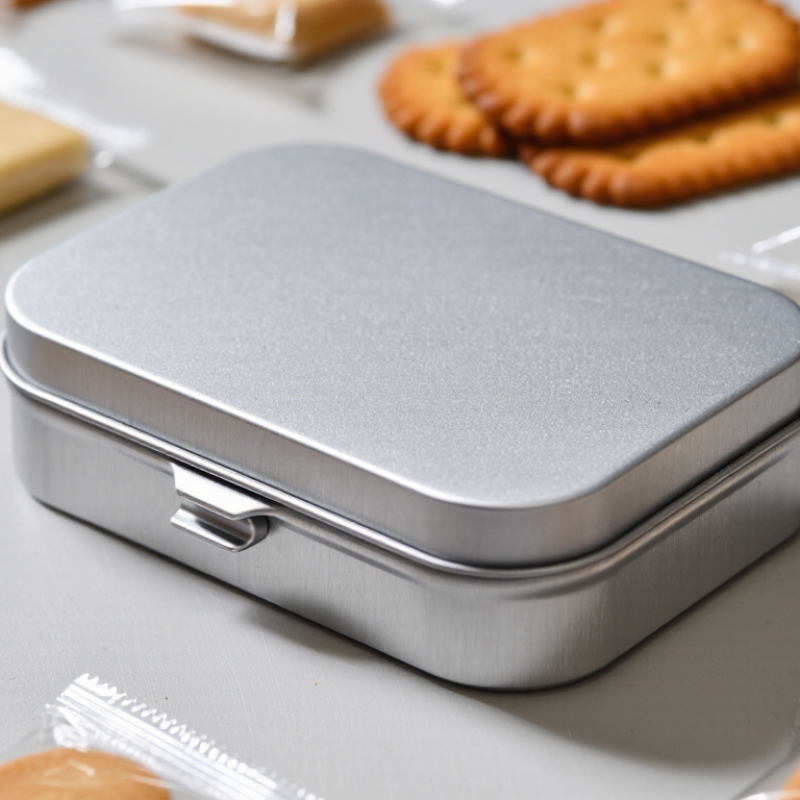
Before sourcing an edibles tin box, define the product requirements in measurable terms. Clarify the food type, fill weight, serving size, and internal dimensions. Candies may need a wider opening, while small baked goods need extra headspace. Choose food-contact tinplate with a suitable interior coating. Request migration and material safety documents from the supplier.
Specify the lid style, closure strength, surface finish, and printing method. A hinged lid feels premium, but it can increase cost and assembly time. Set acceptable tolerances for dimensions, color, dents, and logo alignment. Include moisture resistance if the product may face humid storage or long-distance shipping. The packaging should protect the contents without creating unnecessary material waste. A first specification is rarely perfect. Small test batches can reveal practical problems that drawings miss.
Tips: Ask for a physical sample before mass production. Test opening force with real users. Check stacking stability, odor, rust resistance, and coating performance. Confirm the minimum order quantity, tooling charges, production timeline, and carton protection. Keep every requirement in one approved document. Vague instructions often create expensive revisions. Also review the destination market’s food-contact and recycling requirements with qualified professionals. Supplier certificates help, but independent verification may still be necessary.
When sourcing an edibles tin box, begin with the metal itself. Tinplate should resist dents, rust, and repeated opening. For direct food contact, request coating specifications and migration test documents. A suitable inner lacquer protects both the product and its flavor. Recycled steel can support sustainability goals, but its quality still needs verification.
Start with samples. Measure twice. Compare common sizes, such as 60 mm pocket tins and larger rectangular boxes. The shape affects filling speed, shelf space, shipping weight, and user access. Hinged lids feel convenient, while slip covers often reduce component costs. Check the seam, lid fit, edge safety, and stack stability by hand. I once overlooked a slightly loose lid during sampling; transport testing later exposed the weakness.
Printing options should match the surface and order quantity. Offset printing delivers sharp illustrations and consistent color across large runs. Digital printing suits smaller quantities, but color variation may appear between batches. Ask for a physical proof, not only a digital image. Test matte and glossy finishes under store lighting. Also confirm ink adhesion, scratch resistance, and readability of small text. Keep material records, approved artwork, batch details, and inspection photos traceable for every shipment.
How to Source an Edibles Tin Box for Global Buyers?
Food safety must guide every tin box decision. The World Health Organization estimates that 600 million people become ill from contaminated food each year. Packaging cannot create that risk. Ask suppliers for food-contact declarations, migration test reports, and coating specifications. These documents should match the intended food, temperature, storage time, and destination market.
For the United States, confirm compliance with applicable FDA food-contact requirements and the current FDA Food Code framework. For Europe, request evidence aligned with Regulation (EC) No. 1935/2004 and good manufacturing practice rules. ISO 22000, HACCP, and BRCGS Packaging Materials certification can strengthen supplier evaluation. However, certification alone is not enough. Check the certificate scope, expiry date, production site, and audit status. A logo is not evidence.
Inspect the tin physically. Look for sharp edges, loose lids, coating damage, rust spots, and strong ink odors. Test seam strength and simulate humidity during transit. The OECD’s Global Plastics Outlook reports that only 9% of plastic waste was recycled globally in 2019, so recyclable metal packaging can support responsible sourcing decisions. Still, recyclability varies by local systems. We once accepted an outdated compliance statement during a rushed sample review. That was a mistake. Require batch traceability, change-control notices, and independent laboratory testing before mass production. Suppliers may resist. That reaction itself deserves attention.
When sourcing an edibles tin box, compare suppliers beyond their quoted unit price. Ask about steel thickness, internal coating, lid fit, printing tolerance, and food-contact documentation. A reliable supplier should explain which standards apply in your destination market. Request recent inspection records, production photos, and a clear list of included services. Factory experience matters. So does communication.
Minimum order quantities can vary widely. Some suppliers accept 1,000 pieces for standard sizes, while custom shapes may require 10,000 or more. Request pricing at several volumes, such as 1,000, 5,000, and 20,000 units. Check whether tooling, color matching, setup fees, cartons, and export packing are included. Freight can change the final cost sharply. A low factory price may become expensive after shipping and import charges.
Sample quality deserves careful testing. Order a pre-production sample before approving mass production. Inspect the hinge, edges, coating, closure strength, and print alignment by hand. Place the sample in a warm, dry environment for several days. It should open smoothly without loose powder or sharp metal edges. Ask for a sample matching the final material and artwork, not a cheaper substitute. Samples are useful, but they can hide production variation. I have seen attractive prototypes fail during larger runs. Build acceptable tolerances into the purchase agreement, and record every approval in writing.
How to Source an Edibles Tin Box for Global Buyers?
Production planning should begin with the product, not the tin’s appearance. Define the food type, filling weight, diameter, height, and expected shelf life. Ask suppliers about food-contact coatings, metal thickness, seam quality, and corrosion resistance. Request a physical sample before approving mass production. Check the lid fit by opening it repeatedly. A small defect can become expensive later. Confirm the minimum order quantity, tooling cost, production lead time, and inspection process in writing. Photos are helpful, but they cannot replace hands-on checks.
Packaging must protect both the tin and its contents during long-distance transport. Choose inner bags, dividers, or trays that prevent movement and surface scratches. Use strong export cartons with clear handling marks. Measure carton dimensions carefully, because wasted space increases freight costs. Pallet loading should match the destination warehouse and handling equipment. A tin may look sturdy, yet dent easily under uneven pressure. This detail is often underestimated.
Shipping terms should clearly define responsibility for freight, insurance, customs clearance, and import duties. Prepare the commercial invoice, packing list, certificate of origin, material details, and applicable food-contact test reports. Confirm the correct customs classification with a qualified broker in the destination country. Import rules can differ by material, product type, labeling, and packaging claims. Avoid assuming one document works everywhere. No plan stays perfect. Build time for port delays, document corrections, and a second inspection. Reliable sourcing comes from checking practical details before production starts.
| Sourcing Stage | Planning Dimension | Typical Data or Requirement | Recommended Buyer Action | Key Evidence or Documents |
|---|---|---|---|---|
| 1. Product Definition | Intended use | For direct contact with edible products, specify a food-contact tinplate container. If the product remains in an inner pouch, define the tin as secondary packaging and verify that the inner pack provides the food-contact barrier. | State whether the tin will directly hold gummies, candies, mints, cookies, or another edible product. Identify moisture, oil, odor, and light-barrier requirements. | Product specification; food-contact declaration; material statement |
| 1. Product Definition | Common tin formats | Typical formats include rectangular, round, square, slide-top, hinged-lid, and window tins. Practical small-pack dimensions commonly range from approximately 60–150 mm in length or diameter and 20–60 mm in height. | Choose the shape according to product count, serving size, shelf presentation, and available filling equipment. Request a dimensional drawing before tooling. | 2D drawing; 3D artwork mock-up; sample approval record |
| 1. Product Definition | Material and thickness | Tinplate is commonly used for rigid decorative tins. Sheet thickness is often specified around 0.20–0.35 mm, depending on size, shape, stacking strength, and forming requirements. | Ask for the exact steel substrate, coating system, thickness tolerance, and corrosion-protection method. Do not approve a quotation based only on the word “metal.” | Material certificate; coating specification; thickness inspection report |
| 2. Compliance Planning | Food-contact compliance | Requirements vary by destination. Common checks include overall migration, specific migration where applicable, coating suitability, heavy-metal restrictions, and good manufacturing practice for food-contact materials. | Provide the destination market before production. Have the proposed substrate, internal varnish, ink, and adhesive reviewed against the importing market’s rules. | Declaration of compliance; migration test report; ink and coating declarations |
| 2. Compliance Planning | Edible product regulations | The filled product may require separate rules for ingredients, allergens, nutrition information, claims, net quantity, lot coding, best-before dates, and language. | Treat the tin specification and the food-label review as separate workstreams. Confirm whether the tin is a retail pack, gift pack, or transport pack. | Final label artwork; ingredient and allergen review; shelf-life documentation |
| 3. Supplier Qualification | Supplier capability | A capable supplier should be able to explain tooling, forming, soldering or seaming where relevant, printing, varnishing, inspection, packing, and export documentation. | Use a written request for quotation with drawings, annual volume, order quantity, print colors, finish, lid style, tolerances, and destination country. | Technical questionnaire; factory audit checklist; capability statement |
| 3. Supplier Qualification | Minimum order quantity | Custom printed tins frequently have minimum order quantities in the low thousands or higher. Tooling, color setup, and special components can raise the minimum economical quantity. | Request separate pricing for tooling, samples, 1,000 units, 5,000 units, 10,000 units, and the expected annual volume. Confirm whether the minimum applies per size, artwork, or colorway. | Quotation; tooling invoice; volume-price schedule |
| 4. Sampling and Tooling | Prototype sequence | A normal approval sequence is: dimensional drawing, blank or unprinted sample, decorated sample, filling trial, and final pre-production sample. | Approve dimensions and lid fit before approving decoration. Test opening force, sharp edges, stacking, leakage resistance where relevant, and compatibility with the edible product. | Approved sample; golden sample; sample inspection report |
| 4. Sampling and Tooling | Lead-time planning | Indicative timing is often 7–15 working days for standard samples, 15–30 working days for new tooling, and 20–45 working days for mass production after artwork and sample approval. Actual timing depends on complexity and capacity. | Build the schedule from the required arrival date backward. Add time for artwork corrections, laboratory testing, inspection, port congestion, customs, and final delivery. | Production schedule; milestone plan; approval log |
| 5. Artwork and Printing | Print preparation | Supply vector artwork with defined color references, bleed, safe areas, barcode requirements, regulatory text, and the exact panel layout. Metallic tin surfaces can alter perceived color. | Request a digital proof and a physical color or decorated sample. Confirm whether the finish is gloss, matte, satin, spot varnish, embossing, debossing, or a combination. | Print-ready artwork; color proof; barcode verification report |
| 5. Artwork and Printing | Closure and safety | A reusable tin should close securely without exposed sharp edges. For child-sensitive products, a normal hinged or friction lid is not automatically child-resistant. | If the contents require special child-safety packaging, obtain a separate certified closure design and test it under the destination market’s applicable standard. | Closure test report; edge inspection record; child-resistant certification if required |
| 6. Production Control | Quality-control checkpoints | Inspect dimensions, lid fit, dents, scratches, rust, sharp edges, print registration, color variation, coating defects, odor, cleanliness, and carton counts. | Define acceptance criteria before production. Use sampling based on an agreed inspection level, and separately record critical defects such as contamination, sharp edges, or incorrect labeling. | Inspection plan; defect classification; final inspection report |
| 6. Production Control | Quantity tolerance | Manufacturers may apply an overrun or underrun tolerance stated in the purchase agreement. The permitted range is commercial-contract specific and should not be assumed. | State the exact quantity tolerance, invoicing basis, and treatment of rejected units in the purchase order. | Purchase order; packing list; quantity reconciliation |
| 7. Inner Packaging | Protection for empty tins | Empty tins are commonly protected with polybags, paper separators, trays, or dividers before being packed into corrugated export cartons. | Select packaging that prevents abrasion, lid opening, deformation, moisture exposure, and contact with dirty or recycled materials that are unsuitable for the intended use. | Packing specification; carton-drop test record; packaging approval |
| 7. Inner Packaging | Carton and pallet data | The buyer should receive units per carton, carton dimensions, gross weight, net weight, cartons per pallet, pallet dimensions, and total shipment volume in cubic meters. | Use the confirmed carton data to compare freight quotations and calculate warehouse space. Recheck the data after the final packing trial. | Final packing list; carton marking artwork; pallet plan |
| 8. Shipping Planning | Transport mode | Courier or air freight is generally faster for samples and urgent small volumes. Ocean freight is generally more economical for larger shipments but adds port and customs variability. | Compare total landed cost rather than freight alone. Include origin charges, destination charges, customs brokerage, duties, taxes, inspection, storage, and final delivery. | Freight quotation; commercial invoice; packing list |
| 8. Shipping Planning | Trade terms | Common Incoterms include EXW, FCA, FOB, CIF, DAP, and DDP. They allocate costs, transport responsibilities, and risk differently; the term must include a named place or port. | Ask the seller to quote at least two comparable terms. Confirm who arranges export clearance, main carriage, insurance, import clearance, duties, and last-mile delivery. | Incoterms® sales term; bill of lading or air waybill; insurance certificate if applicable |
| 8. Shipping Planning | Transit-time allowance | International ocean transit can vary substantially by route and season. Add time for booking, consolidation, port handling, customs clearance, and inland delivery rather than using only the sailing time. | Set a required delivery date and a latest acceptable date. Build a contingency buffer for peak seasons, port congestion, inspections, and documentation corrections. | Booking confirmation; shipment tracking; arrival notice |
| 9. Import Preparation | HS classification | The correct HS classification depends on the product’s material, function, and whether it is imported empty or filled. Classification and duty rates vary by jurisdiction. | Obtain a written classification decision from a customs broker or the relevant customs authority before shipment. Do not rely only on a supplier’s suggested code. | HS classification; customs ruling if available; customs entry data |
| 9. Import Preparation | Customs value | The customs value may include the transaction value and certain additions required by local law, such as assists, packing, royalties, or transport to the import point. | Confirm the valuation method with the importer of record and broker. Ensure the invoice, payment records, packing list, and transport documents are consistent. | Commercial invoice; payment evidence; freight invoice; customs declaration |
| 9. Import Preparation | Importer of record | The importer of record is responsible for import declarations, applicable duties and taxes, product compliance, and maintaining required records in the destination market. | Identify the importer before production. Confirm registration numbers, customs power of attorney, tax treatment, broker appointment, and delivery address. | Importer registration; power of attorney; broker instructions |
| 10. Landed-Cost Review | Cost structure | A realistic landed-cost model includes unit price, tooling amortization, sampling, inland transport, export charges, freight, insurance, duty, import tax, brokerage, storage, inspection, and final delivery. | Calculate landed cost per usable unit, not only per shipped unit. Include expected scrap, defects, damaged cartons, and currency or fuel adjustments where relevant. | Landed-cost worksheet; duty estimate; logistics invoice set |
| 11. Pre-Shipment Release | Final approval | Release should occur only after the approved sample, artwork, quantity, packaging, documentation, and inspection results match the purchase agreement. | Use a signed pre-shipment checklist. Hold the balance payment or shipment release until agreed inspection criteria are satisfied. | Pre-shipment inspection report; approved sample; release authorization |
| 12. Receiving and Traceability | Warehouse controls | Store tins in a clean, dry area protected from condensation, chemicals, excessive humidity, crushing, and direct contamination. Retain lot and shipment records. | Inspect cartons on arrival, photograph visible damage, quarantine questionable units, reconcile counts, and link each batch to its supplier, production date, and shipping documents. | Goods-receipt record; damage report; batch traceability log |
Specify food type, fill weight, serving size, and internal dimensions. Candies may need wider openings. Small baked goods need extra headspace. Keep all requirements in one approved document.
Choose food-contact tinplate with a suitable interior coating. Request migration tests and material safety documents. The inner lacquer should protect flavor and resist rust. Supplier certificates help, but independent verification may still be necessary.
Compare measurements such as 60-millimeter pocket tins and larger rectangular boxes. Shape affects filling speed, shelf space, shipping weight, and user access. Measure twice. A drawing may miss practical problems.
Hinged lids feel convenient and premium, but they can increase cost and assembly time. Slip covers may reduce component costs. Test opening force with real users. Check lid fit, seam quality, edge safety, and stacking stability.
Offset printing suits larger runs with detailed artwork and consistent colors. Digital printing suits smaller quantities, but batch variation may appear. Request a physical proof. Test matte and glossy finishes under store lighting.
Ask about steel thickness, coating, lid tolerance, printing accuracy, and food-contact documents. Request inspection records, production photos, and included services. Freight, tooling, cartons, and import charges can change the final cost sharply.
Request prices at 1,000, 5,000, and 20,000 units when possible. Standard sizes may allow lower quantities. Custom shapes may require 10,000 or more. Confirm tooling, setup, color matching, export packing, and freight separately.
Order a sample matching the final material and artwork. Inspect hinges, edges, coating, closure strength, and print alignment by hand. Store it in a warm, dry place for several days. Attractive prototypes can still fail during larger runs. Record approvals and acceptable tolerances in writing.
Sourcing an Edibles Tin Box for global buyers starts with clearly defining the product requirements, including capacity, dimensions, shape, closure style, finish, and intended use. Buyers should evaluate suitable tinplate materials, available sizes and shapes, and printing or decoration options that support attractive, durable, and consistent packaging. Food-contact safety is also essential, so suppliers should provide relevant test reports, certifications, and documentation for the target markets. Requirements may vary by destination, making early compliance checks an important part of the sourcing process.
A reliable purchasing plan should compare suppliers based on manufacturing experience, minimum order quantities, pricing, communication, and sample quality. Before placing a bulk order, buyers should review prototypes carefully and confirm specifications in writing. Production timelines, quality inspections, protective packaging, shipping arrangements, customs documents, and import procedures should also be planned in advance. With clear requirements and thorough supplier verification, an Edibles Tin Box can be sourced efficiently while maintaining product quality, safe packaging, and smooth international delivery.

CR Tin