Cigarette Tin Box remains a specialized packaging format for tobacco brands, collectors, and compliant retail applications. It combines rigid protection, printable surfaces, and a distinctive opening experience. However, supplier quality varies widely. Small differences matter: lid alignment, hinge resistance, edge finishing, coating adhesion, and carton protection during ocean transport.
Industry reports provide useful context. Smithers’ global packaging outlook identifies metal packaging as a durable sector supported by recyclability, long service life, and strong barrier performance. Euromonitor International’s packaging research also highlights growing buyer attention toward material efficiency, premium presentation, and supply-chain reliability. These trends make supplier evaluation more complex than comparing unit prices. A low quotation may hide tooling charges, inconsistent dimensions, weak coatings, or unclear compliance documents.
“Packaging must protect the product, communicate value, and reduce its environmental burden,” observes David Luttenberger, a recognized global packaging analyst. His point is practical. A Cigarette Tin Box should look refined, but it must also survive stacking, humidity, vibration, and repeated handling. Certification evidence matters. So do production photographs, sample approvals, and transparent factory communication.
This ranking examines ten manufacturers for global buyers. It considers manufacturing experience, customization capability, material consistency, export support, quality systems, and reported market reputation. No supplier ranking is flawless. Buyer requirements change by region, order volume, artwork complexity, and regulatory expectations. The strongest choice is not always the largest factory. It is the supplier that documents its process clearly and delivers repeatable results.
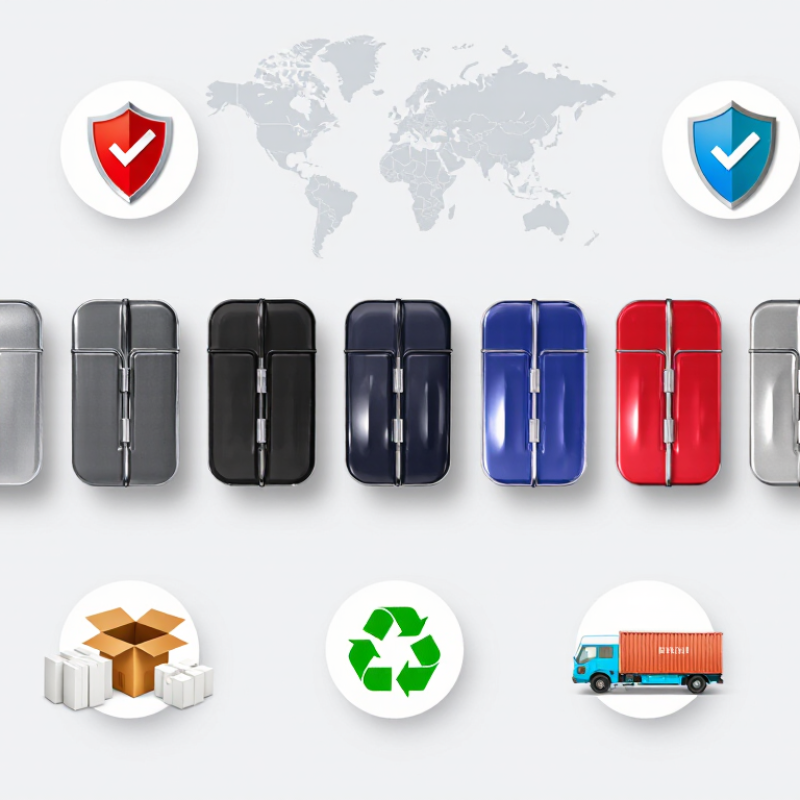
Cigarette tin boxes are rigid metal containers designed to protect and present packaged cigarettes. They are commonly made from tinplate, which offers strength, clean printing, and resistance to ordinary handling. Their role is practical, not merely decorative. A fitted lid helps reduce crushing, while smooth edges improve daily handling. The metal structure also supports consistent stacking during storage and transport. These features make tin boxes useful in global packaging supply chains.
For global buyers, a tin box must balance protection, usability, compliance, and cost. Experienced packaging teams check metal thickness, hinge alignment, coating adhesion, and edge safety before approval. They also compare box dimensions with filling equipment and shipping cartons. A container that looks attractive can still fail during stacking or humid transport. That lesson is easy to overlook. Printed surfaces need controlled color reproduction, scratch resistance, and enough space for required information. Specifications should appear in technical drawings, approved samples, and inspection records.
Tin boxes may increase perceived product value and support organized retail presentation. Yet sustainability claims require evidence. Buyers should verify recycled content, coating materials, and available recycling routes. In practical sourcing, small details often create larger problems. No package is perfect. A decorative finish may reduce recyclability, while a lighter gauge may weaken durability. Careful testing remains more reliable than attractive promises. Manufacturers should provide measurable data, realistic samples, and clear quality procedures before large-scale production.
Selecting a cigarette tin box manufacturer requires more than comparing prices. Product experience shows that small details matter, including lid alignment, hinge strength, coating uniformity, and edge safety. Buyers should request recent production samples, not only digital images. A reliable supplier can explain material thickness, tinplate grade, printing tolerance, and expected packaging performance.
Quality systems provide useful evidence. The ISO Survey 2023 recorded more than 1.26 million ISO 9001 certificates worldwide. However, certification alone does not guarantee consistent output. Ask for the certificate scope, audit date, and factory location. Review inspection records for color deviation, dimensional accuracy, adhesion, and corrosion resistance. Independent testing is valuable when products will cross different climate zones.
Environmental controls also deserve attention. The ISO Survey 2023 reported over 529,000 ISO 14001 certificates globally, showing the growing use of formal environmental systems. Manufacturers should disclose recycled-content options, coating chemistry, scrap handling, and energy practices. Packaging buyers should also verify conformity with destination-market rules, including labeling, chemical restrictions, and child-safety requirements where applicable. A low quotation can hide weak tooling or unstable lead times. I would not ignore that risk. Ask for a pilot run, measurable acceptance criteria, and a corrective-action process. Proof matters. Metrics beat promises.
For international buyers, a credible Top 10 Cigarette Tin Box Manufacturers list should measure more than price. I would compare export experience, steel quality, mold capability, printing accuracy, and production capacity. Smithers’ The Future of Global Packaging to 2028 estimates that worldwide packaging demand will exceed US$1.2 trillion by 2028. That growth increases supplier choices, but also makes verification harder. Samples matter.
A practical review should inspect tin thickness, lid fit, edge safety, coating adhesion, and carton strength. Buyers should request test reports, factory audit records, and recent export references. Grand View Research estimated the global metal packaging market at over US$130 billion in 2023, while noting different research methods can produce different figures. That warning deserves attention. Market numbers are useful, not absolute.
International sourcing also depends on documentation and delivery discipline. The World Bank’s 2023 Logistics Performance Index uses a 1-to-5 scale to assess customs, infrastructure, shipment arrangements, and timeliness. Manufacturers serving overseas buyers should provide clear lead times, packing specifications, and inspection procedures. They should also support destination-market requirements for materials, labeling interfaces, and recycling information. A polished catalog is not proof of reliability. I would rank suppliers by verified performance, not impressive promises. A perfect ranking is impossible.
International buyer screening index based on practical sourcing criteria for cigarette tin box suppliers. No company or brand data is displayed.
The index prioritizes the capabilities most relevant to global buyers, including export experience, customization, quality systems, tooling support, production flexibility, regulatory readiness, packaging sustainability, delivery reliability, communication, and after-sales service. Higher values indicate greater importance during supplier evaluation.
For global buyers, a cigarette tin box manufacturer must show more than attractive samples. Reliable production begins with consistent tinplate thickness, clean forming, and accurate dimensions. Buyers should request material specifications, inspection procedures, and recent quality records. Written evidence matters.
Customization may include rectangular or rounded shapes, embossed details, matte or glossy coatings, and printed color systems. Each change affects cost, tooling, and production risk. Experienced suppliers confirm artwork tolerances before making molds. They also test lid fit, hinge movement, edge safety, and coating adhesion. Small defects become expensive when thousands of units are shipped.
Quality control should cover every stage. Incoming tinplate needs checks for thickness, surface damage, and rust protection. During forming, inspectors can measure length, width, depth, and closure pressure. Finished boxes should receive visual checks, drop tests, and packaging inspections. Depending on the destination market, buyers must verify labeling, material, recycling, and product-safety requirements independently.
No factory is flawless. That matters. A supplier that records defects honestly may be more dependable than one promising zero problems. Ask how rejected pieces are separated, how corrective actions are documented, and who approves shipment release. Samples should be tested after storage and transport simulation, not only when they leave the production line. Clear communication, traceable batch numbers, and realistic lead times help global buyers reduce surprises without sacrificing customization.
Choosing the right cigarette tin box supplier requires more than comparing unit prices. Your market may demand specific dimensions, coatings, labels, and recycling information. Ask each manufacturer for recent test reports, factory certifications, production photos, and sample boxes. A reliable supplier should explain material thickness, hinge durability, closure strength, and surface protection clearly.
Inspect samples under real conditions. Place them in humid storage, check for rust, and open the lids repeatedly. Measure the inner space with your actual product format. Small differences can affect packing speed. Request a written quality plan covering color tolerance, dent limits, inspection stages, and corrective actions. Independent pre-shipment inspection adds useful protection, especially for first orders.
Production capacity also matters. Confirm monthly output, lead times, tooling ownership, and backup equipment. A low quotation can become expensive when molds, freight, or rejected goods appear later. Do not rely only on polished factory videos. Visit the facility when possible, or arrange a live video audit. Ask how the supplier handles complaints and delayed materials.
The details matter.
Review compliance requirements for every destination market. Packaging rules change, and suppliers may not track every update. Keep approved samples and signed specifications as reference points. One weakness remains: even a well-audited factory can make mistakes during peak seasons. Regular communication, staged payments, and batch inspections reduce that risk without creating false confidence.
Anonymous supplier benchmark based on commonly used metal-packaging capabilities, buyer requirements, and international sourcing considerations.
| Position | Anonymous Supplier Profile | Primary Manufacturing Strength | Typical MOQ (units) |
Typical Production Lead Time (business days) |
Common Tin Material & Thickness | Decoration Options | Quality & Compliance Evidence to Request | Best Market Fit | Buyer-Fit Score (10) |
|---|---|---|---|---|---|---|---|---|---|
| 01 | Profile A — High-Volume Standard Tin Producer | Large-scale stamping, deep drawing, and automated assembly | 10,000+ | 25–40 | Electrolytic tinplate, approximately 0.23–0.30 mm | Offset lithography, varnish, embossing, debossing | ISO 9001 certificate, coating specifications, batch inspection records | National retail and tobacco-distribution programs | 9.2 |
| 02 | Profile B — Custom-Shape Engineering Specialist | Complex geometries, custom tooling, and tight dimensional control | 5,000+ | 35–55 | Tinplate or aluminum, approximately 0.25–0.40 mm | Embossed logos, shaped lids, textured finishes, spot varnish | Tooling drawings, first-article approval, dimensional inspection report | Premium and differentiated product lines | 9.0 |
| 03 | Profile C — Low-MOQ Private-Label Supplier | Short runs, flexible artwork changes, and mixed-SKU production | 500–2,000 | 20–35 | Tinplate, approximately 0.23–0.28 mm | Digital proofing, offset printing, matte or gloss varnish | Pre-production sample, color proof, artwork approval procedure | Start-ups, test launches, and regional distributors | 8.8 |
| 04 | Profile D — Premium Finishing Manufacturer | Luxury surface treatments and decorative presentation | 3,000+ | 30–50 | Tinplate, approximately 0.25–0.35 mm | Metallic inks, embossing, foil effects, tactile varnish | Surface-rub testing, color tolerance records, packaging inspection plan | Premium gifting, collector editions, and specialty retail | 8.7 |
| 05 | Profile E — Export-Ready Contract Manufacturer | International documentation, palletization, and freight coordination | 5,000+ | 30–45 | Tinplate, approximately 0.23–0.30 mm | Four-color offset, protective varnish, standard hardware options | Commercial invoice, packing list, HS-code support, carton drop-test records | Importers serving multiple countries | 8.5 |
| 06 | Profile F — Sustainable Packaging Specialist | Recyclable metal formats and reduced-material packaging programs | 5,000+ | 30–50 | Recyclable tinplate, approximately 0.23–0.30 mm | Water-based or low-solvent coating options where available | Material declaration, recycled-content statement, REACH and RoHS documentation where applicable | Markets with sustainability reporting requirements | 8.3 |
| 07 | Profile G — Fast-Sampling Manufacturer | Rapid prototypes, artwork validation, and sample turnaround | 1,000–3,000 | 15–30 | Tinplate, approximately 0.23–0.28 mm | Digital mock-ups, standard printing, limited embossing | Sample approval record, production color standard, tolerance sheet | Seasonal campaigns and time-sensitive launches | 8.1 |
| 08 | Profile H — Integrated Tin-and-Insert Supplier | Metal boxes combined with paperboard, foam, or molded inserts | 3,000+ | 35–55 | Tinplate, approximately 0.23–0.35 mm | Printed metal, paper inserts, die-cut liners, fitted trays | Component specifications, adhesive declarations, assembly inspection records | Gift sets, promotional kits, and multi-component packaging | 7.9 |
| 09 | Profile I — Regional Flexible-Order Factory | Moderate volumes, repeat orders, and region-specific delivery support | 2,000–5,000 | 25–45 | Tinplate, approximately 0.23–0.30 mm | Standard offset printing, gloss or matte protective coating | Production samples, carton specifications, supplier audit questionnaire | Regional wholesalers and specialty retailers | 7.7 |
| 10 | Profile J — Promotional Tin Specialist | Cost-efficient promotional formats and campaign packaging | 1,000–5,000 | 20–40 | Tinplate, approximately 0.23–0.28 mm | Standard lithography, simple embossing, promotional sleeves | Artwork proof, sample approval, print-registration and finish inspection | Events, limited promotions, and short-term campaigns | 7.5 |
Benchmark ranges are industry reference values for supplier screening and are not company-specific performance claims or a verified ranking of named manufacturers.
Check lid alignment, hinge strength, edge safety, and coating uniformity. Open the lid repeatedly. Look for dents, sharp edges, rust, and uneven printing. Digital images cannot replace recent physical samples.
The supplier should state material thickness, tinplate grade, dimensions, and printing tolerance. Ask about closure strength and packaging performance. Measure the inner space using your actual product format. Small differences may slow packing.
No certification guarantees every batch. Ask for the certificate scope, audit date, and factory location. Review inspection records for color variation, dimensions, adhesion, and corrosion resistance. No audit is perfect.
Store samples in humid conditions and inspect them for rust. Open and close each lid many times. Check whether the coating cracks or the hinge loosens. Real conditions reveal weaknesses.
Request a quality plan covering color tolerance, dent limits, inspection stages, and corrective actions. Define measurable acceptance criteria. Keep approved samples and signed specifications as references. Vague promises are not enough.
Confirm monthly output, expected lead time, tooling ownership, and backup equipment. Ask how delayed materials affect production. A low quotation may exclude molds, freight, or rejected goods. Capacity matters.
Ask about recycled-content options, coating chemistry, scrap handling, and energy practices. Request relevant environmental records. Verify labeling and chemical requirements for each destination market. Rules can change.
Arrange a pilot run and consider independent pre-shipment inspection. Use staged payments and inspect production batches. A live factory video audit may reveal more than polished videos. I would still keep communication frequent.
This article provides a practical overview of the Cigarette Tin Box as a durable, reusable, and customizable packaging format for regulated consumer products. It explains how tin boxes can support product protection, visual presentation, portability, and brand communication while meeting the packaging requirements of different international markets. The discussion also introduces the key criteria for evaluating manufacturers, including production capacity, material quality, printing technology, tooling capabilities, certifications, delivery reliability, and customer service.
A structured review of ten manufacturer types and supplier profiles highlights differences in customization, minimum order quantities, quality control, sustainability practices, and export experience without promoting any specific brand. The article further examines manufacturing standards, surface finishing, dimensional accuracy, inspection procedures, and packaging safety. Finally, it offers a supplier-selection framework based on market regulations, design needs, budget, order volume, lead time, and communication efficiency, helping global buyers choose a dependable partner for compliant and high-quality packaging projects.

CR Tin