Global Industrial Whitepaper & B2B Sourcing Guide

Custom Child Proof Metal Packaging Suppliers & Factories

Company Profile & Core Capabilities

CR Tin (Andylots Tin Box Packaging Co.,Ltd) is a streamlined, single-source professional supplier of child resistant tin boxes, integrating child resistant lock design, mold making and sampling, child resistant lock testing, and mass production. CR Tin began developing child resistant lock tin boxes in 2017. After nine years of research and development and pioneering experience, we have over 70 certified child resistant lock tin boxes, covering all tin box packaging styles in the industry, and have established our own unique child resistant lock tin box system.

As the legal landscape surrounding controlled substances, pharmaceuticals, and household products tightens globally, corporate buyers require certified structural security that does not compromise on user experience or brand equity. CR Tin solves this dual requirement by utilizing advanced toolpathing engineering, robust material sciences, and optimized production methods to yield high-quality, recyclable metal packaging.
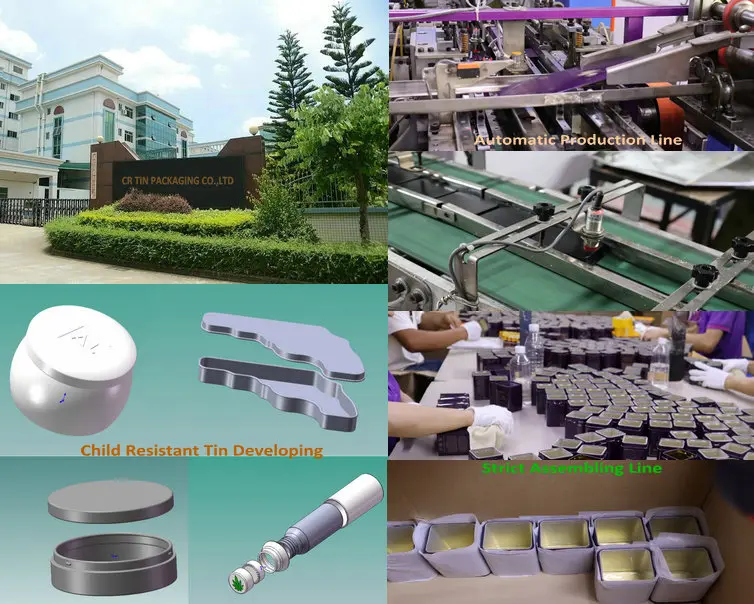
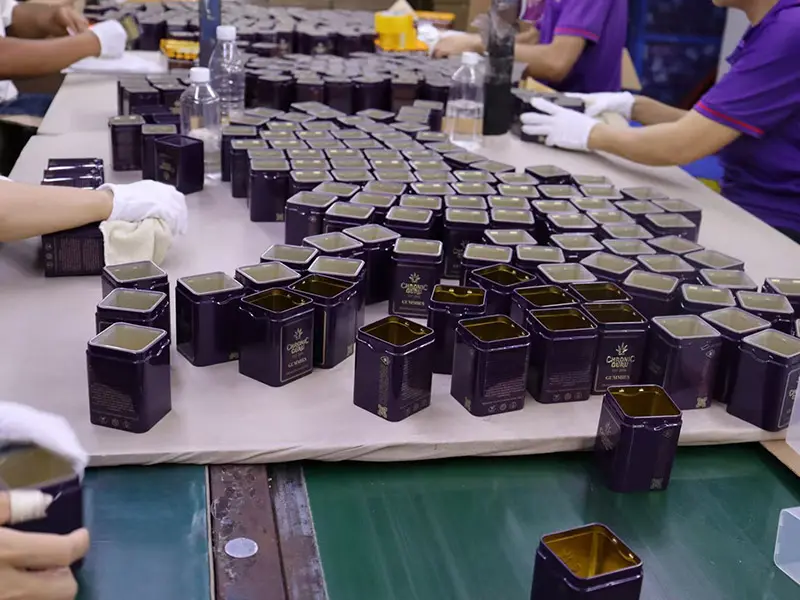
CR Tin Manufacturing Facility & Production Line
2016
R&D Conception
12+
Certified Structures
8+
Automation Lines
30
Days Design to Product
70+
Patented Molds

"Developed CR tin from 2016 to ensure the capability of your customizable CR tin packaging. More than 12 different certified CR tin structures to ensure your CR lock options are visible and could be applied to market directly. More than 8 automatic production lines to ensure the production capacity and quality. Within 30 days to finish your unique CR tin design, tin mold, CR certification, production process."

Key Industry Advantages & Structural Engineering

Providing technical excellence across design, manufacturing, and supply chain domains to protect international supply chains.

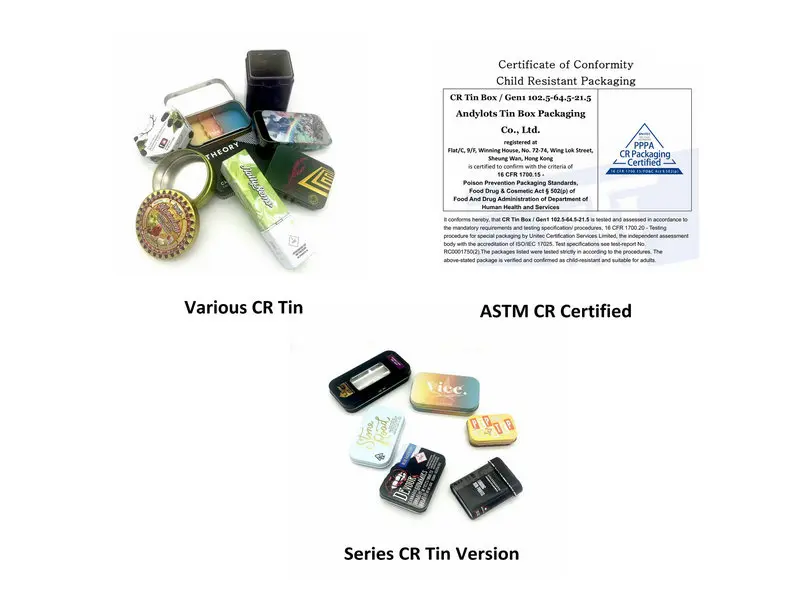
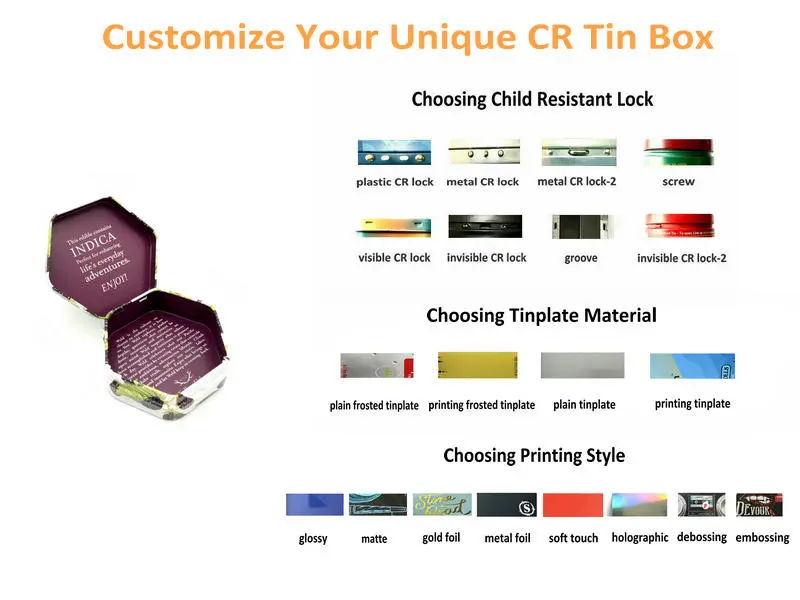
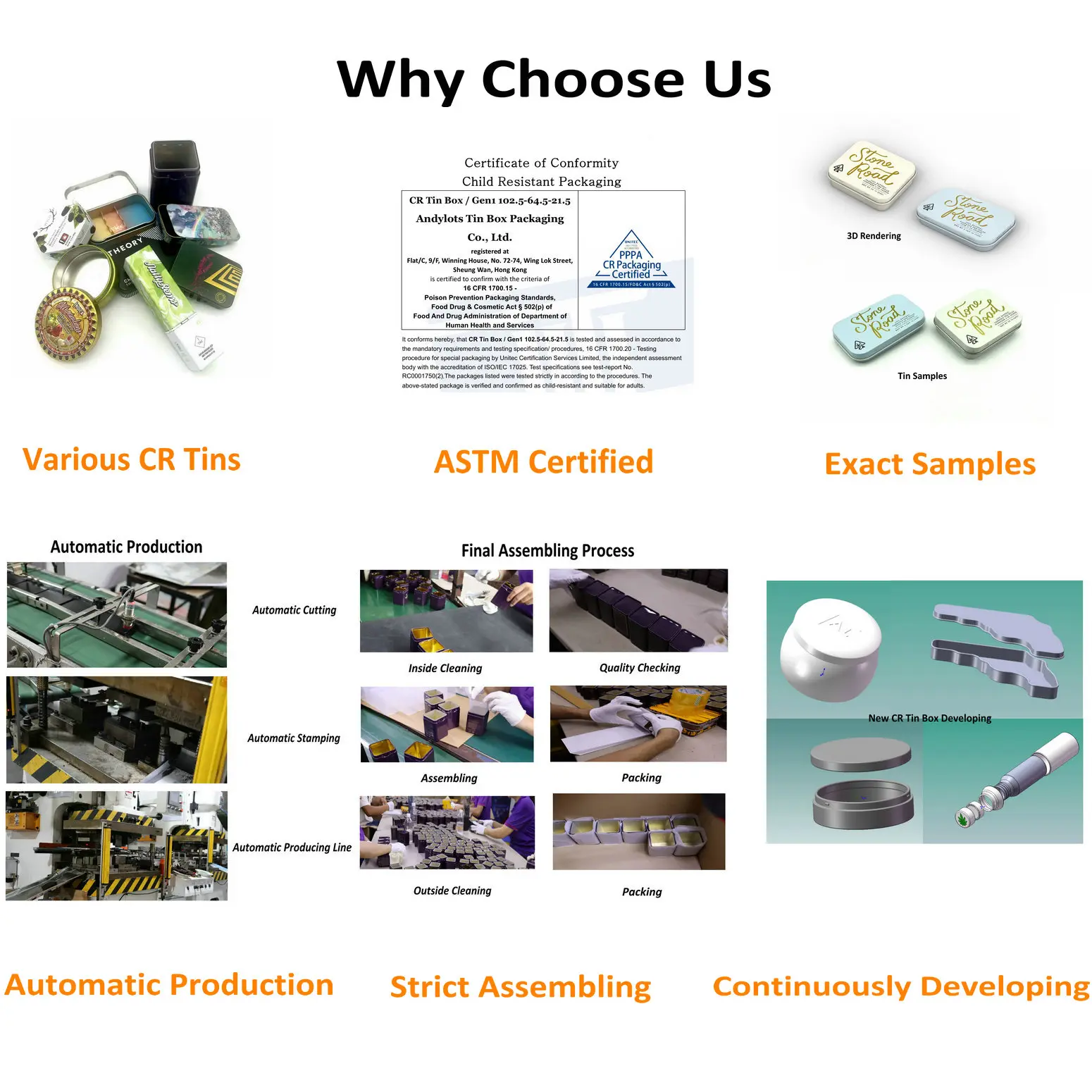
Various CR Tin Options

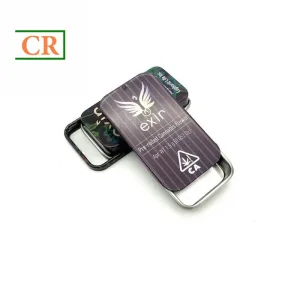
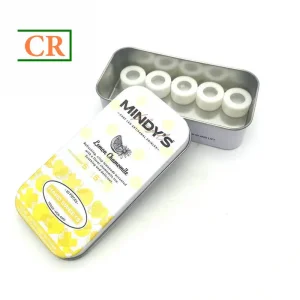
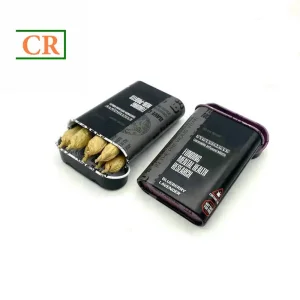
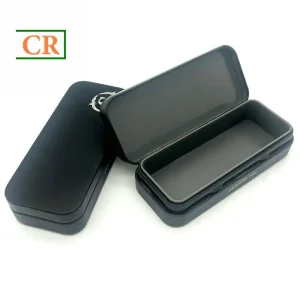
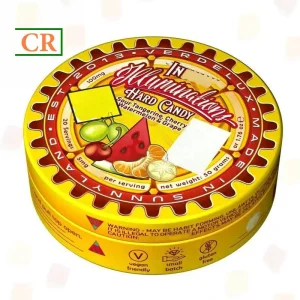
Offering more than 12 distinct mechanical CR tin structures. We specialize in tailoring custom layouts to specific product types, including pre-rolls, cartridges, ingestibles, and pharmaceutical concentrates.

Strong R&D Team

Complimentary custom CR packaging concept creation, professional structural engineering, and fast prototyping. Services include rendering, 3D structural mapping, and 3D printing of operational samples.

Rigorous Quality Control

Advanced automatic production lines run alongside professional QC personnel to ensure stable quality across high volumes. This helps minimize structural defects in locking mechanisms.
Advanced Child Resistant Development Engineering

Decades of Collective Structural Knowledge

With over 8 years of pioneering child resistant tin developing experience, we offer deep understanding of tinplate material characteristics, deformation limitations, and mechanical tolerances. This expertise enables us to support brands throughout the sourcing process. Whether you require airtight preservation features, plastic-free mono-material recyclability, or high-end custom lithographic printing, we can support your production needs.

Our structures balance safety and ease of use: they are designed to prevent children under 5 years old from opening the container, while remaining accessible to adults and seniors, meeting global compliance standards.

Whitepaper: Industrial Compliance & Global Trends in CR Metal Packaging

This technical analysis reviews child-resistant (CR) packaging, focusing on tinplate metal configurations. It is designed to assist packaging engineers, procurement managers, and compliance directors in evaluating sustainable, child-resistant metal packaging solutions.

1. The Regulatory Landscape: Global Compliance Frameworks

In many regions, safety packaging regulations for pharmaceuticals, cannabis derivatives, and household chemicals are strict. The primary reference standard for child resistance is 16 CFR Part 1700.20 under the U.S. Poison Prevention Packaging Act (PPPA). To be classified as child-resistant under this protocol, a packaging solution must pass formal panel testing:

  • Child Testing Panel: A group of children aged 51 to 100 months are given 10 minutes to attempt opening the packaging. The design must achieve a Child Resistant Effectiveness (CRE) of at least 85% without a demonstration, and at least 80% after a visual demonstration.
  • Senior/Adult Testing Panel: A panel of adults aged 50 to 70 years are given 5 minutes to open and, if applicable, properly reclose the packaging. A minimum of 90% of the adult panel must succeed.

In Europe, parallel standards such as EN 862 (for non-pharmaceutical products) and ISO 8317 (for reclosable packages) apply. Metal packaging from CR Tin complies with these protocols, offering a resilient option that combines safety with sustainability.

2. Macro Industrial Trends: The Shift to Circular Packaging

Global consumer product markets are transitioning away from single-use plastics due to environmental concerns and emerging extended producer responsibility (EPR) regulations. In this context, metal stands out due to its recyclability:
  • Permanent Material Lifecycle: Steel and tinplate are infinitely recyclable without loss of quality. Metal recycling processes are established worldwide, making metal containers a good choice for brands looking to minimize their environmental footprint.
  • Premium Brand Appeal: Metal containers offer a high-quality feel and can be printed with detailed lithographic finishes, helping brands stand out on store shelves.
  • Durability: Metal tins can be reused by consumers, extending the brand's visibility after the product inside has been consumed.
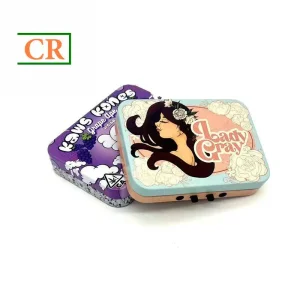
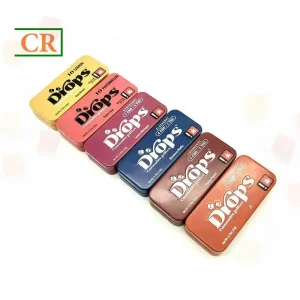
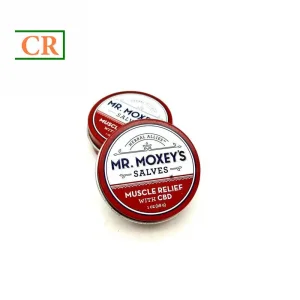
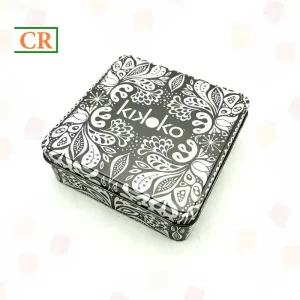
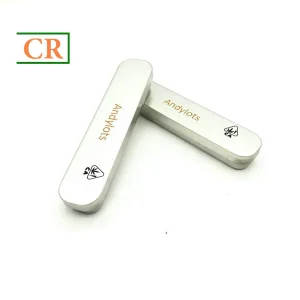
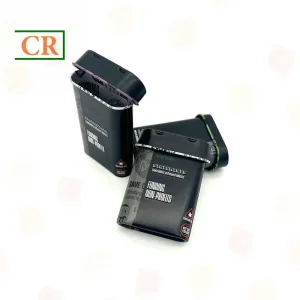
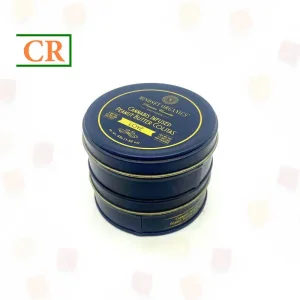
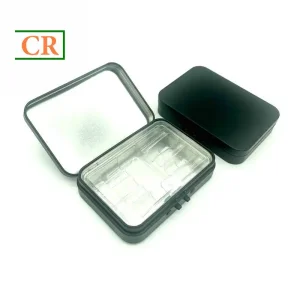
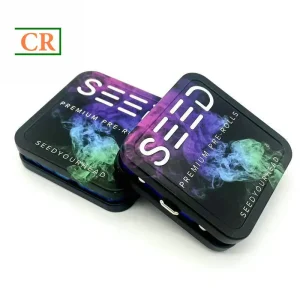
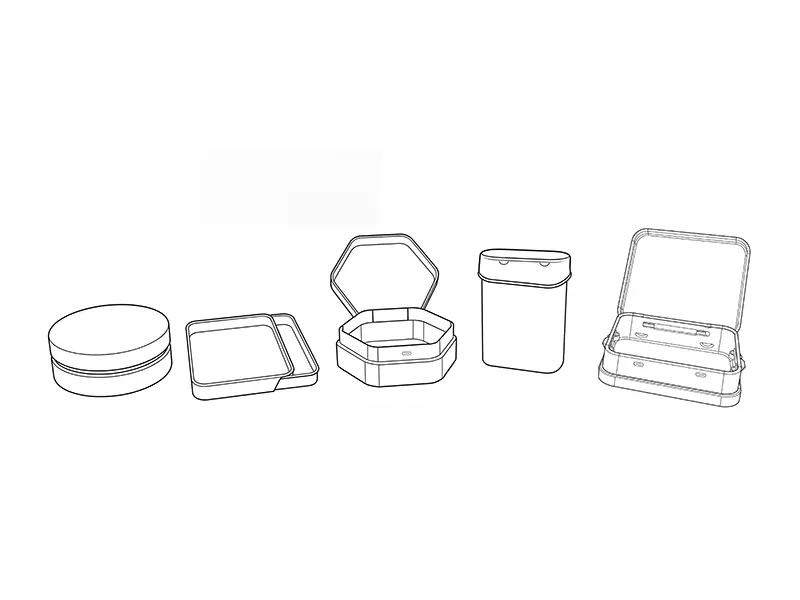
Diverse Child Resistant Tin Options
Custom Embossing and Brand Customization
Quality Assured Metal Stamp Manufacturing

3. Supply Chain Optimization: Controlling Factory Costs

B2B packaging procurement requires balancing unit costs against the risk of compliance failures or supply chain delays. CR Tin addresses these costs through several approaches:

  1. Simplified Safety Structures: By engineering mechanical locking mechanisms directly into the tinplate body, we reduce the need for multi-component plastic inserts. This simplifies assembly and lowers material costs.
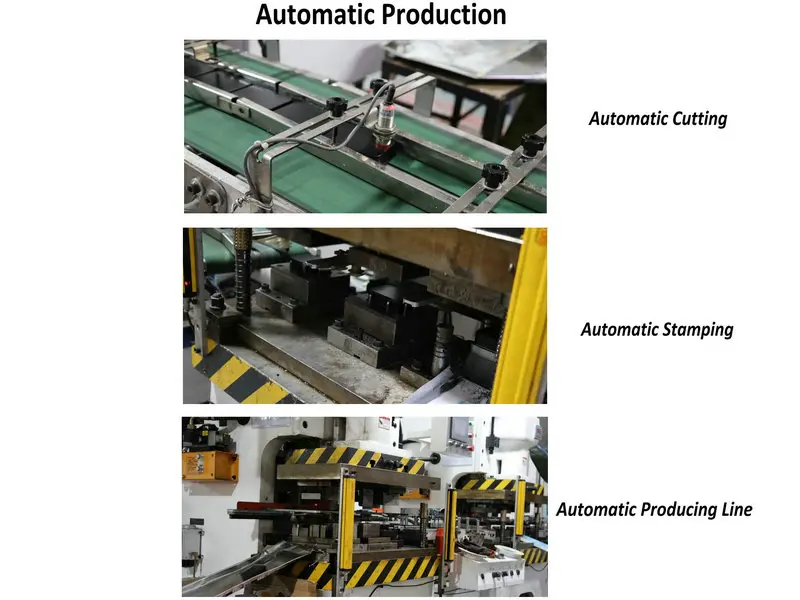
  2. Automated Production Lines: Automated stamping and assembly lines help maintain consistent quality across high volumes while lowering labor costs.
  3. Integrated Component Sourcing: Working with established, audited suppliers for specialized accessories (such as silicone seals, plastic latches, or custom inserts) helps prevent supply chain bottlenecks.
  4. Optimized Tooling and Materials: Continuous refinement of metal forming processes helps reduce raw material waste, lowering the overall unit cost.

4. Four-Stage Quality Assurance Protocol

To meet the standards of pharmaceutical and high-value consumer brands, CR Tin employs a comprehensive quality control system:

  • Incoming Material Inspection (IQC): Raw tinplate sheets are tested for thickness, tempering, and coating consistency before production begins.
  • In-Process Control (IPQC): Stamping and assembly processes are monitored continuously to verify that locking dimensions remain within designed tolerances.
  • Final Assembly Inspection (FQC): Completed tins are tested for lock function and, where applicable, seal integrity.
  • Independent Verification (OQC): Final batches are audited using AQL standards, and third-party inspection agencies are welcome to provide pre-shipment reports.

5. Custom R&D and Prototyping Timeline

Developing a custom, certified child-resistant container requires collaboration. CR Tin offers a structured 30-day workflow from concept to final sample approval:

  • Days 1-5: CAD Modeling & Concept Design: Our engineers create 2D and 3D technical layouts based on your specifications, adjusting for child-resistant performance and material limits.
  • Days 6-12: 3D Prototyping & Testing: We produce physical 3D-printed plastic prototypes for functional evaluation and initial testing before building metal tooling.
  • Days 13-22: Tooling & Mold Production: Precision molds are machined using CNC equipment to form the tinplate bodies and locking mechanisms.
  • Days 23-30: Pre-Production & Inspection: Initial metal samples are run, finished with custom artwork, and tested for fit, lock performance, and certification readiness.

Industrial Packaging Specifications

Technical capabilities across custom metal tin production lines.

Child Resistant Tin Box Certification

Certified Packaging Systems

  • Over 8 years of specialized child-resistant development.
  • Most designs comply with ASTM safety certifications.
  • A systematic approach to locking configurations.
  • Cost-effective solutions for diverse markets.
Automated Production Floor

Production Efficiency

  • Simplified locking mechanisms reduce assembly costs.
  • Automated tooling lines help stabilize production quality.
  • Component sourcing from audited suppliers.
  • Continuous improvements in metal forming processes.
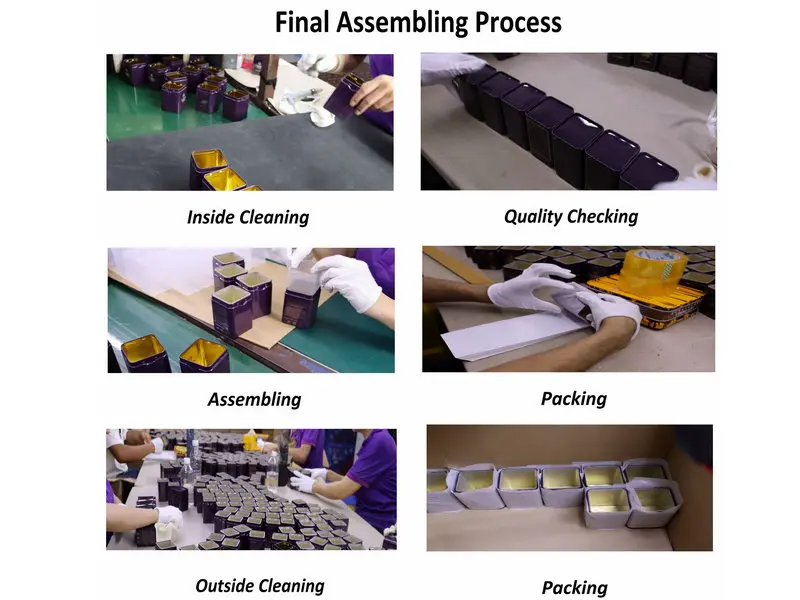
Quality Inspection Stations

Quality Control System

  • Detailed inspection of accessories and raw materials.
  • Automated visual checking on key assembly stages.
  • Post-assembly checks to verify lock tension.
  • AQL reports and coordination with third-party testing labs.
Custom 3D Prototyping Services

Custom Design Services

  • Multiple established lock configurations available.
  • Custom shape and size development options.
  • 3D concept design and rapid plastic modeling.
  • High-resolution digital proofing for artwork setup.

Industrial Q&A / Technical FAQ

Answers to common B2B questions regarding child-resistant metal packaging, materials, and production.

Q1: What certifications do CR Tin containers carry for North American and European markets?
Our child-resistant tins are designed to meet the requirements of U.S. 16 CFR 1700.20 and European ISO 8317 standards. We utilize independent laboratories to test our packaging structures, and we can provide safety reports to support your compliance submissions.
Q2: Can the child-resistant tins be customized to be airtight?
Yes. We design and manufacture airtight child-resistant tins using food-safe silicone gaskets or specialized plastic rim liners. These components create a secure seal to preserve product freshness and control odors, which is particularly useful for cannabis flower, concentrates, and edibles.
Q3: What are the standard lead times for custom tooling and mass production?
Standard tooling and sample validation typically take 20 to 30 days. Once the pre-production sample is approved, mass production usually requires 25 to 35 days, depending on order volume and the complexity of the custom graphics.
Q4: Are the coatings and inks used on the tins food-contact safe?
All internal food-grade lacquers and external printing inks comply with FDA and EU food safety standards. We offer BPA-free internal coatings to prevent direct contact between product ingredients and the raw tinplate steel.
Q5: How does CR Tin manage shipping and protect tins from damage during transit?
To prevent denting and scratches, tins are packed in custom-sized polybags and arranged in heavy-duty, corrugated outer shipping cartons with partition inserts. We also offer palletized shipping options for high-volume orders.
Q6: What is the typical Minimum Order Quantity (MOQ) for custom-printed designs?
For custom lithographic printing and unique finishes, our standard MOQ is 10,000 units. For generic or unprinted sizes where tooling is already in place, we can accommodate smaller test runs. Please contact our sales engineering department to discuss your requirements.