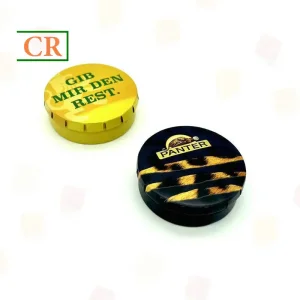
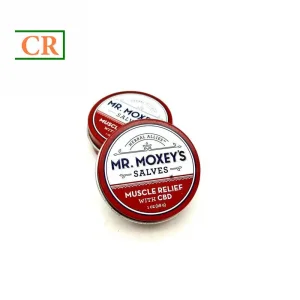
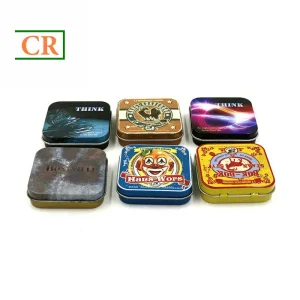
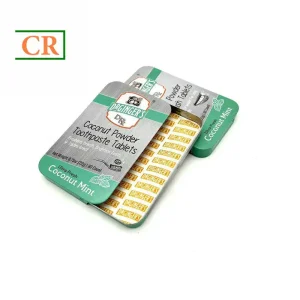
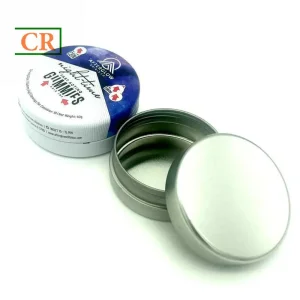
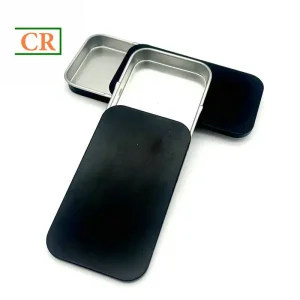
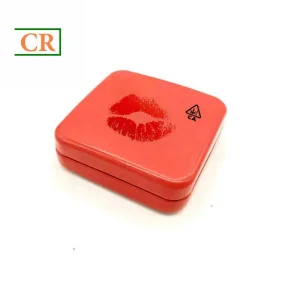
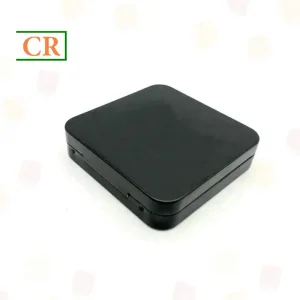
Optimized metal canister architectures featuring high-precision tolerances and compliance-driven child-resistant systems engineered for Nagoya's discerning manufacturers.
Integrating advanced metallurgical craftsmanship with the logistics hubs of Aichi Prefecture.
Nagoya, the capital of Aichi Prefecture, stands as the heartbeat of Japan’s automotive and heavy machinery engineering. Under the philosophy of Monozukuri (the art of manufacturing), companies operating within Nagoya possess an uncompromising expectation for precision engineering, quality management, and waste reduction. This cultural baseline influences Nagoya's FMCG, pharmaceutical, and high-end confectionery sectors, requiring packaging that matches industrial-grade excellence.
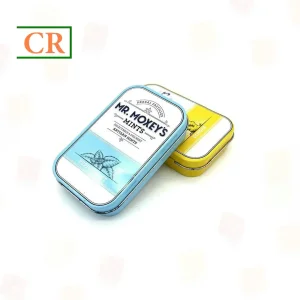
Local confectioneries and mint manufacturers in the Chubu region demand metal tin packaging that is not only visually striking but also meets strict physical dimensions. As consumer demographics skew towards health-conscious formulations and premium, customized packaging (Omiyage gifts), local brands seek flexible partners who can customize small to medium runs while scaling to automatic high-volume output. Furthermore, strict environmental guidelines under the Japanese Container and Packaging Recycling Law dictate the use of infinitely recyclable materials, reinforcing tinplate as the optimal medium over single-use plastics.
Your streamlined, single-source developer of high-precision metal containers and child-resistant locking mechanisms.
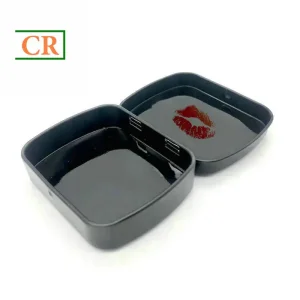
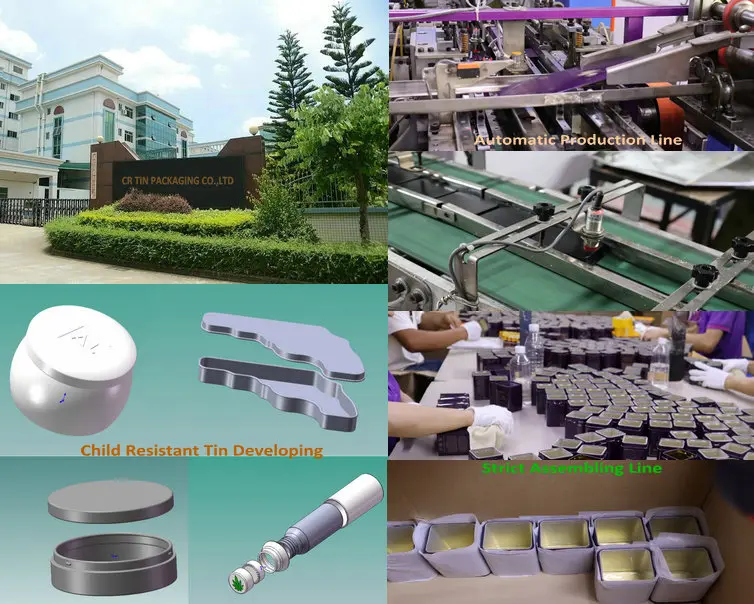
CR Tin (operating under Andylots Tin Box Packaging Co., Ltd.) represents the vanguard of child-resistant (CR) packaging engineering. Established as a single-source developer, the enterprise integrates structural design, state-of-the-art mold fabrication, rigorous compliance testing, and high-volume mass production under one unified workflow. Since initiating specialized CR development in 2017, the enterprise has accumulated over nine years of pioneering industry experience, resulting in more than 70 certified child-resistant lock configurations.
Our comprehensive framework covers every phase of production. Decades of collective industry experience fuel our team’s deep metal forming knowledge, fresh design ideas, and consistent quality in our premium tin boxes. Whether you are launching a new consumer brand or represent a seasoned manufacturer, we support and guide you to choose the ideal structural configuration. From airtight lids to high-end, custom structures, we have your needs covered.
A proven performance record backed by technological scale and streamlined turnaround times.
How we address global compliance, quality consistency, and engineering costs.
More than 12 different patented structures verified under ASTM D3475 protocols. We tailor mechanisms to fit product forms, maintaining accessibility for seniors while blocking entry by children.
Equipped to translate client concepts into full 3D rendering profiles and functional 3D-printed plastic mockups, facilitating design validation before mold cutting begins.
Multi-stage automated inspection systems, featuring optical scanners to detect physical blemishes, aligned with manual quality checkpoints on final assembly lines.
Combining state-of-the-art smart systems and deep raw material integration to ensure reliability.
A deep dive into tinplate tempering, printing science, and barrier mechanics.
We source high-grade Electrolytic Tinplate (ETP) featuring a cold-rolled low-carbon steel base coated with a protective layer of pure tin. Depending on structural requirements, we select specific tempers—varying from T2.5 for ductile deep-drawing lids to TH570 for child-resistant sliders requiring spring tension. By controlling grain structure orientation, we prevent fracturing or creasing along sharp radii, ensuring smooth radii on all tin profiles.
To preserve graphics on metallic surfaces, we utilize high-precision multi-color offset metal printers. Designs are baked at specific temperature ranges to cure UV-resins, preventing chipping during post-forming processes. Furthermore, we apply food-grade gold lacquer or clear organosol coatings to protect the internal surfaces. These coatings are free from BPA and Bisphenol-S, complying with the standards of the Japanese Ministry of Health, Labour and Welfare.
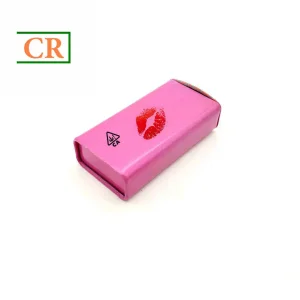
Our child-resistant geometries rely on physical barriers that require two distinct, synchronized actions (e.g., press-and-slide, squeeze-and-lift). Standardizing these mechanisms requires maintaining narrow dimensional tolerances (within ±0.15mm) on structural contact points. Variations outside this range can make locks hard to open for adults or allow access for children. We resolve these issues using automated post-forming calibration equipment that gauges lock tension on every production batch.
Mints, lozenges, and confectionery formulations are sensitive to moisture and relative humidity. To extend shelf life, we integrate silicone or plastisol liners into deep-drawn tins. These liners form a seal when compressed, protecting ingredients against oxidation, degradation, and loss of flavor.
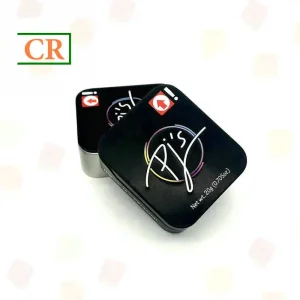
A comprehensive overview of our diverse structural configurations, fully customizable with custom finishes, embossings, and dimensions.
A reliable logistics pipeline connecting Chinese automated manufacturing to the Port of Nagoya.
We manage all processes in-house, covering mold design, steel stamping, printing, assembly, and quality assurance. Our engineering teams utilize 3D-printing systems to produce functional plastic prototypes within days, allowing clients to test locking mechanisms before starting tooling creation.
Once approved, molds are fabricated using CNC milling centers to maintain dimensional tolerances. This systematic approach reduces typical development timelines, allowing us to produce finished, certified products within a 30-day window.
Located near shipping lanes, we maintain regular cargo schedules to the Port of Nagoya, helping to minimize shipping transit times to Japan. We coordinate import documents to meet Japanese customs and trade guidelines. Our staff manage packaging requirements, palletizing shipments with dry desiccants and secure wraps to prevent humidity or shifting during sea freight.
Expert answers addressing compliance, material specifications, MOQ structures, and regional delivery pipelines.
Partner with a specialized child-resistant tin manufacturer to deliver premium metal packaging that meets your brand requirements.
 CR Tin