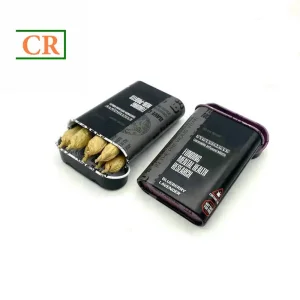
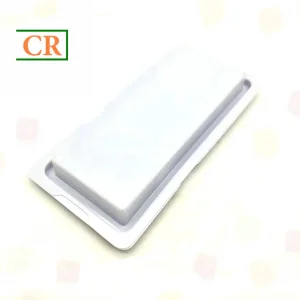
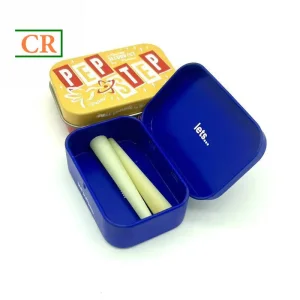
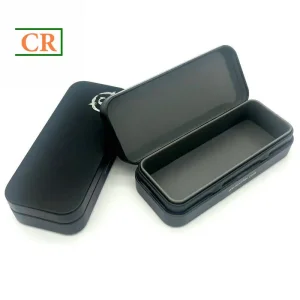
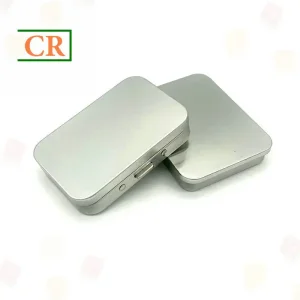
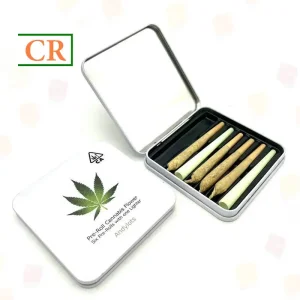
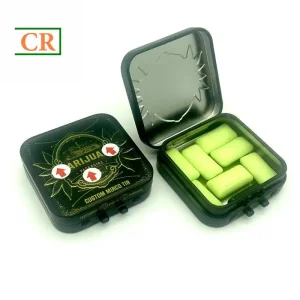
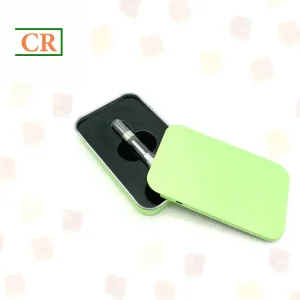
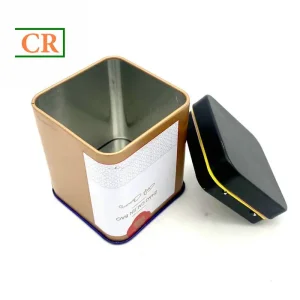
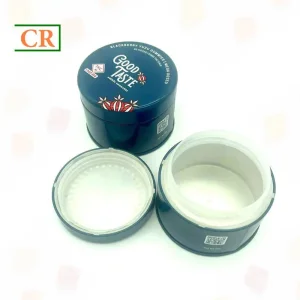
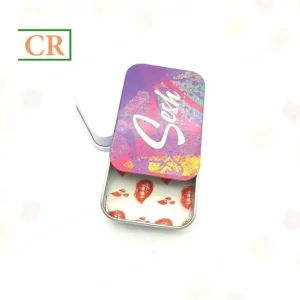
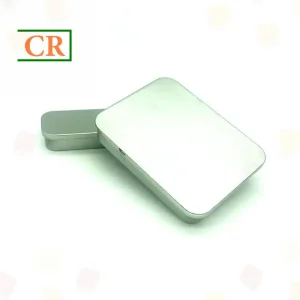
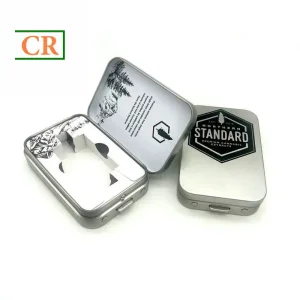
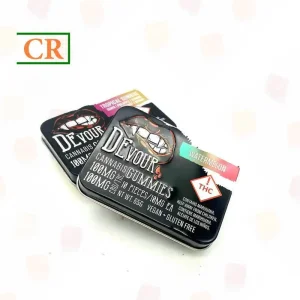
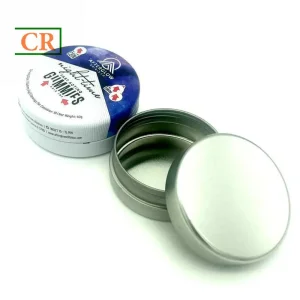
ASTM certified, high-barrier metal packaging manufactured with premium food-safe tinplate. Perfect for premium mints, functional botanicals, and pharmaceutical formulations.
Overcoming compliance hurdles and supply chain fragmentation through robust packaging engineering.
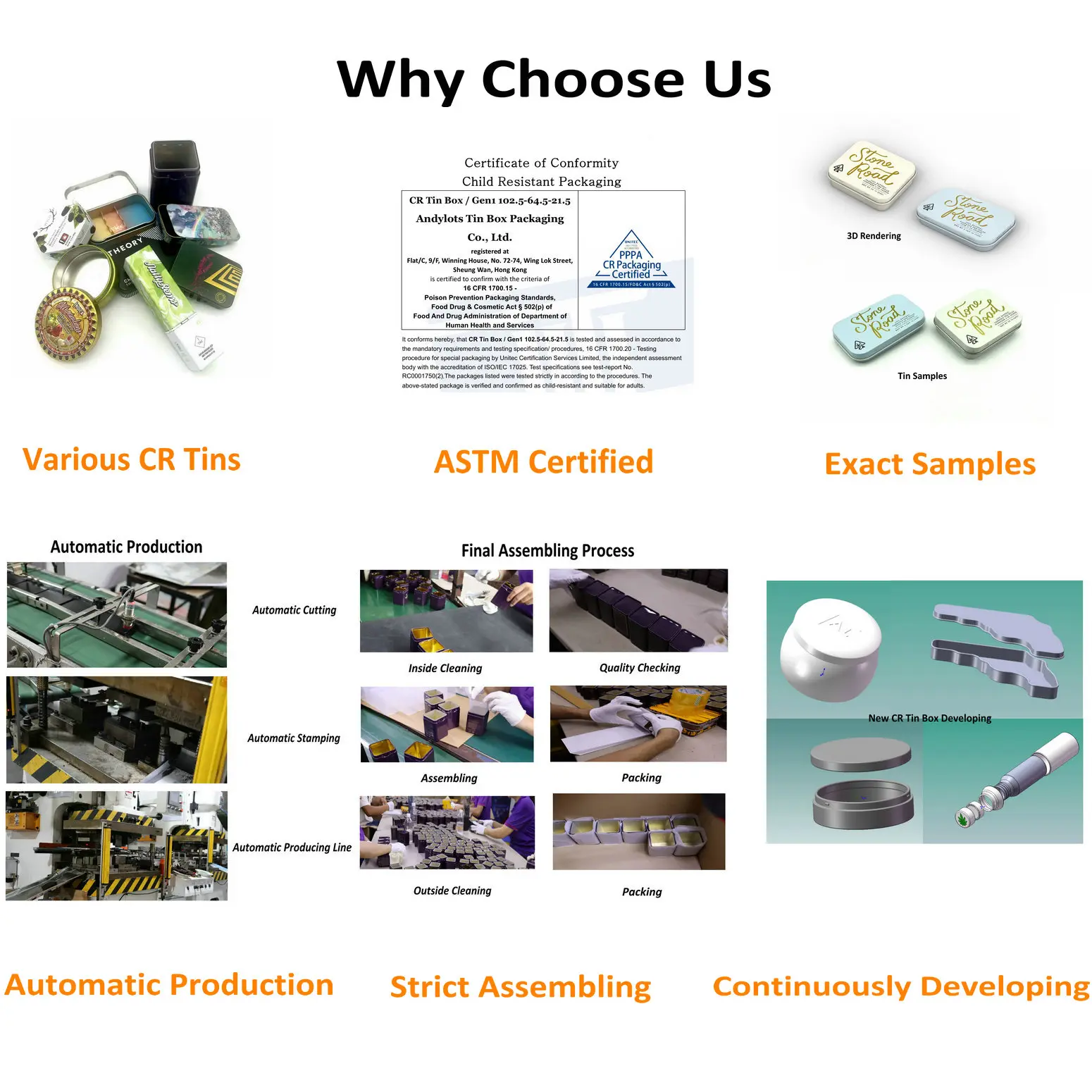
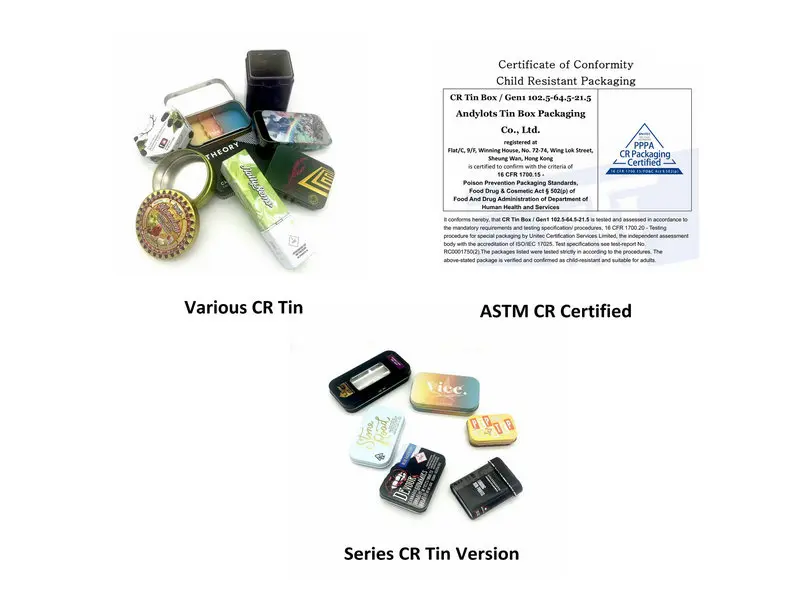
Our tins are designed and tested to comply with ASTM D3475 and US CPSC child-resistant standards. Rest easy knowing your functional mint packaging is legally compliant in North American and European jurisdictions.
From custom embossed configurations to specialized sliding structures, our in-house engineering team works with 3D CAD/CAM designs to construct flawless custom molds within tight timelines.
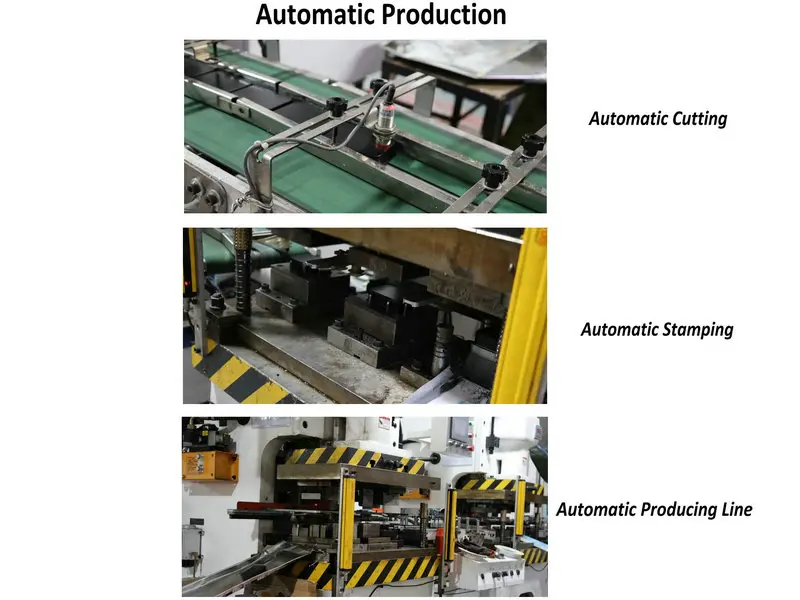
By using optimized internal latch mechanisms and highly automated production lines, we minimize raw material waste and structural complexity to pass on significant unit-cost savings to our partners.
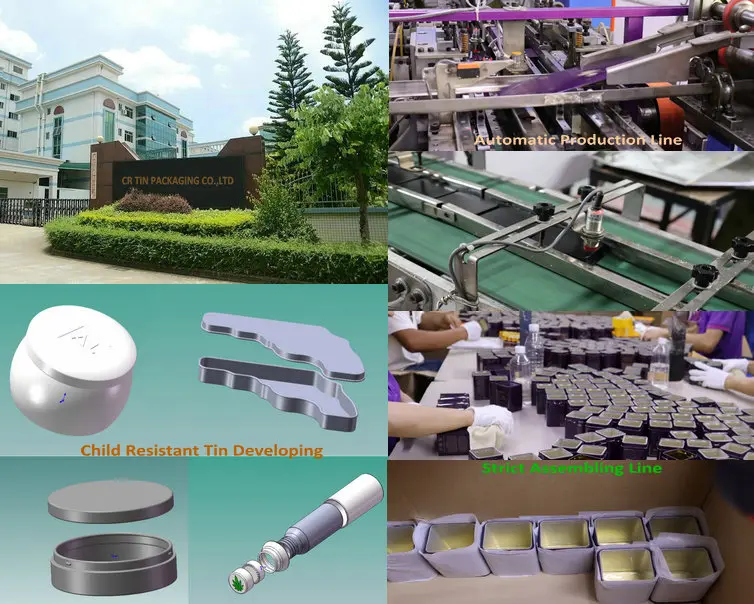
CR Tin (Andylots Tin Box Packaging Co.,Ltd) is a streamlined, single-source professional supplier of child resistant tin boxes, integrating child resistant lock design, mold making and sampling, child resistant lock testing, and mass production. CR Tin began developing child resistant lock tin boxes in 2017. After nine years of research and development and pioneering experience, we have over 70 certified child resistant lock tin boxes, covering all tin box packaging styles in the industry, and have established our own unique child resistant lock tin box system.
Our core mission is to bridge the gap between aesthetic product design and strict legal safety requirements. Brands operating in competitive environments need custom packaging that communicates trust, protects product integrity, and facilitates frictionless user access while preventing accidental ingestion by children.
An analysis of child-resistant dynamics, food-grade metal safety, and supply chain logistics in the premium mint and functional confectionary markets.
The global confectionery packaging industry is undergoing a structural transition. Consumer demand for sustainable packaging, coupled with strict regulatory guidelines, is shifting brands away from single-use plastics toward endlessly recyclable metal options. Among these, the custom mints tin can stands out as a preferred format. Custom mint tins are durable, offer superior product protection, and carry a tactile premium weight that enhances brand perception.
In particular, high-growth segments such as functional mints (infused with caffeine, CBD, THC, adaptogens, or vitamins) rely on tin packaging to assure consumers of safety and product longevity. Tins preserve volatile compounds and botanical ingredients from moisture and UV degradation, extending shelf life while complying with regional food safety regulations.
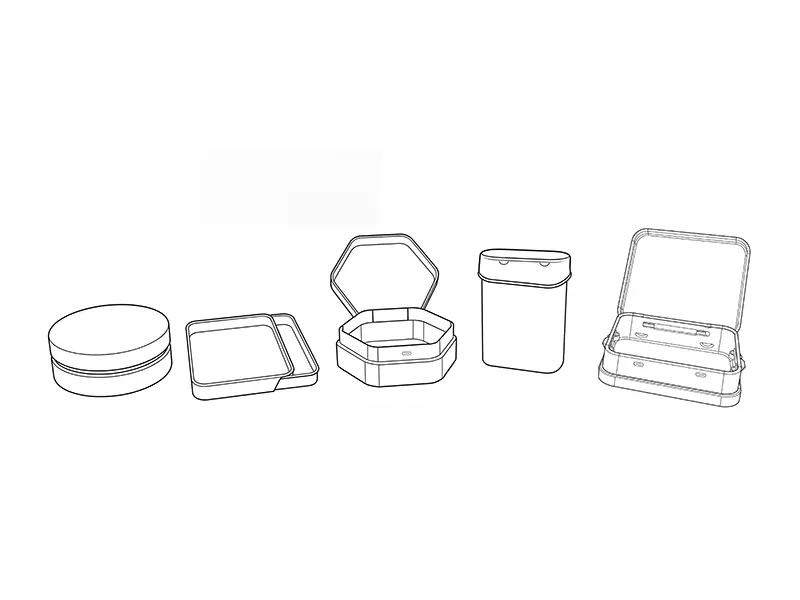
Traditional packaging fails to establish a distinct sensory profile on crowded shelves. Custom metal tins solve this by engaging multiple human senses. The mechanical "click" of a locking lid, the metallic texture, and custom embossing details deliver immediate tactile reassurance. This sensory profile supports high-margin positioning, driving repeat purchases and enhancing brand loyalty.
For brands shipping products containing high-potency ingredients, safety compliance is not optional. Child-resistant (CR) packaging prevents accidental ingestion by children under five while maintaining accessibility for adults and seniors. The standard testing protocol is defined by the CPSC (U.S. Consumer Product Safety Commission) under 16 CFR 1700.20 and ASTM D3475.
These certifications verify that at least 85% of children in a test group cannot open the packaging within 5 minutes, while at least 90% of adults can open and properly re-secure the packaging within 5 minutes.
"Developing a functional CR tin requires balancing structural elasticity and precision engineering. A small deviation in millimeter tolerances can cause the lock to fail safety standards or lock out the adult consumer."
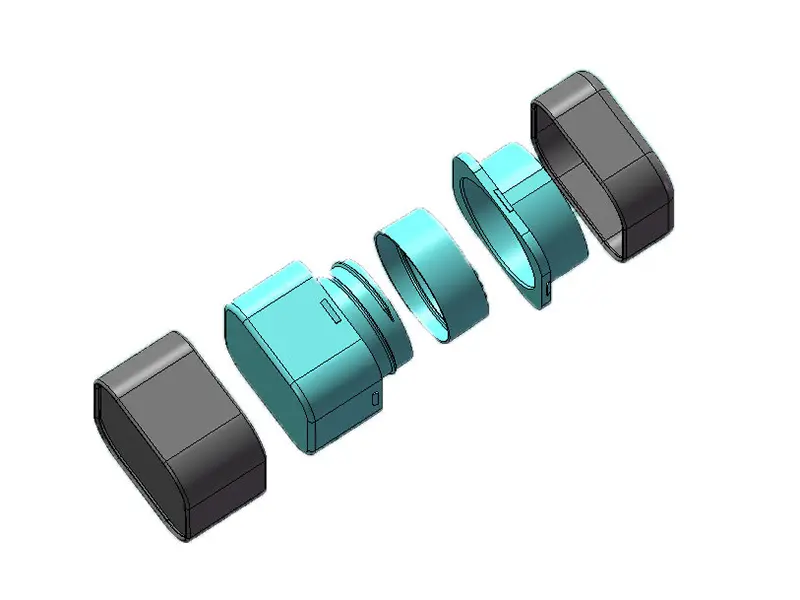
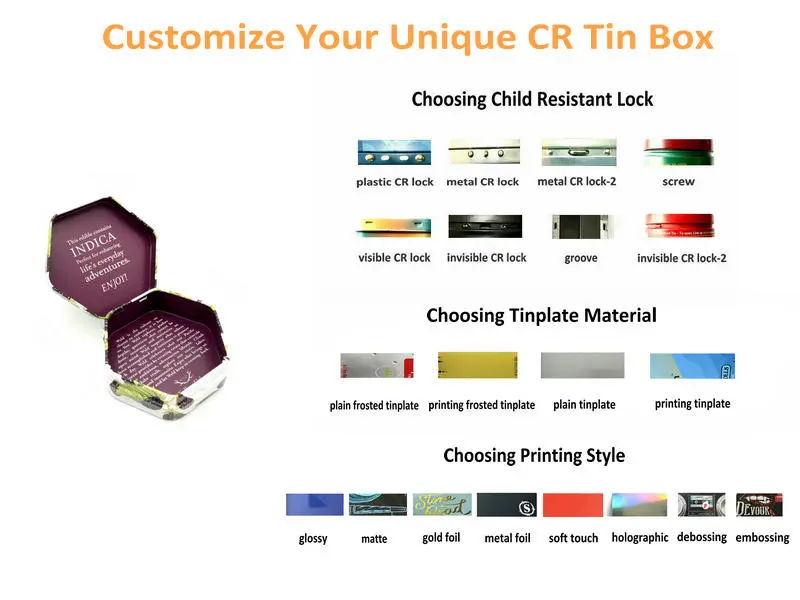
Our engineering team relies on multiple proprietary, certified locking mechanisms, including:
Translating a creative design into a certified, mass-producible tin requires rigorous prototyping and testing. We provide support at every step of this journey to ensure cost-efficiency and performance.
Phase 1: Conceptual Design and 3D Rendering. Our engineering department generates realistic 3D CAD mockups and renderings. This step allows product managers to verify dimensions and visual ratios before committing to physical tooling.
Phase 2: 3D Plastic Prototyping. Utilizing SLA (Stereolithography) and FDM 3D printing technologies, we create functional plastic models of the lock system within 48 hours. This allows early physical validation of the mechanism.
Phase 3: Trial Tooling & Certifications. A sample mold is manufactured to press a limited batch of tin prototypes. These are sent for certified laboratory testing (ASTM/CPSC) and used to finalize production tolerances.
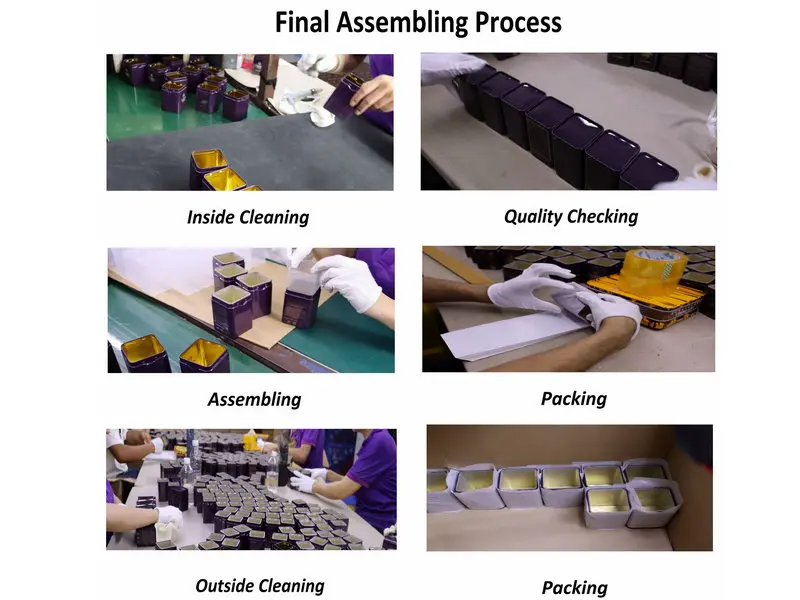
To balance safety requirements with cost concerns, we utilize a combination of automatic production lines, strict raw material sourcing, and end-to-end quality control.
We reduce unit costs by optimizing metal structures, implementing automated production lines, and sourcing accessories directly from reliable suppliers.
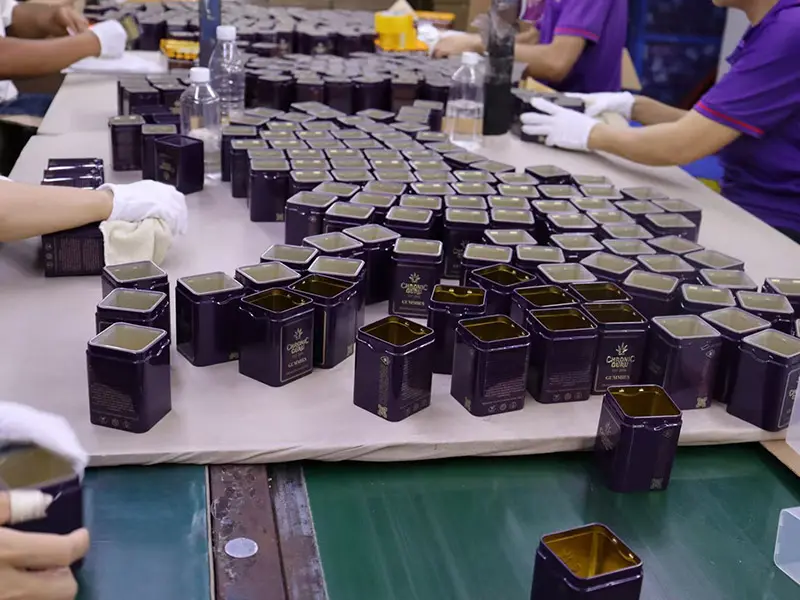
Our quality control process includes checking incoming materials, utilizing automatic production lines to maintain quality standards, and employing dedicated assembly line checkers.
We offer a range of existing child-resistant designs, custom shape options, 3D structure drawing, and rapid prototyping services.
Packaging for edible mints, lozenges, and chewables must meet strict food-contact safety standards. Unprotected steel can oxidize or interact chemically with active ingredients, potentially compromising product taste and consumer safety.
To address this, we apply internal coatings and varnishes designed to prevent metal-to-product migration.
Different regions present unique market demands and legal requirements for custom mint tins.
The custom mints tin is evolving beyond a simple storage container. The future of metal packaging integrates technology and sustainability in new ways.
High-precision machinery ensures consistent safety-lock alignment and structural integrity across every batch.
Answers to common industry questions regarding regulatory compliance, manufacturing timelines, and customization options.
Custom shapes, premium finishes, and compliance-driven packaging tailored to meet your marketing and logistics requirements.
 CR Tin