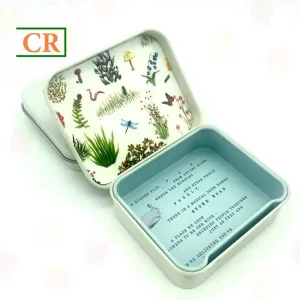
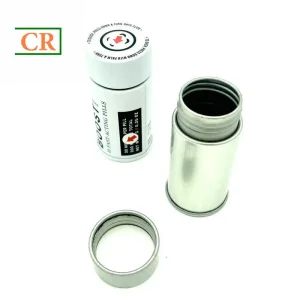
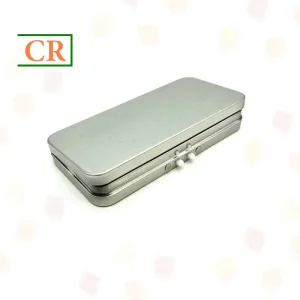
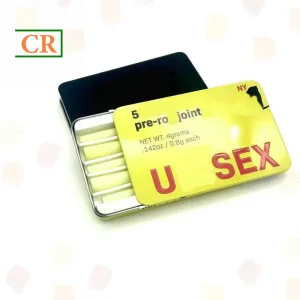
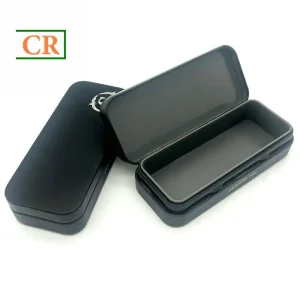
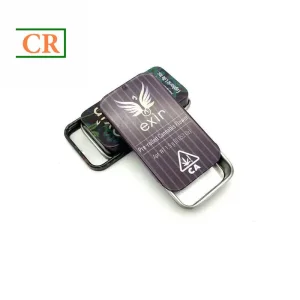
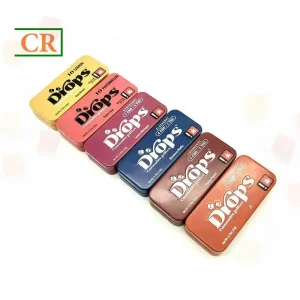
CR Tin (Andylots Tin Box Packaging Co., Ltd) is a streamlined, single-source professional supplier of child-resistant tin boxes. We integrate industrial locking design, precision mold making, comprehensive prototyping, certified child safety locking verification, and mass manufacturing inside our state-of-the-art facilities.
We began developing specialized locking and rectangular tins in 2017. Benefiting from over nine years of research, pioneering development, and validation experience, we have achieved and maintained ASTM certification across over 70 unique formats. Our capabilities cover all standard metal styling methods in the current market, positioning CR Tin as a primary architect in high-end compliant metallic packaging solutions.
Manufacturing high-performance custom rectangle tin cases demands a rigorous understanding of metallurgy and mechanical deformation limits. Unlike circular structures where tensile stress is distributed uniformly along the circumference, rectangular tins present significant structural challenges at the corner radiuses and seams. Without precise engineering, the corners of a deep-drawn rectangular case will experience thinning, tearing, or wrinkling.
To eliminate these structural failure points, CR Tin utilizes premium Electrolytic Tinplate (ETP). Tinplate is thin sheet steel coated on both sides with a layer of pure tin via electrodeposition. This composite material marries the raw structural strength and formability of cold-rolled steel with the non-toxic, corrosion-resistant, and aesthetically brilliant properties of tin. Our standard manufacturing specifications dictate the use of temper grades ranging from TH610 to TS275, ensuring the optimal ratio of ductility for deep drawing and yield strength to prevent deformation during logistics.
Depending on the mechanical demands of the box size, we source ETP thickness values from 0.21mm to 0.28mm. This ensures structural rigidity while maintaining lightweight characteristics for international logistics.
We leverage FDA-compliant food-grade internal lacquers (organosol and epoxy-phenolic resins) and external UV varnishes to guarantee absolute safety and print longevity under varying environments.
Tooling tolerances are maintained within a ±0.05mm margin. This micro-precision ensures lid-to-body alignment remains uniform, preventing lid slippage and structural wear over hundreds of operational cycles.
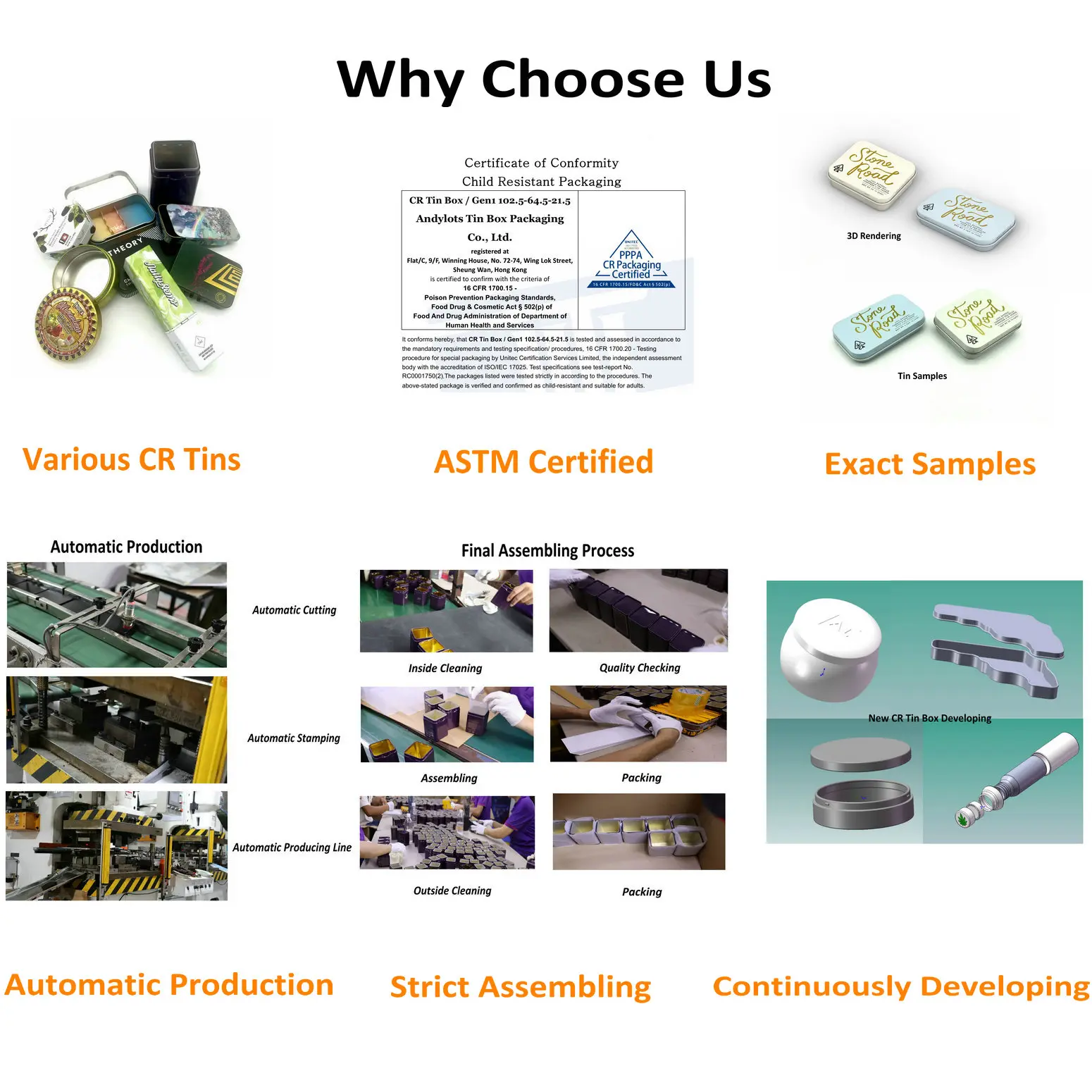
In highly regulated markets like North America and Europe, packaging for medicinal, nutraceutical, and high-potency lifestyle products (such as pre-rolls and mints) must adhere to rigorous child safety standards. The core test of compliance is the CPSC 16 CFR Part 1700.20 protocol, which evaluates packaging against a cohort of children (under 5 years) and a cohort of senior adults (aged 50-70).
CR Tin has pioneered the engineering of rectangular sheet metal to support physical lock integrations that bypass the need for single-use plastics. Our child-resistant (CR) configurations rely on two distinct cognitive or mechanical physical motions required simultaneously to open the case. These include:
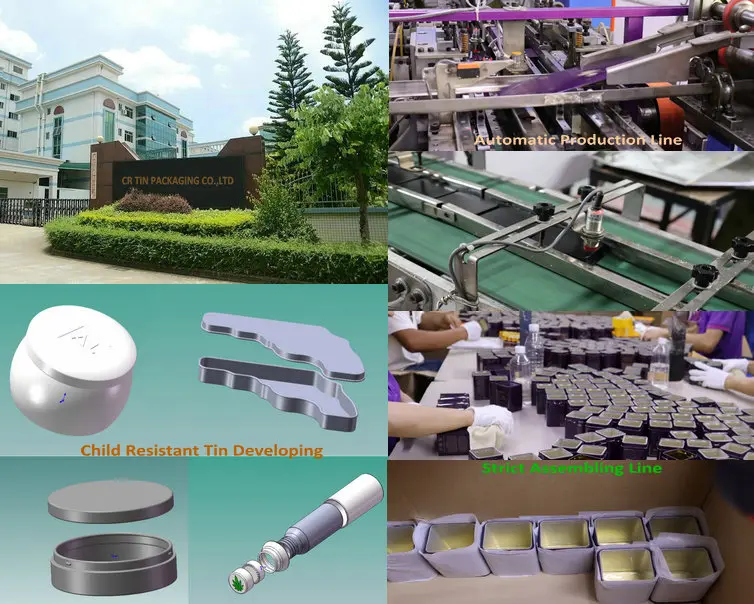
Modern supply chain vulnerabilities demand that a manufacturer do more than simple stamping. At CR Tin's manufacturing center in China, we have transitioned our classical press floors into an Industry 4.0 Smart Manufacturing Facility. By pairing automated robotic transfers with multi-stage progressive stamping dies, we ensure consistency across million-unit production runs.
Our automated pressing lanes utilize progressive coil-fed dies. Raw tinplate coils are uncoiled, straightened, stamped, drawn, hemmed, and ejected without manual intervention, removing human error and maintaining absolute unit uniformity.
Each production line is fitted with high-speed optical vision systems. These sensors check every rectangular tin for dimensional tolerances, surface scratching, print registration errors, and lock functionality in real-time.
With an in-house tooling facility, we can modify molds to adjust height parameters within 10 days, allowing buyers to customize capacities without having to pay for a completely new mold from scratch.
Our factory features 8 automated production lines operating inside ISO 9001:2015 certified facilities. Through real-time Enterprise Resource Planning (ERP) tracking, we optimize steel coil procurement, mitigating the price volatility of industrial metals and guaranteeing stable pricing models for our global supply partners.
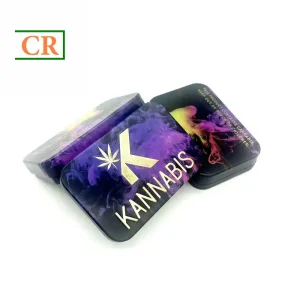
A premium brand's packaging is its primary tactile touchpoint. Through meticulous structural and surface adjustments, we adapt the baseline rectangular tin format to serve several distinct commercial verticals:
Our specialized airtight structures protect organic materials from light, oxygen, and moisture degradation. Using internal food-safe silicone or TPE gaskets, we guarantee a hermetic seal that locks in terpenes while complying with child-resistant legal codes across US and Canadian markets.
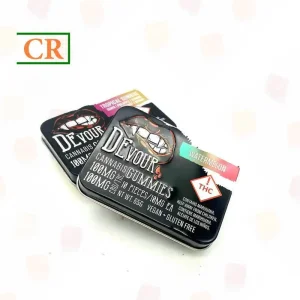
For tablets, capsules, and therapeutic patches, our child-proof sliding tins provide a durable alternative to plastics. They prevent accidental consumption by children while remaining accessible to arthritis patients who struggle with blister packs.
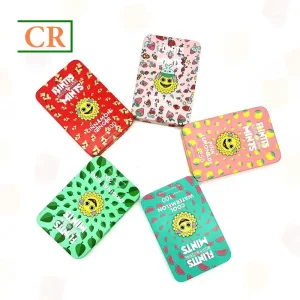
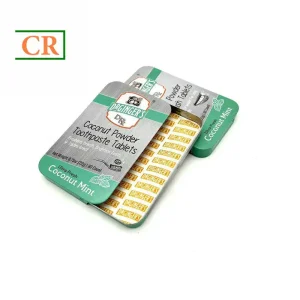
Pocket-sized slide tins have long been a favorite for premium mint brands. We produce mini slide configurations featuring secure click-closures, providing consumer feedback upon closure and preventing spills in pockets or bags.
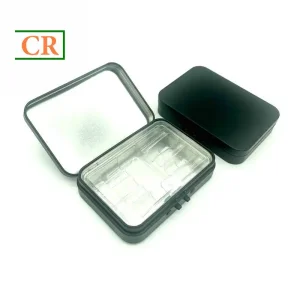
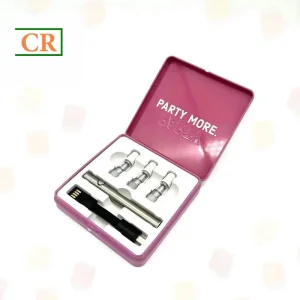
For premium cosmetics, salves, and luxury items, we offer specialized decorative finishes. Techniques include multi-level embossing, metallic inks, matte spot varnishes, and customized interior dividers made from post-consumer recycled paperboard.
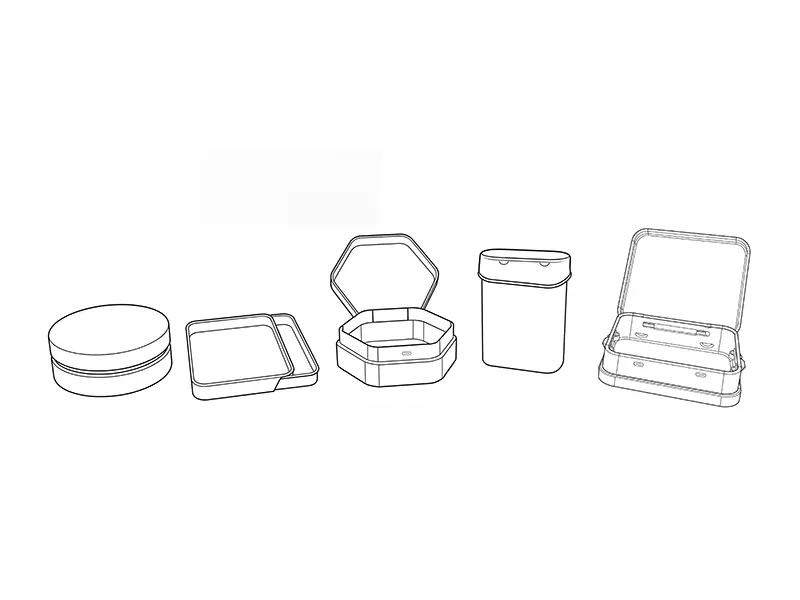
Choose from over 12 certified CR tin structures. Brands can deploy directly to market using our pre-certified ASTM templates, saving thousands of dollars in regulatory testing fees.
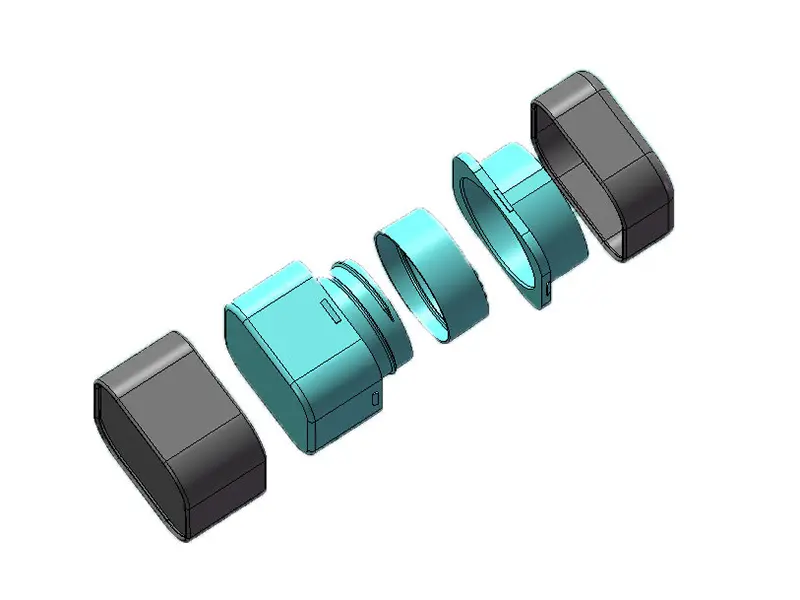
Our engineering division delivers free custom tin designs, quick-turnaround 3D renderings, and precise 3D-printed plastic prototypes to evaluate physical dimensions before cutting steel molds.
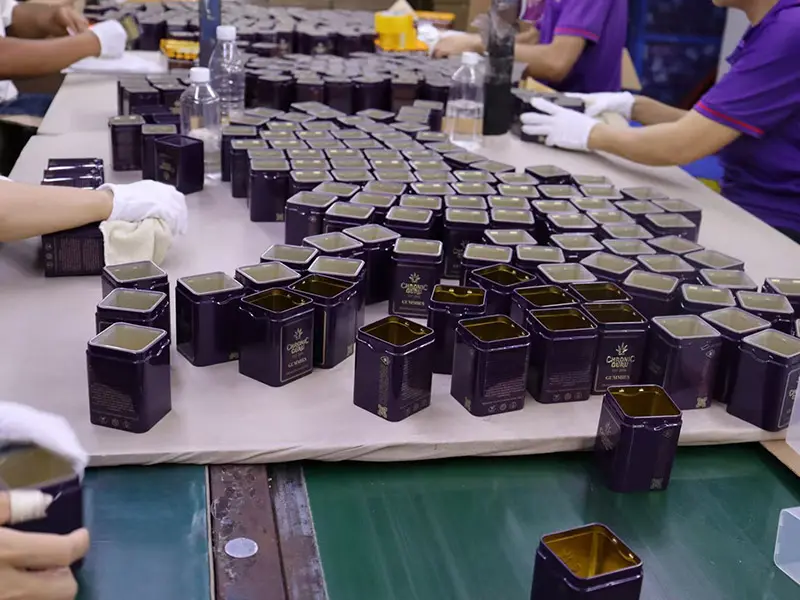
We utilize automated checking devices alongside manual inspect-on-assembly procedures. Third-party testing houses verify all compliance outputs before shipping batches.
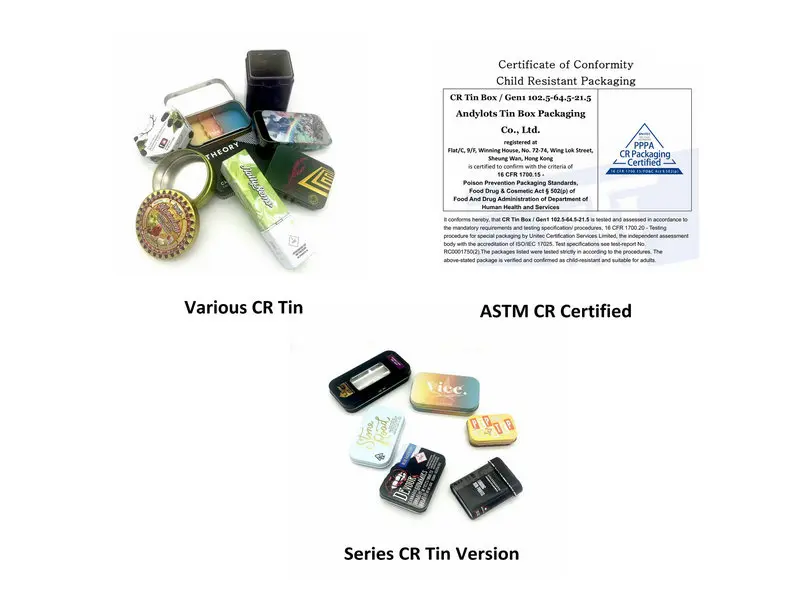
Eight years of development has built a certified system, with most structures passing ASTM child safety criteria.
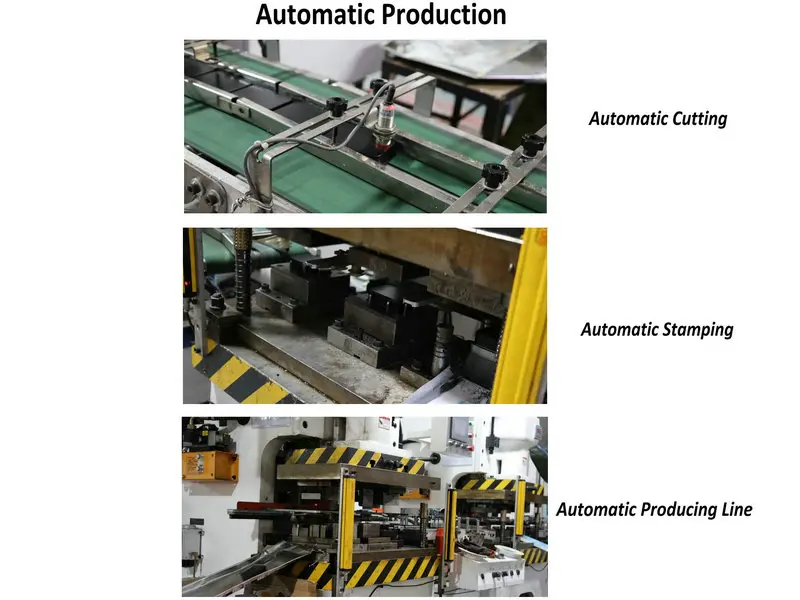
Simplified locks, updated automation, and strategic relationships reduce unit costs.
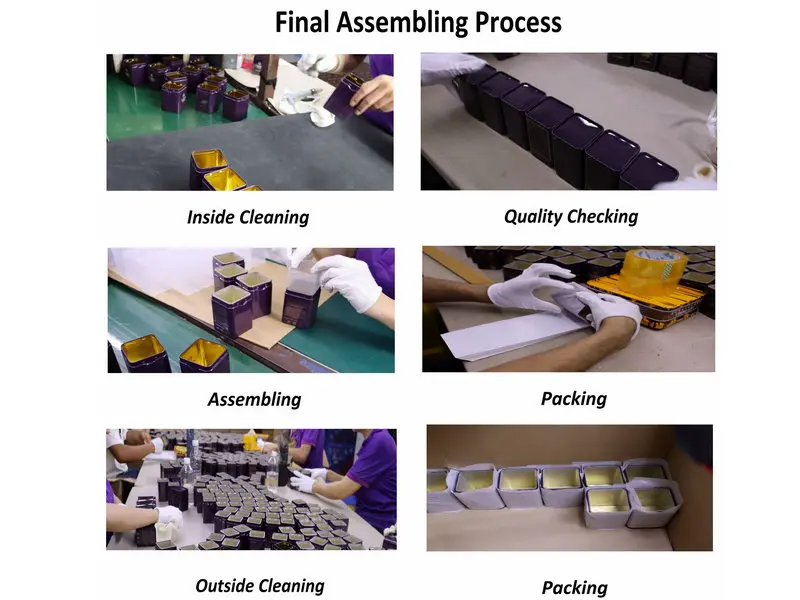
Strict QC covers accessories, automated assembly, and third-party inspections to protect your brand.
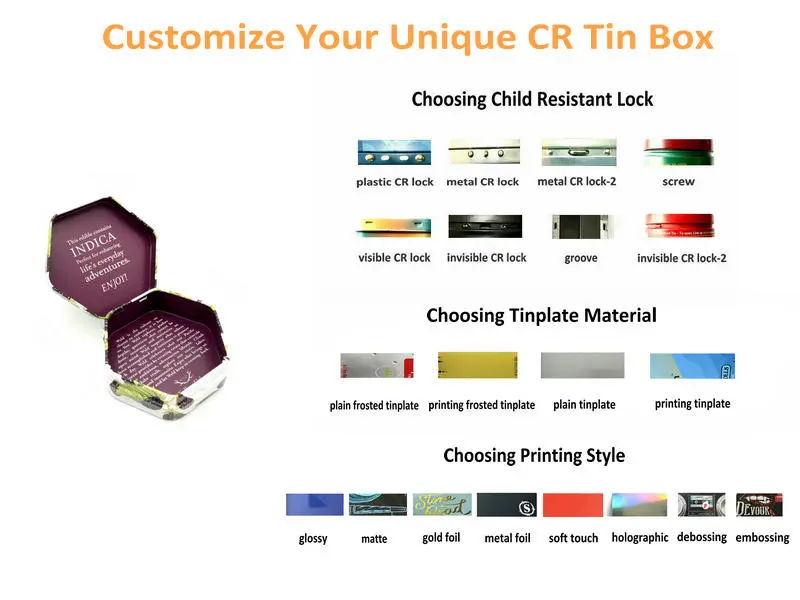
Get bespoke shapes, size adjustments, 3D artwork files, and plastic models for test-fitting.
Sourcing metallic packaging requires navigation of international custom profiles and compliance structures. CR Tin provides door-to-door (DDP) transport routes, managing ocean freight, custom clearances, import tariffs, and local trucking directly to your final warehouse destinations.
All steel tin materials comply with international standards, including REACH, RoHS, and FDA guidelines for direct food contact. Additionally, we provide documentation such as General Certificates of Conformity (GCC) and ISO certification reports to verify the compliance of our products.
Whether your destination is in the US, Europe, or other international regions, our logistics network provides steady lead times and consistent delivery schedules.
A tin box is deemed child-resistant (CR) when it integrates a mechanical locking mechanism that requires two distinct, simultaneous physical movements to open. These designs must be verified under CPSC 16 CFR Part 1700.20 protocols to ensure they are difficult for children under 5 to open, while remaining accessible for senior adults.
Yes. All tin materials utilize electrolytic tinplate lined with FDA-approved, BPA-free internal protective lacquers (such as organosols or epoxy phenolics). These coatings prevent interaction between the metal and the contents, making them safe for foods, mints, and organic items.
Yes. In-house tooling departments can adjust the height of an existing mold without modifying the base perimeter, saving cost. Adjustments to the width or length require fabricating a new mold set, which we can complete in under 30 days.
Bespoke design, 3D printing, and mold tooling creation typically require 20 to 25 days. Once prototypes are approved, standard mass production takes 25 to 30 days, depending on order volume and the chosen decoration technique.
We require vector artwork in AI, PDF, or EPS formats with fonts outlined. Our design team will supply the exact physical dieline files to ensure your graphics align with the seams, hinges, and curled edges.
Standard custom production runs start at 10,000 units due to automated press set-up parameters. For pre-made stock items, we can accommodate smaller trial orders to support emerging brands.
 CR Tin