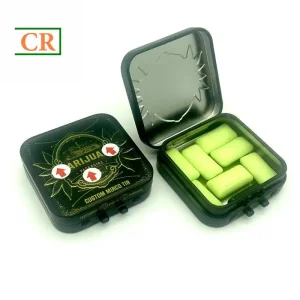
 CR Tin
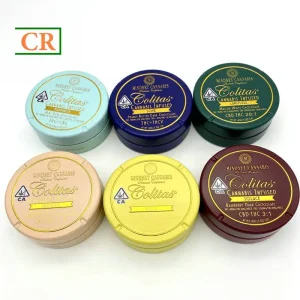
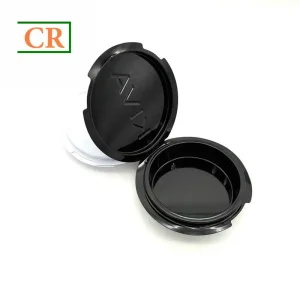
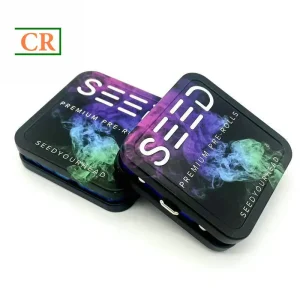
1. Global Pre-Roll Packaging Industry Landscape
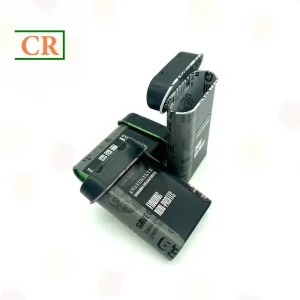
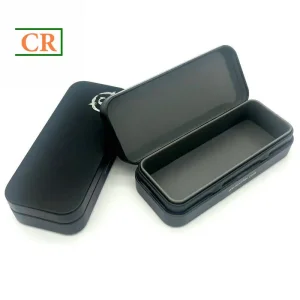
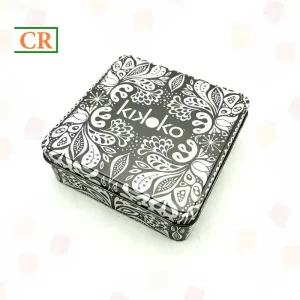
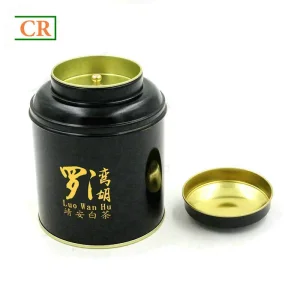
The global cannabis market is undergoing a rapid evolution, shifting from fragmented, localized operations into a highly standardized, multi-billion-dollar global supply chain. At the epicenter of this shift is the pre-roll category, representing one of the fastest-growing sectors in both mature and emerging legal jurisdictions. However, as product sophistication increases, consumers and regulatory bodies alike are demanding a standard of packaging that guarantees fresh retention, structural integrity, and public safety. This has initiated a massive transition away from single-use plastics toward premium, recyclable Pre-Rolls Metal Containers.
From an industrial standpoint, metal tins manufactured from high-grade tinplate steel offer unmatched physical barriers against atmospheric elements. Oxygen, ultraviolet light, and ambient moisture are the primary agents of cannabinoid and terpene degradation. While plastic tubes or cardboard sleeves fail to halt oil permeation and structural warping over time, precision-engineered metal tins maintain a constant micro-climate, preserving the organoleptic profile of premium pre-rolls. Today, global brands realize that packaging is not merely a vessel; it is a critical extension of product quality and brand capital.
Information Gain Concept: High-performance barrier packaging does not simply protect; it actively delays the oxidation process of delicate plant materials. Tinplate containers exhibit a zero OTR (Oxygen Transmission Rate) and zero WVTR (Water Vapor Transmission Rate) when properly sealed, yielding up to a 40% longer active shelf-life compared to traditional polypropylene structures.
2. Regulatory Frameworks & Child Resistance (CR)
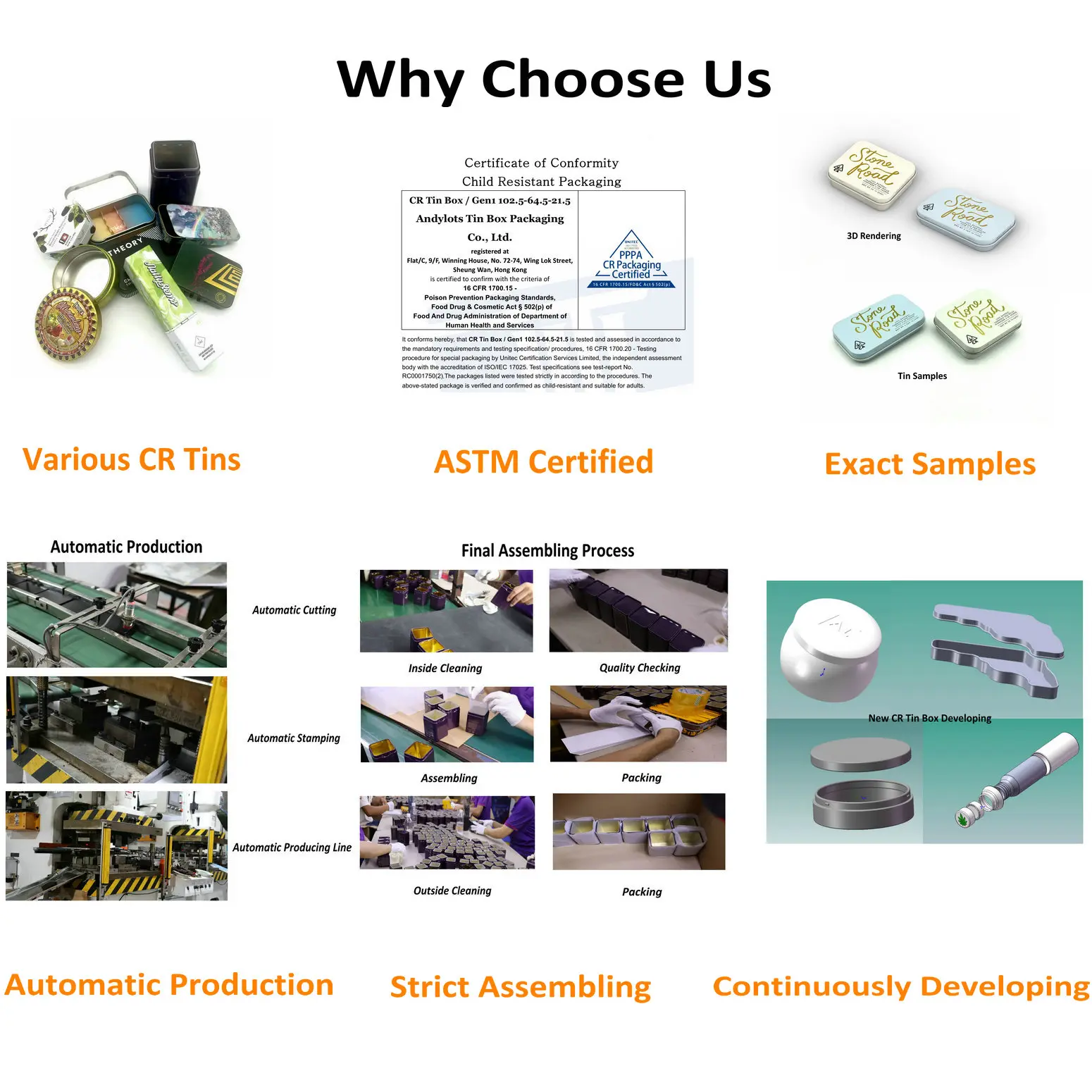
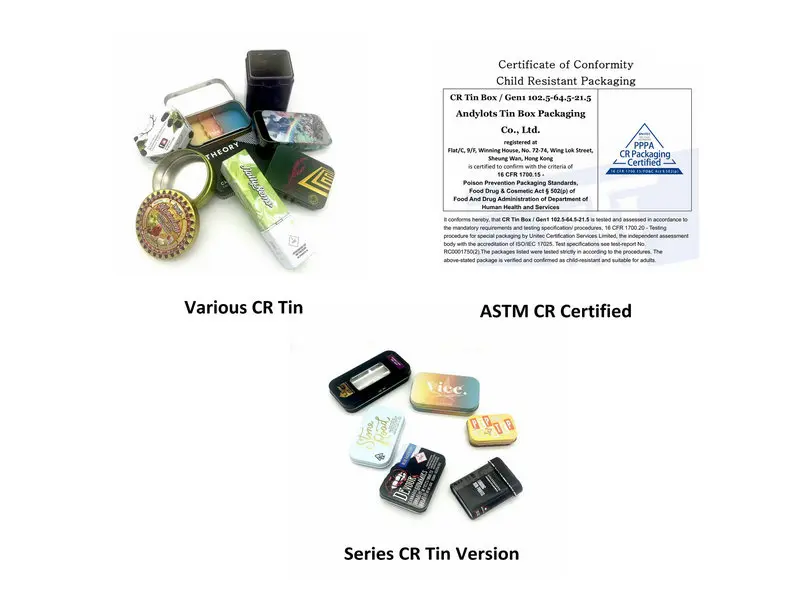
Navigating the legal intricacies of cannabis distribution requires strict adherence to international safety protocols. In North America and Europe, local authorities mandate Child-Resistant Packaging (CRP) for all cannabis-infused and smokable products. The gold standard for certifying child resistance is the ASTM D3475 protocol, as overseen by the U.S. Consumer Product Safety Commission (CPSC) under 16 CFR § 1700.20.
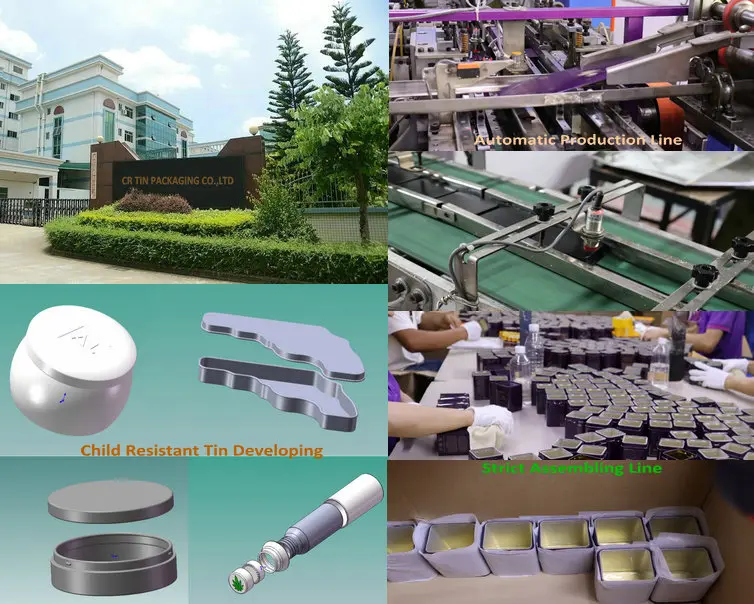
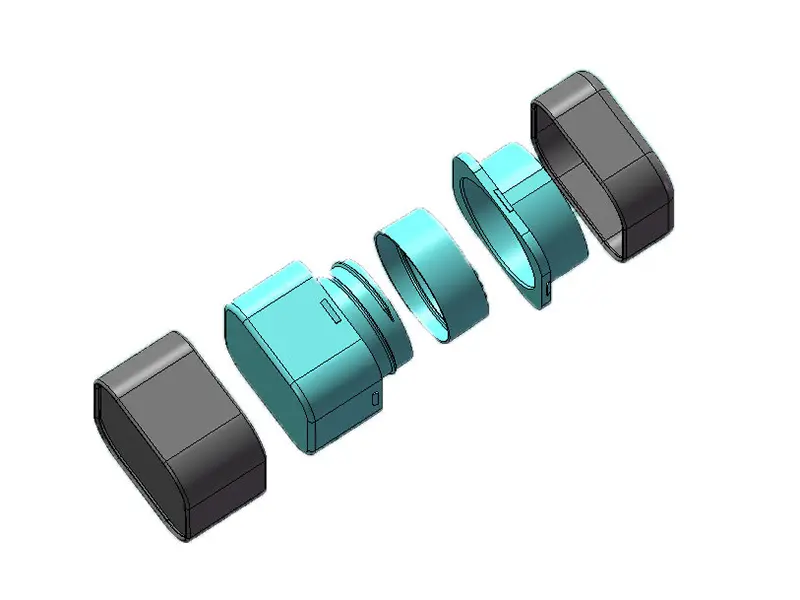
Establishing compliance requires a deep understanding of cognitive development. The lock must challenge the physical coordination and multi-step cognitive processing capability of children under five years of age, yet remain easily accessible to senior citizens or adults with limited dexterity. This requires extensive engineering in joint alignment, structural resilience under pressure, and precise manufacturing tolerances. CR Tin has systematically built its product framework around these rigid demands. By deploying a comprehensive child-resistant lock system validated across 70+ certified structures, our products allow global multi-state operators (MSOs) to scale across multiple regions without risking regulatory non-compliance or supply disruptions.
3. The Chinese Manufacturing Advantage & Supply Chain Integration
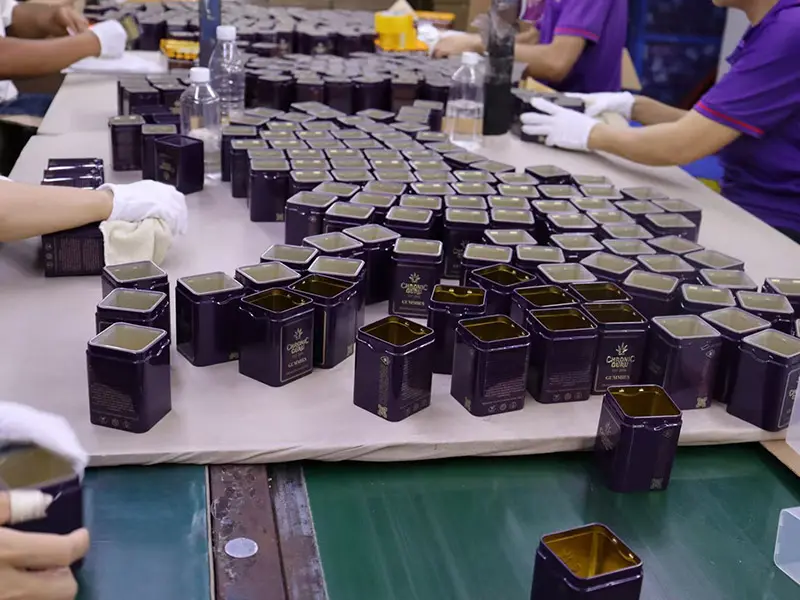
For global procurement managers, the key to scaling lies in balancing unit economics with rigid quality control. Sourcing directly from an integrated OEM factory in China provides a major competitive edge. The manufacturing ecosystem in industrial hubs like Guangdong leverages vertical integration—bringing together raw steel sourcing, precision toolmaking, automated lithographic printing, and physical assembly line operations under one unified roof.
At CR Tin (Andylots Tin Box Packaging Co.,Ltd), we leverage this industrial consolidation to optimize lead times and lower unit costs. Traditional western tooling processes can easily take 60 to 90 days. Our advanced engineering pipeline uses 3D rendering and fast plastic prototyping to deliver verified, market-ready custom tins in under 30 days. Our 8+ fully automated production lines reduce labor costs, eliminate human assembly errors, and ensure dimensional stability across million-unit runs. This level of quality and cost control is essential for modern brands operating in highly competitive retail environments.
4. Tailored Localized Use Cases & Market Profiles
Different markets present distinct consumer behaviors and regulatory realities, demanding custom approaches to product design:
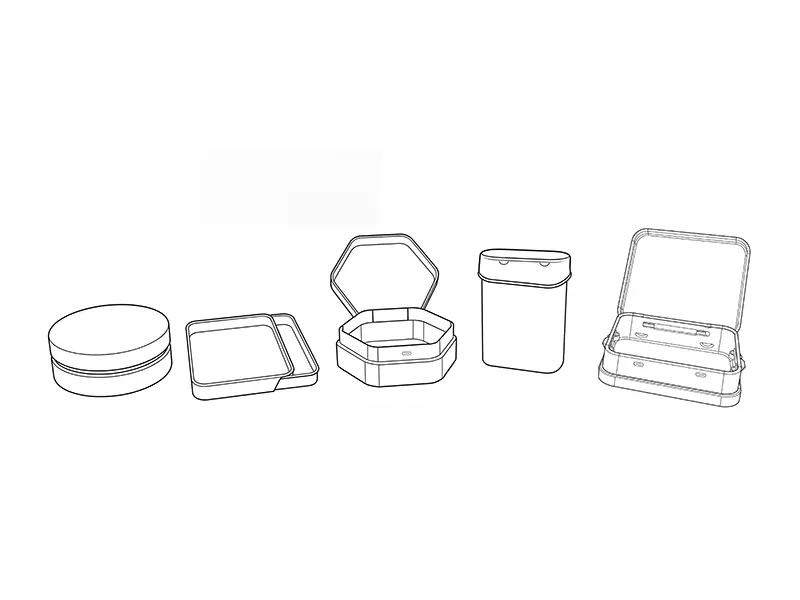
- The North American Market (US & Canada): Dominated by high-volume Multi-State Operators (MSOs) demanding rapid turnaround, high-speed automated filling compatibility, and full compliance with ASTM D3475. Aesthetic preferences focus on sleek, matte-black layouts, embossing, and child-safe sliders.
- The European Market (Germany, UK, Spain): Strongly focused on sustainability and minimal ecological footprints. European B2B buyers prioritize plastic-free, infinitely recyclable tinplate solutions. Design languages lean toward clean, minimalist, medical-grade profiles with subtle color configurations.
- The Asia-Pacific and Emerging Markets: Increasingly adopting Western compliance structures. Focus is placed on dual-use tins that can house pre-rolls, vape cartridges, or premium edible mints, maximizing utility and branding opportunities.
5. Future Engineering & Material Trends
The future of pre-roll metal container design belongs to two converging fields: smart-locking mechanisms and environmental circularity. As consumers demand absolute zero-plastic solutions, manufacturers must integrate functional, bio-degradable liners or silicone gaskets directly into metal tins to achieve airtight, hermetic seals without resorting to plastic inserts.
Furthermore, structural customizability is taking center stage. Brands are moving away from stock dimensions to design custom metal shapes with textured surfaces like tactile embossing, holographic print coatings, and spot UV varnishes. A metal tin is rarely discarded; it is kept, repurposed, and shared. This extends the marketing lifespan of a single package far beyond the initial purchase cycle, giving brands continuous consumer exposure.
6. Enterprise B2B Procurement Strategy
Enterprise procurement departments must look beyond standard pricing tables when choosing a manufacturing partner. A resilient supply chain partner must offer:
- Verifiable Certification: Transparent ASTM testing documentation, third-party laboratory verification, and clean materials testing certificates.
- Production Agility: The capacity to scale production volumes from small trial runs (10,000 units) to multi-million mass-production schedules without degrading structural tolerances.
- Total Logistics Support: Complete customs clearance, duty-paid shipping options (DDP), and reliable global transport networks to prevent stockouts during peak selling seasons.