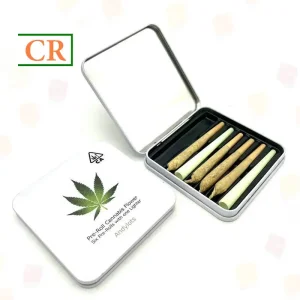
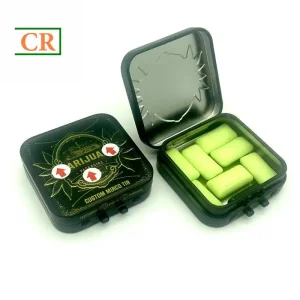
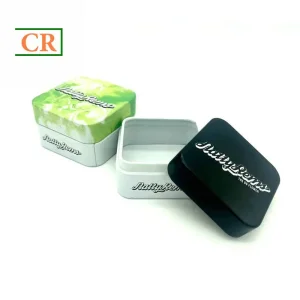
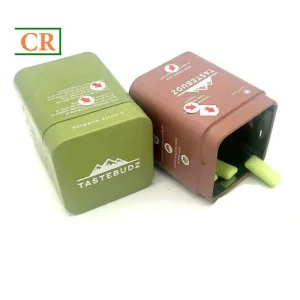
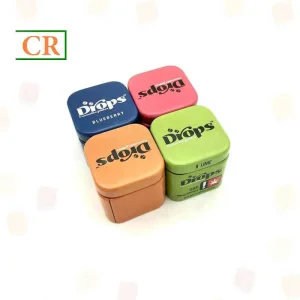
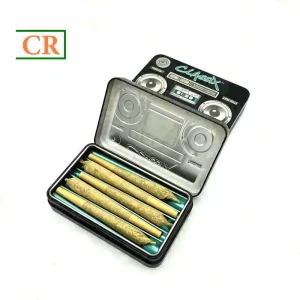
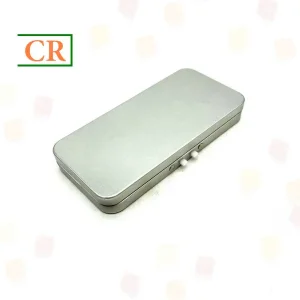
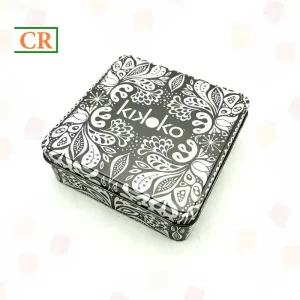
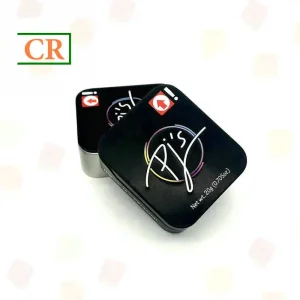
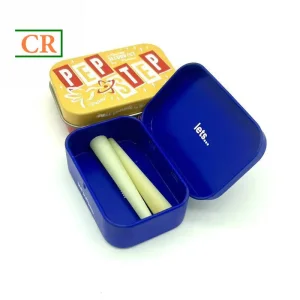
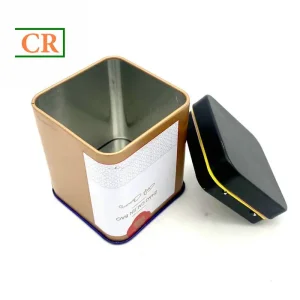
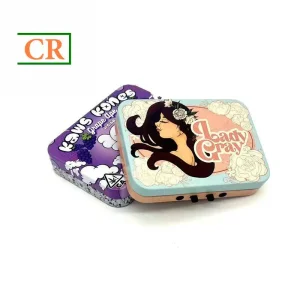
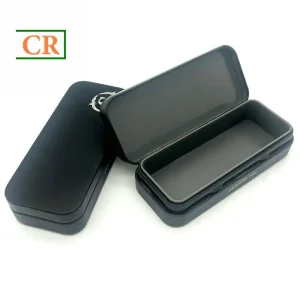
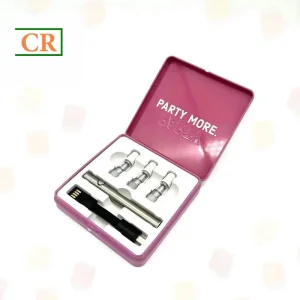
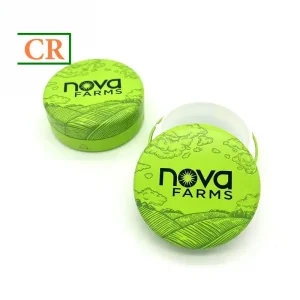
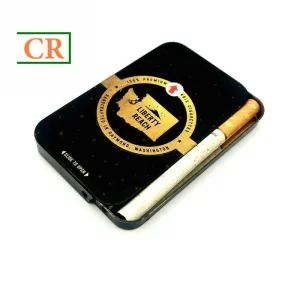
Explore our certified child-resistant and classic customized rectangular metal containers engineered for cannabis pre-rolls, gummies, concentrates, chocolates, and high-end consumer goods.
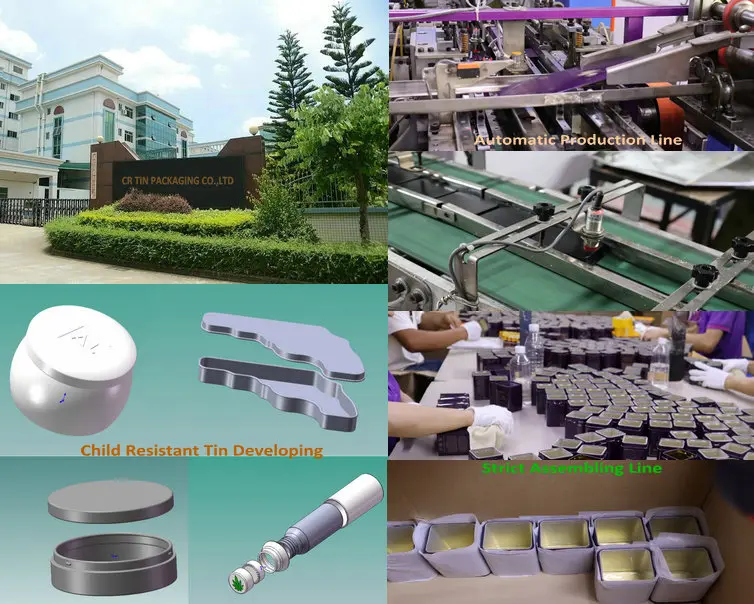
As environmental directives penalize single-use plastics, global consumer industries are shifting toward recyclable, durable metal structures. CR Tin (Andylots Tin Box Packaging Co.,Ltd) operates at the forefront of this industrial transition. We are a streamlined, single-source professional supplier of child-resistant tin boxes, integrating child-resistant lock design, custom mold engineering, automated sampling, regulatory compliance testing, and high-volume mass production.
CR Tin began developing certified child-resistant (CR) locking tin boxes in 2017. Benefiting from nearly a decade of technical R&D and manufacturing experience, our design engineering team has developed over 70 certified child-resistant locking systems. This proprietary portfolio covers the full spectrum of tin packaging shapes and sizes in the industry, establishing our reputation as a highly specialized engineering partner.
Analyzing the core competencies required to support international brands in achieving supply chain agility, cost minimization, and premium branding.
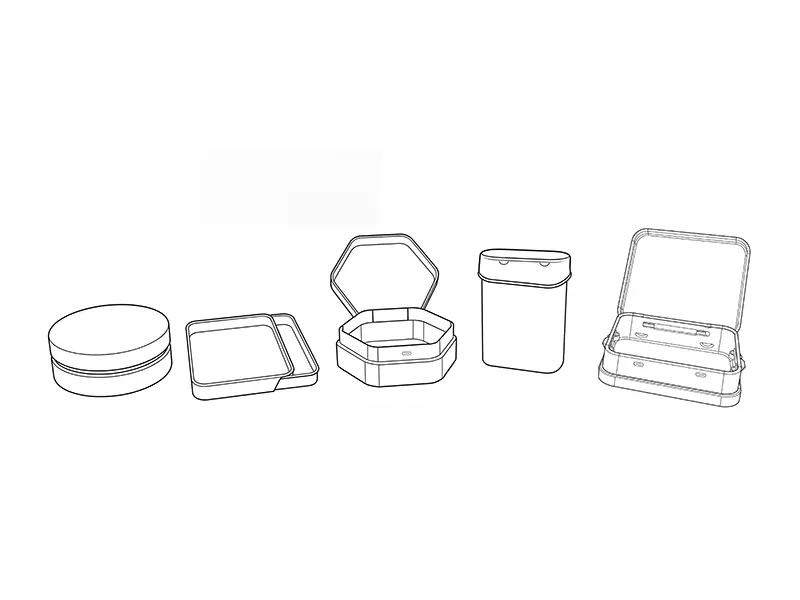
We supply more than 12 custom child-resistant mechanism patterns (including slide locks, squeeze-and-lift tabs, button mechanisms, and two-step hinge designs) to align with specific product viscosities, size profiles, and retail price points.
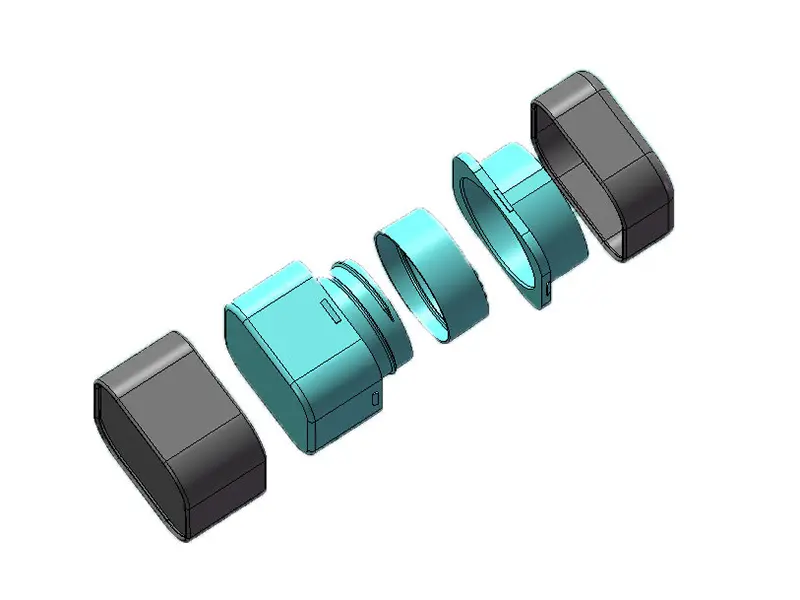
Our packaging engineers offer full 3D rendering support, structural stress-tolerance simulations, and custom plastic mock-ups. We refine the mechanical interactions of the locking lid before investing in hard tooling.
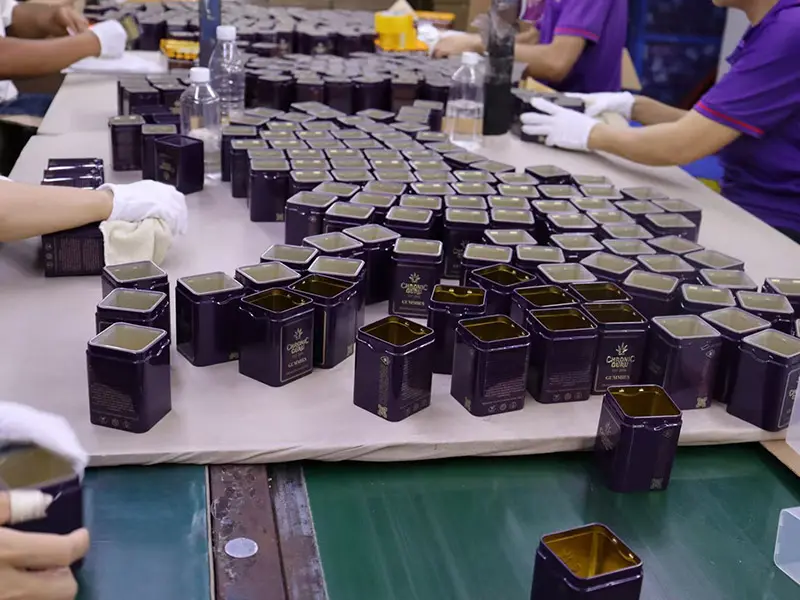
Using advanced automated punch machinery and vision-sensor inspection cameras, we maintain high-speed throughput while eliminating minor physical deviations, scratches, and misalignment errors.
For global enterprise buyers—ranging from multi-state cannabis operators (MSOs) to international confectionery brands—sourcing rectangular tin packaging involves balancing several distinct engineering demands:
Rectangular profiles offer up to 22% better space utilization on standard shipping pallets compared to cylindrical tins, significantly reducing ocean freight expenses and carbon footprints.
Typical tinplate ranges from 0.23mm to 0.28mm in thickness. Our engineering utilizes tempered T2/T3/DR8 raw steel sheets to ensure the hinges and locking tabs withstand repeated opening cycles.
Active ingredients require moisture and oxygen protection. We integrate custom food-grade silicone liners, expanded polyethylene (EPE) gaskets, or food-safe varnish coatings to meet strict shelf-life requirements.
Tins undergo multi-color offset lithography (CMYK + PMS spot matching) and food-grade interior lacquer baking. We verify that all varnishes are BPA-free and meet FDA Title 21 CFR and EU Regulation 10/2011 standards.
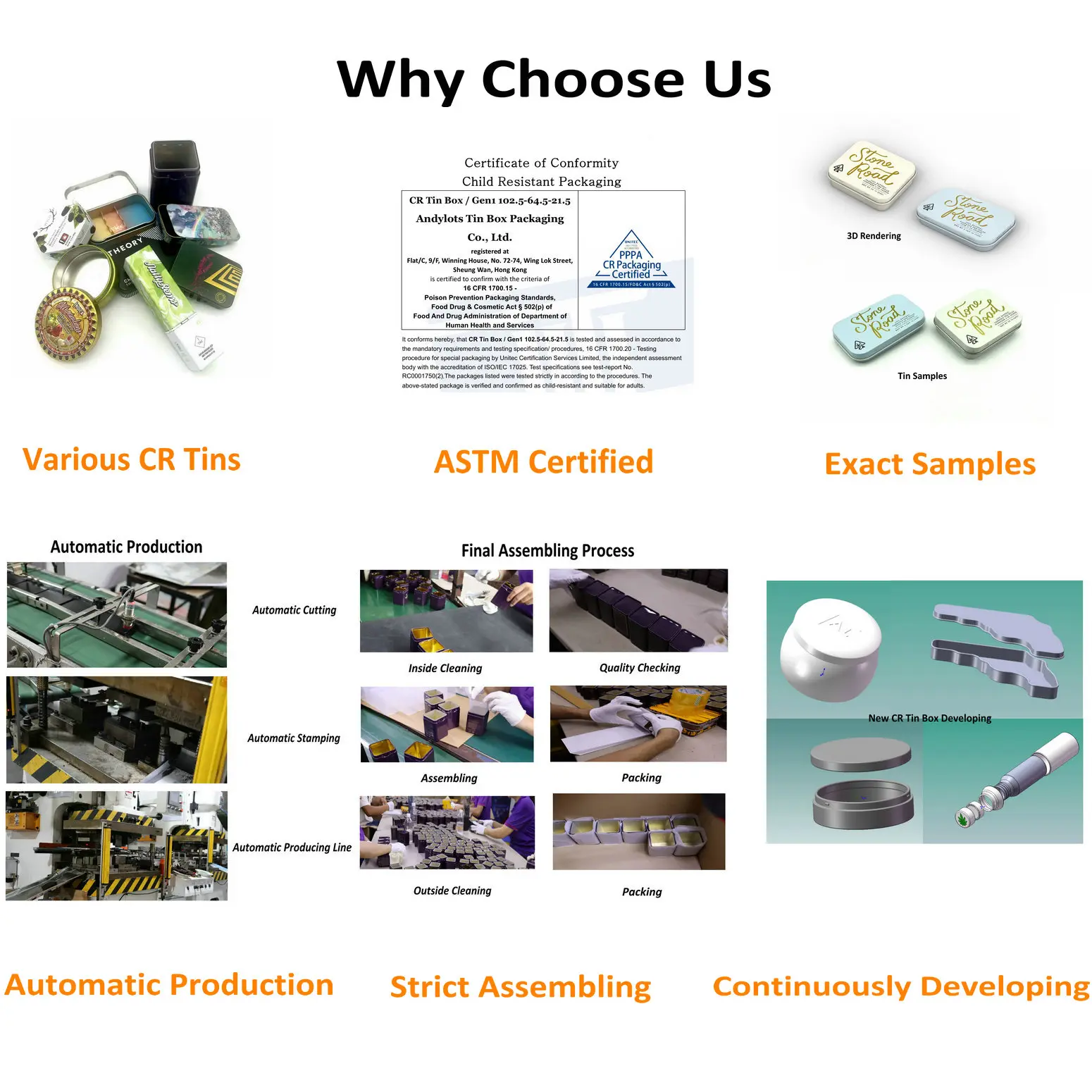
A technical overview of how we optimize child-resistant tin fabrication through engineering design, production line automation, and direct supply chain management.
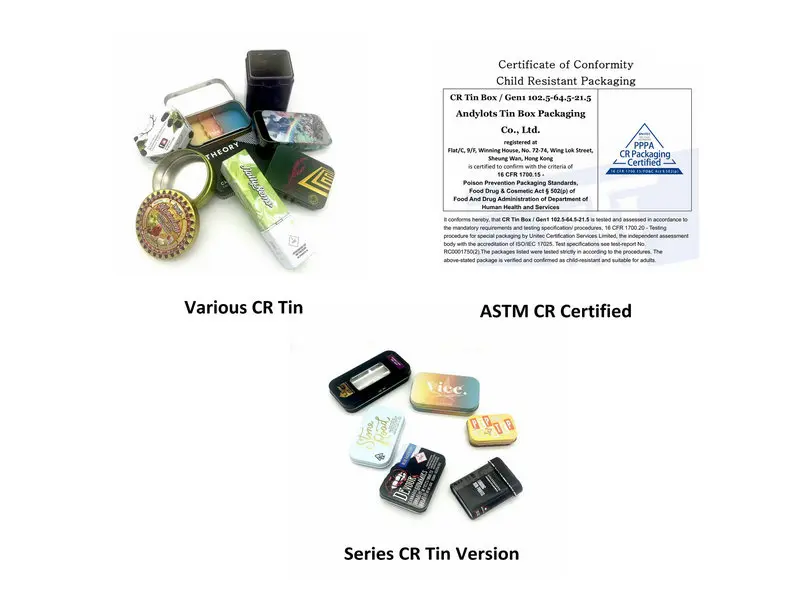
Developing custom child-resistant metal packaging requires balancing child safety with senior-friendly access. Our designs are engineered to meet ASTM D3475, CFR Title 16 Part 1700.20, and ISO 8317 certifications.
By designing mechanical locks that require two distinct, synchronized movements—such as squeezing lateral push tabs while lifting the hinged lid, or applying down-force to a sliding track—we ensure our packaging passes certified testing panels while maintaining a smooth user experience.
Achieving cost efficiency in custom tin manufacturing requires reducing material scrap, tooling costs, and assembly labor.
We optimize manufacturing economics by simplifying certified locking shapes to reduce punch-stage fatigue and tool wear. Additionally, our high-speed automated production lines lower per-unit labor costs, while our long-standing relationships with tier-one tinplate mills keep raw material costs stable.
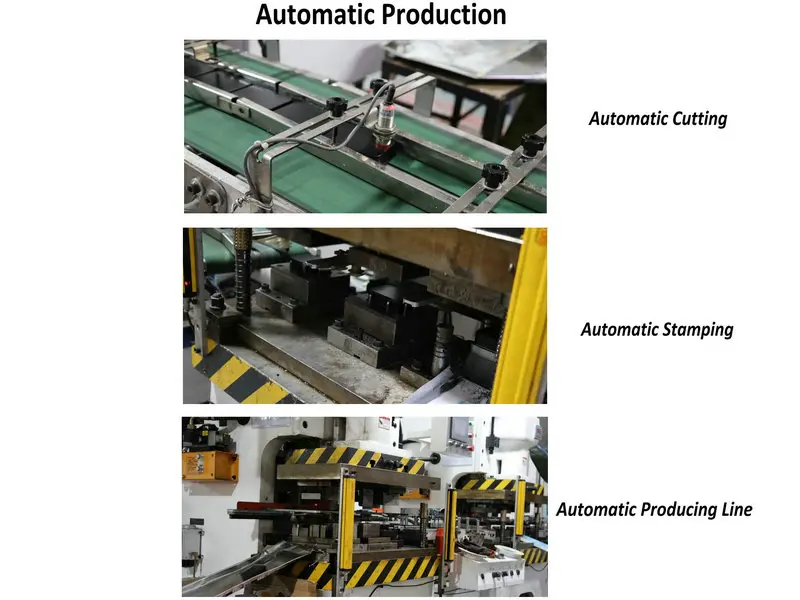
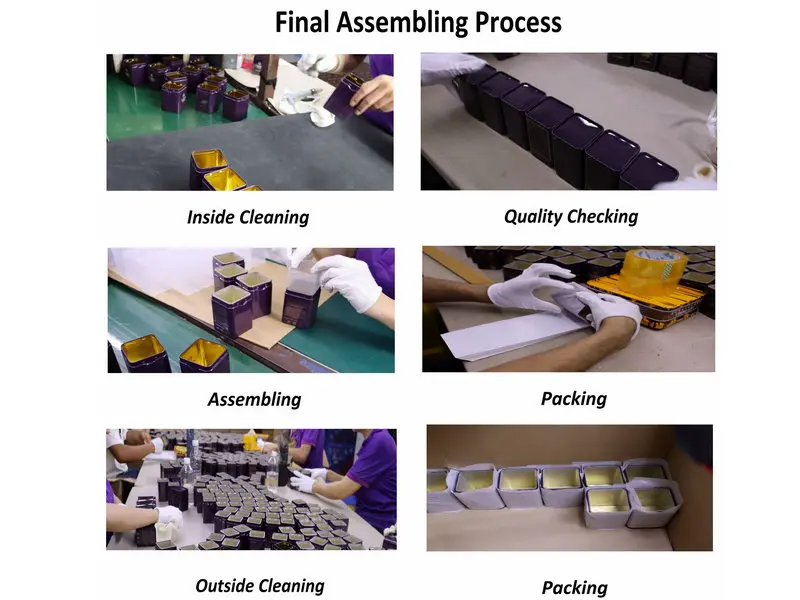
Our quality management system is structured to guarantee that every batch of tin containers meets specifications for printing, structural integrity, and lock mechanics.
We implement strict quality controls from incoming tinplate inspection to on-line dimensional checks and post-assembly testing. Third-party testing reports are available to confirm conformance to global packaging safety standards.
Transforming customized tin packaging from a concept into a certified commercial product involves a structured, five-stage engineering process designed to manage risk at every step.
Once a design is finalized, our tooling engineers construct stamping dies within 30 days. We then produce pilot samples under full-scale production conditions, allowing buyers to verify fit, print quality, and auto-packing line compatibility before starting high-volume runs.
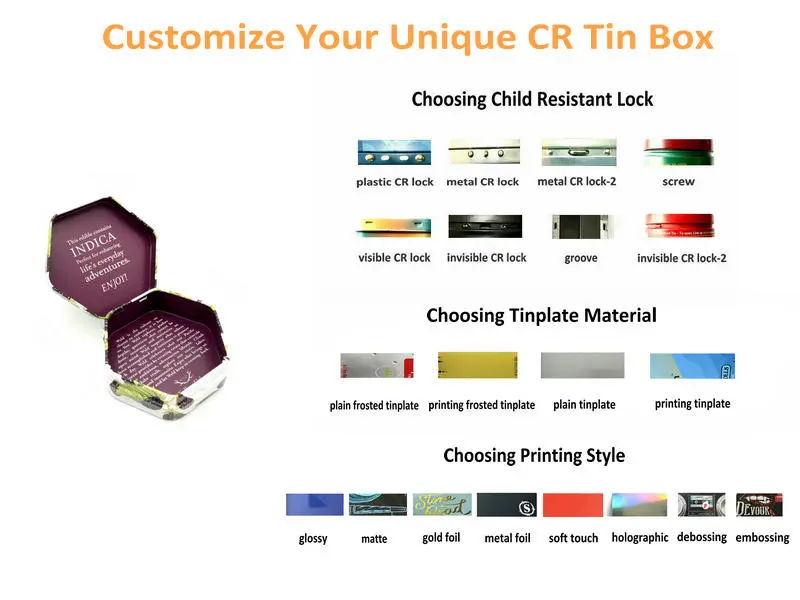
Select from our pre-certified catalog or create a custom shape. We supply 3D STL files and SLA plastic models for testing prior to building production molds.
Our printing division matches color profiles to your design files. We adjust for distortion along metal contours, ensuring text and logos remain readable.
We send prototype tins to certified labs for CPSC 16 CFR Part 1700.20 protocols, confirming locking mechanisms prevent entry by children under five.
We pack containers in heavy-duty shipping cartons with humidity absorbers to prevent rust during transit, ensuring they arrive ready for your packaging line.
Answering common technical questions from B2B sourcing managers regarding certifications, logistics, customs, and materials.
Our child-resistant rectangular tin boxes undergo third-party laboratory evaluations in compliance with United States CPSC standards under 16 CFR Part 1700.20, as well as ASTM D3475 protocols. These tests verify the designs prevent children under 51 months from opening the packaging, while allowing access for seniors. Upon request, we provide testing certificates (COCs) to support compliance filings with state and federal authorities.
For custom sizing, new mold tooling is completed in approximately 30 days. Once the mold is tested and pilot samples are approved, our standard production lead time runs between 25 to 30 days, depending on volume and decoration complexity. If using one of our 12+ pre-existing certified molds, the tooling phase is bypassed, reducing lead times to about 25 days.
To prevent rust during ocean transit, we use high-grade tinplate with an electrolytic tin coating (E2.8/2.8) and apply rust-resistant varnishes during the printing process. Finished containers are packed in heavy-duty cardboard boxes lined with plastic vapor barrier bags, and we place industrial silica gel desiccant packs in each carton to manage humidity levels.
Our standard MOQ for custom lithographed printing is 10,000 units per design. This minimum is determined by the setup requirements of high-speed metal offset printing presses. For special projects or pilot launches, we can discuss smaller quantities with digital printing, though this increases the per-unit cost.
Yes, we design and source integrated packaging inserts, including vacuum-formed trays, molded pulp dividers, EVA foam inserts, and silicone seals. For products that require moisture and odor control, we integrate food-grade silicone liners or EPE gaskets to create an airtight seal inside the rectangular rim.
Yes, all interior coatings, epoxy varnishes, and printing inks used by CR Tin are food-grade and comply with FDA 21 CFR 175.300 regulations and European Food Safety Authority (EFSA) directives. They are tested to be BPA-free and resistant to chemical degradation from essential oils, acids, and moisture.
Explore our selection of slide tins, child-resistant locks, and sealed container geometries designed to meet specialized retail and industrial needs.
 CR Tin