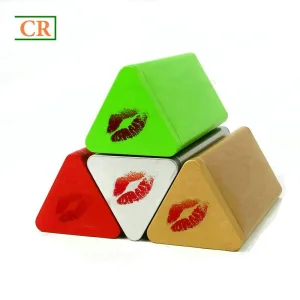
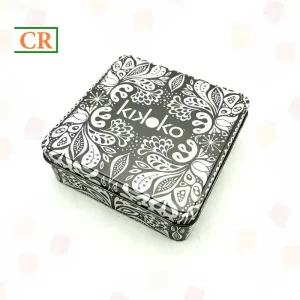
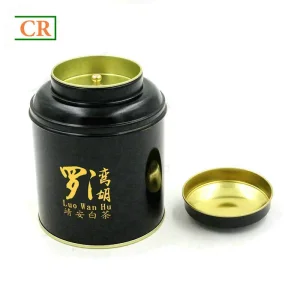
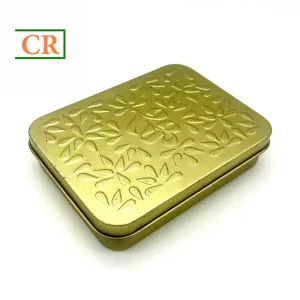
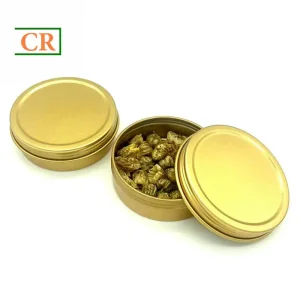
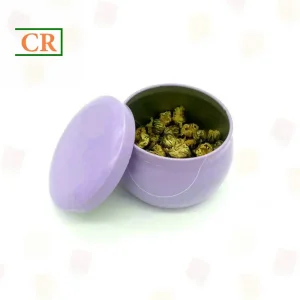
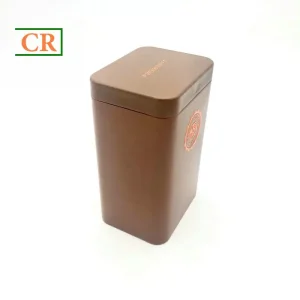
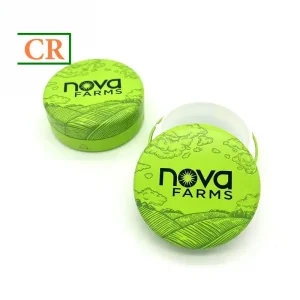
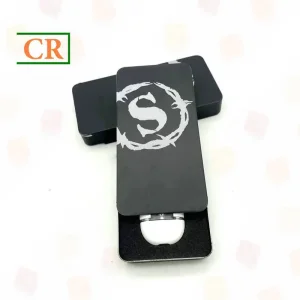
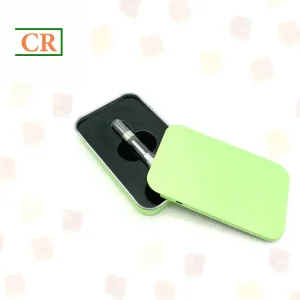
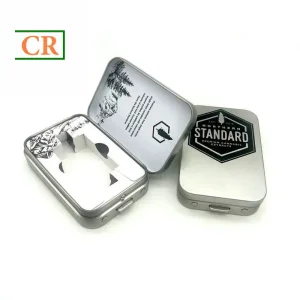
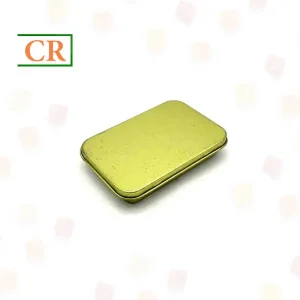
Engineered to withstand tropical humidity parameters while maintaining structural integrity for premium global export. These four primary configurations lead our export programs out of Indochinese logistics terminals.
CR Tin (Andylots Tin Box Packaging Co., Ltd) is a streamlined, single-source professional supplier of child-resistant tin boxes, integrating child-resistant lock design, mold making, structural prototyping, certified laboratory testing, and scalable mass production. Founded with a vision to redefine child-safe hardware packaging, we began dedicated development of specialty lock mechanisms in 2017.
Through close to a decade of relentless research, development, and pioneering experience, we have successfully developed over 70 certified child-resistant lock tin boxes. Our catalog covers all standard tin packaging styles in the global market, positioning us as an industry leader with our own unique child-resistant safety locking patent designs.
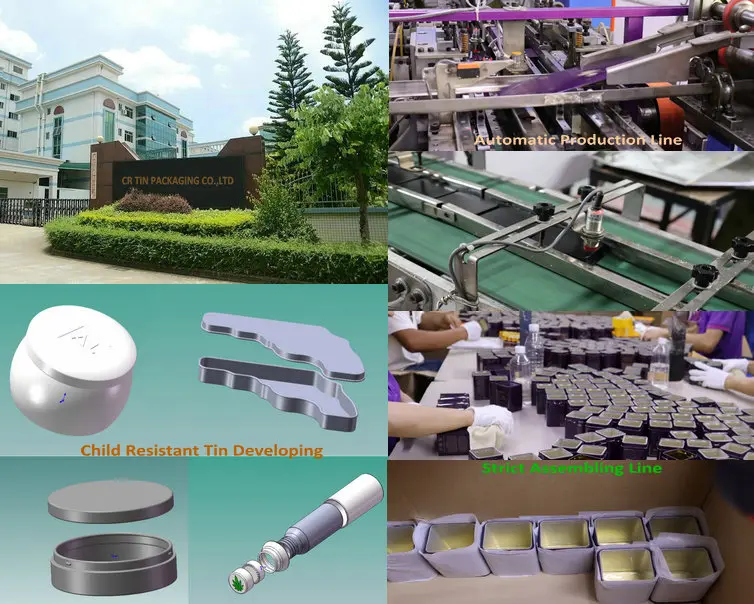
As global supply chains shift toward decentralized, high-reliability manufacturing nodes, Ho Chi Minh City (HCMC) has emerged as the premier logistics hub for Southeast Asia. Supported by immediate access to Cat Lai Port, Saigon High-Tech Park, and major sea lines connecting directly to North American and European coastal destinations, our integration within the HCMC export framework offers unmatched supply-chain security.
Leveraging bilateral and multilateral agreements like the EVFTA and CPTPP, we streamline duties and documentation, offering highly competitive pricing directly to global buyers accessing the Vietnamese logistics corridor.
Industrial operations within Southeast Asia require products that resist high relative humidity. Our flower tins incorporate advanced anti-corrosive tinplate coatings optimized for tropical marine transit.
By utilizing regional shipping hubs, we reduce transit times to Western US ports to 18-22 days, presenting an efficient secondary source for high-demand, just-in-time cannabis and botanical brands.
Child safety packaging is not merely a legal requirement; it is a strict science of tolerances, material memory, and ergonomic resistance. Under US 16 CFR Part 1700.20 and international equivalents, packaging must restrict accessibility for children under five years old while remaining highly functional for seniors. Our engineering team specializes in achieving this balance through high-precision metal stamping.
Unlike plastic child-resistant caps that rely purely on thread-friction, our metal tin boxes utilize physical locking tabs, spring-steel bottom profiles, and localized pressure release triggers. These mechanisms require a cognitive, two-step motion (e.g., Press down and twist, or squeeze-and-slide) to open.
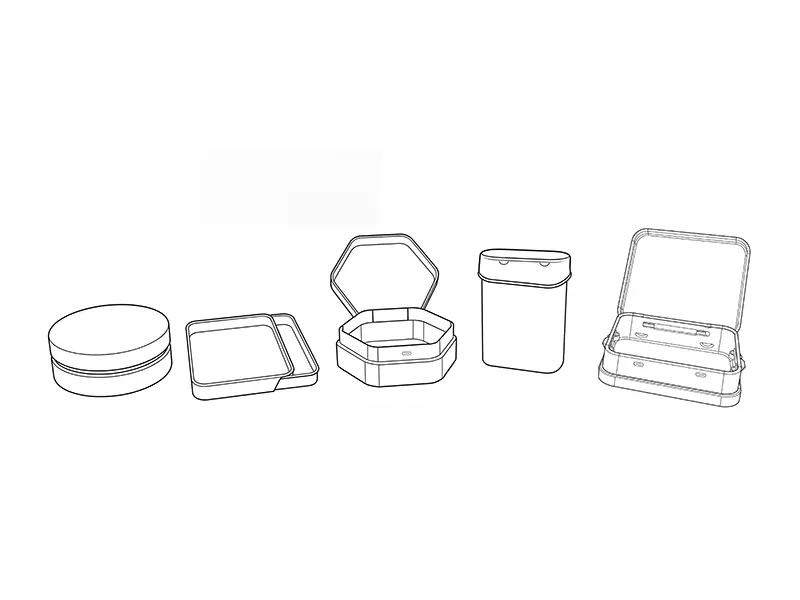
Sourcing flower tins requires strict validation of material purity and structural integrity. Because metal packages directly contact natural botanicals and food products, our supply chain ensures that every batch of tinplate exceeds global safety standards, including EU regulations and FDA food contact requirements.
We use strictly premium Electrolytic Tinplate (ETP), featuring a uniform tin deposition layer that provides natural rust protection and excellent printability. Material certifications are generated for every production run.
To safeguard flower terpene profiles, our tins feature food-grade, solvent-free epoxy phenolic or organosol coatings. These linings prevent chemical migration and safeguard botanical purity.
Our airtight configurations utilize high-grade silicone or food-safe TPE gaskets. These gaskets are molded directly into the tin’s inner recess to retain moisture and isolate odors.
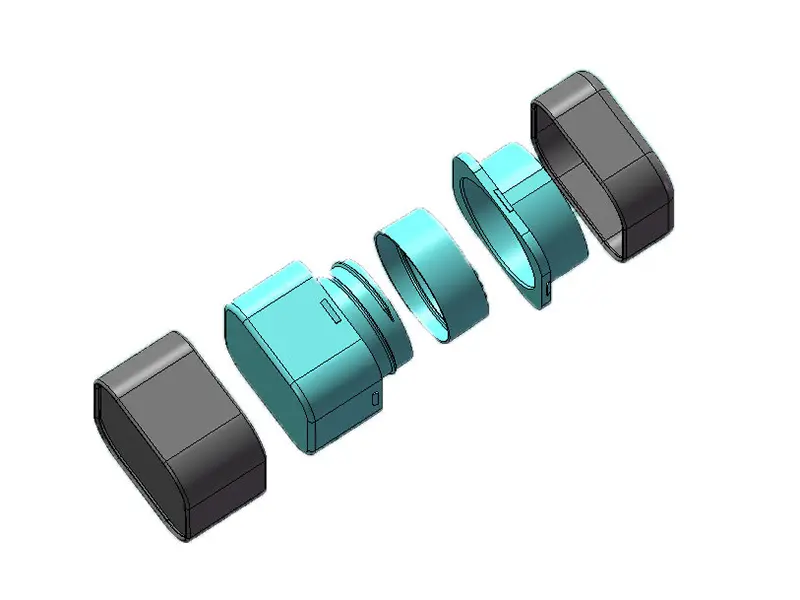
Manual inspections are insufficient to guarantee child-resistant safety compliance at scale. We utilize high-speed optical inspection systems on our automated lines to monitor the precise physical dimension of every lock point.
As consumers and regulatory frameworks demand transitions away from single-use plastics, metal packaging offers a viable long-term solution. Steel and tinplate represent a truly circular material system.
Metal is a permanent resource. Unlike plastics that degrade in quality during recycling, tinplate maintains its physical properties through infinite recycling cycles.
Modern metal recycling consumes up to 60% less energy than primary production. Our materials are sourced from energy-efficient partners to lower scope 3 logistics emissions.
High-end metal containers are routinely repurposed by end-consumers. This extends your brand's presence in their homes long after purchase, providing ongoing marketing value.
To help sourcing procurement directors evaluate our systems, we maintain a transparent blueprint of our primary manufacturing criteria.
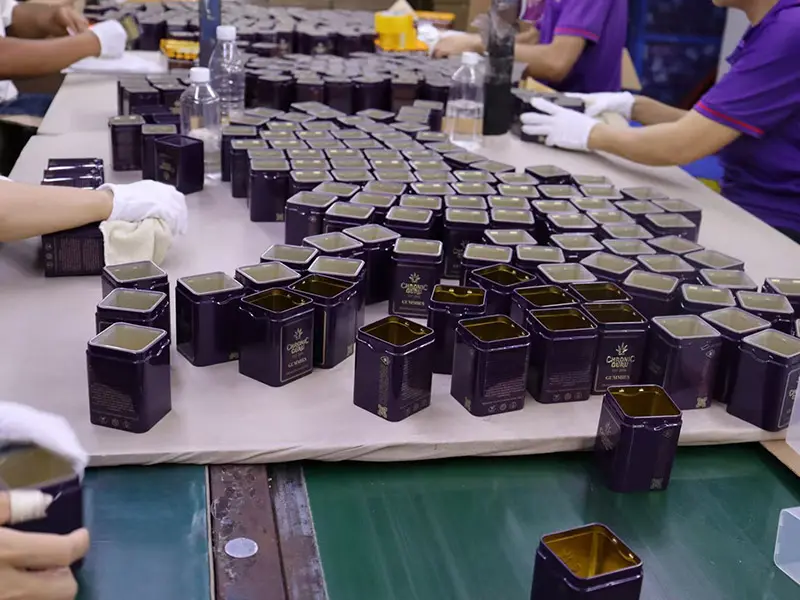
Explore our complete range of certified child-resistant tins, engineered for global export and distribution via the Ho Chi Minh City logistics network. These designs are fully customizable in dimensions, lithography, and finish.
CR Tin provides structured frameworks designed to reduce cost while improving reliability across all phases of product customization, quality assurance, and manufacturing.
Find authoritative answers to common regulatory, logistical, and technical questions regarding sourcing child-resistant packaging through Ho Chi Minh City ports.
In North America, child-resistant packaging must comply with the testing protocols defined under 16 CFR Part 1700.20 (US) and CSA Z76.1 (Canada). Compliance is validated through consumer panel testing to ensure children under 5 cannot open the packaging within the test period, while adults can. CR Tin offers over 12 patented configurations that carry direct ASTM D3475 certifications to simplify compliance audits.
We address high-humidity ocean transit by using premium Electrolytic Tinplate (ETP) treated with anti-oxidizing passivation films. Our internal and external surface areas are sealed with custom-formulated food-safe clear varnishes or colored pigments. Our storage, packaging, and container loading processes also include desiccant systems to control moisture during transit from Cat Lai Port.
Our standard tooling process takes 30 days. This timeline includes preparing technical CAD files, producing a 3D-printed plastic prototype for structural check, milling the test steel molds, and stamping physical metal pre-production samples. Once pre-production samples are approved, mass production tooling is finalized to initiate high-speed automated runs.
Yes, all components, including the base tinplate sheet, inks, lacquers, and airtight rubber/TPE gaskets, comply with FDA 21 CFR 175.300 and EC 1935/2004 standards. We utilize food-grade materials that undergo regular migration testing to ensure they are safe for direct contact with dry botanicals, tea leaves, and confectionery items.
 CR Tin